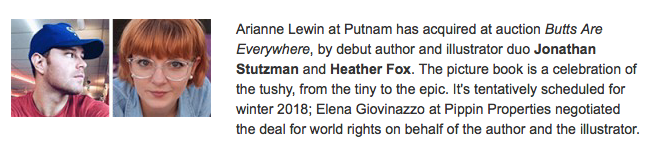
As the semester begins, I warn new students that illustration is a very tough field. Like acting, -the world only needs so many movie stars. On the other hand, I should share success stories of grads doing great work in illustration. Here are a few stellar grads.Take 2017 grad Heather Fox, for example. She made a zine that debuted at MoccaFest 2016. Then she self-published via Amazon’s CreateSpace. She created a retelling of one of Rudyard Kipling’s Just So stories, The Elephant’s Nose. She collaborated with her boyfriend Jonathan Stutzman on these projects. Now they have an agent and a real book deal with Putman books for Butts Are Everywhere! I wrote more about Heather and her talented classmate Meredith Shriner here.
Tom Whalen’s collector tix for Rogue One
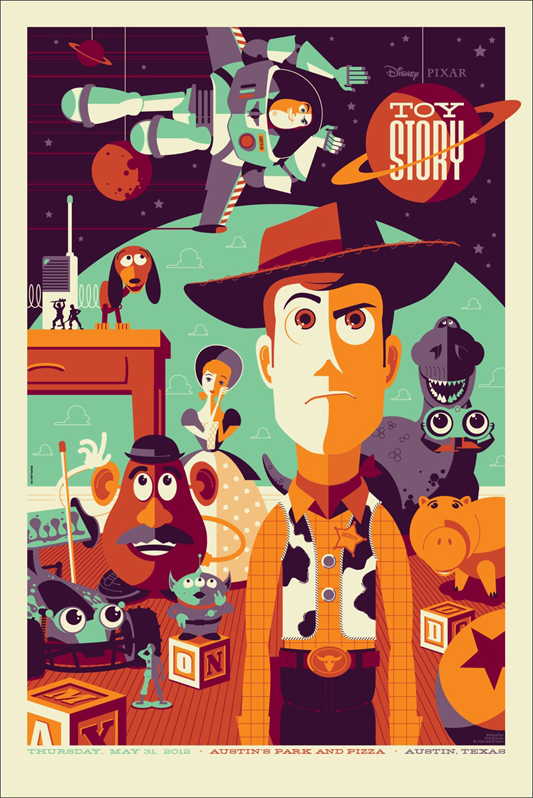
Tom Whalen, KU CD, 1996, is one of the greatest vector-illustrators in the country. He has worked for major entertainment studios including Disney, Lucasfilm, Paramount, Marvel, DC, and Warner Bros. Above are his collector’s tickets for Rogue One’s theatrical release. Below is one of his posters for Disney/Pixar.
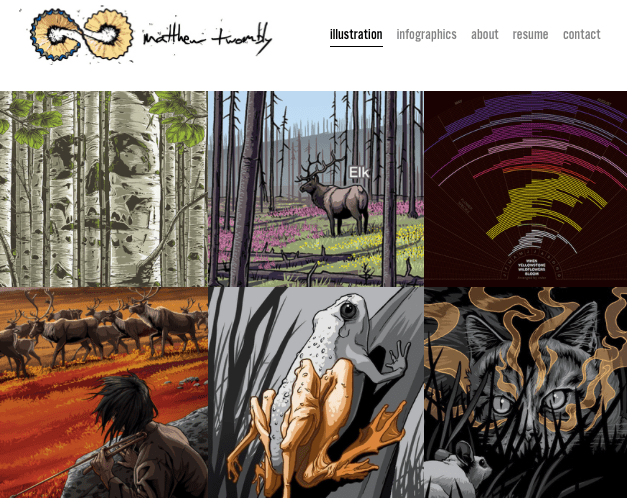
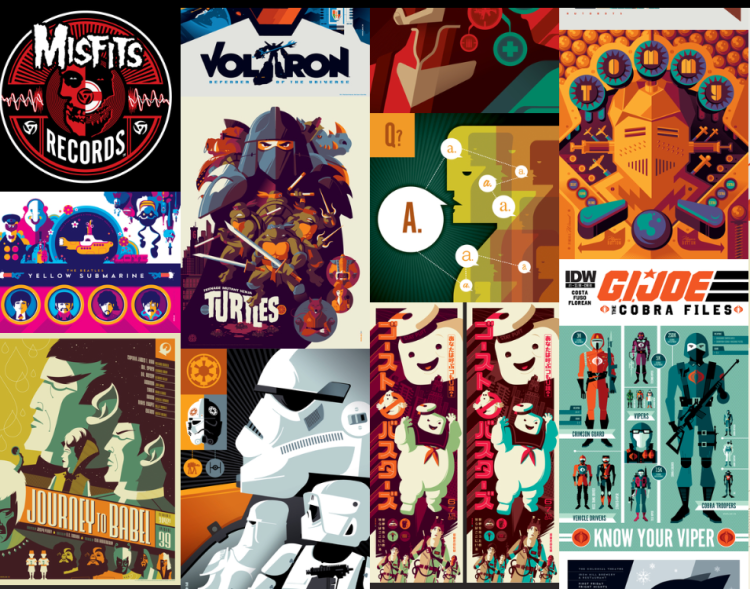
Tom Whalen’s work can be found at Strongstuff.net. Below is a screen grab from his site to give a window into his versatility and prodigious output.
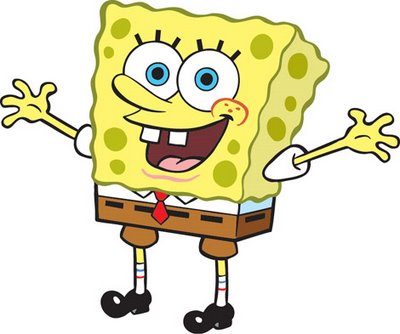
Amanda Geisinger, a 2008 grad from Pottstown, won an Emmy for her work at Nick Digital, part of the Nickelodeon empire. She works on Times Square with Spongebob and other celebrities. Back in 2010, I interviewed her for a blog post I titled, What’s Spongebob Really Like.
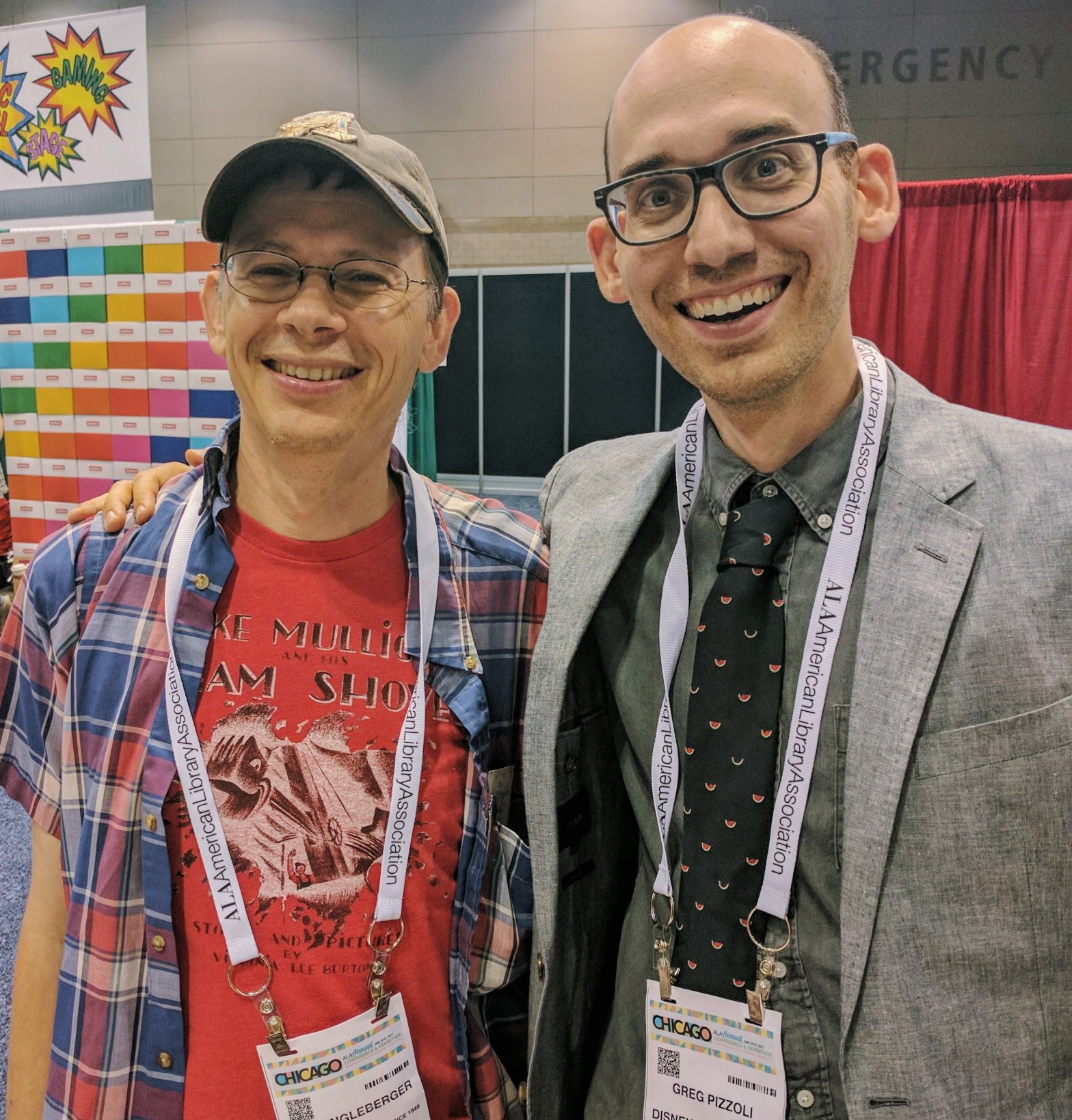
I tabled at ALA in Chicago to promote my new Toon book, Something’s Fishy. ALA is the American Library Association’s mega-convention. Over 10,000 librarians and hundreds of authors and illustrators roamed the aisles. Anchored to my table, I still managed to meet some superstar illustrators as they passed by. In front of my display, Greg Pizzoli bumped into his pal Tom Angleberger, creator of the mega-hit Origami Yoda series.
I asked Greg how he came up with the idea for his new book, The Quest for Z. Truth be told, I wish I had thought of it. It began in Greg’s studio while working on his prior nonfiction kid’s book, Tricky Vic. He listened to the audiobook of David Grann’s bestseller, The Lost City of Z: A tale of Deadly Obsession in the Amazon. He was enthralled. “Soon as it finished,” Greg said, “I started it over, I’d never done that before.”
Greg is a 2005 Millersville University of PA grad with an MFA from Philadelphia’s University of the Arts. He still lives in Philadelphia where he is part of the printmaking scene. His specialty is serigraphy- silkscreen. He taught for 8 years at the U of Arts before becoming a full-time author and illustrator. He did 8 books in this year ranging from board books to nonfiction picture books. I asked Greg about how he came to do the nonfiction works.
Tricky Vic: The Impossibly True Story of the Man Who Sold the Eiffel Tower started out as a self-published zine. “Self-published is an overstatement,” said Greg, “I printed 100 copies and sent them to friends.” Somebody clearly liked it! Tricky Vic, in the form published by Viking, went on to success, and was selected for The New York Times 10 Best Illustrated Children’s Books of 2015.
On Sunday at the appointed hour I went to the Penguin Books for Young Readers aisle where Greg was signing books. His line of fans snaked through the aisles much like an image from his ‘Z’ book. I will have to get mine another day!
Chicago was great. I had a good ALA convention and so did Greg. His Good Night Owl won a Geisel Honor.
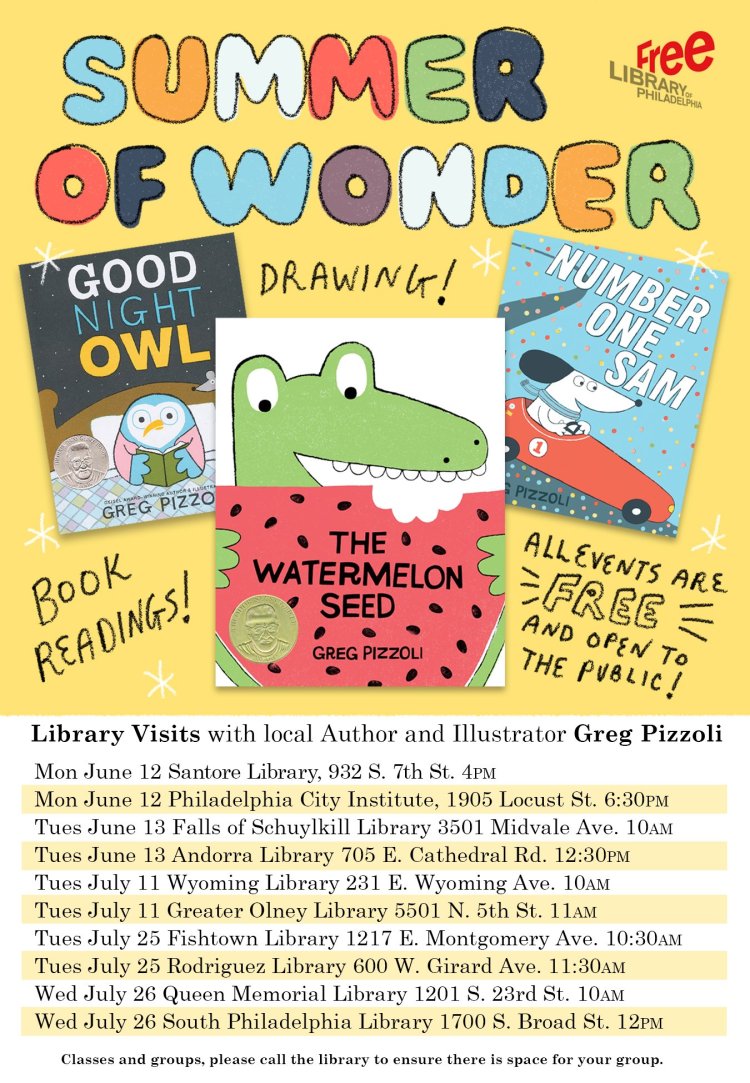
Hey, Philly! Greg Pizzoli is doing a series of Free Public presentations for the Free Library of Philadelphia’s neighborhood branches. Check your local library. Info:
He is also signing books at Princeton Children’s Book Festival in NJ on Sept 24, 2017. The event is a fundraiser for the Princeton Public Library. I will be there, too.
P.S. For Pizzoli nonfiction fans I asked Greg about the subject of his next book. I would never have guessed – John Wilkes Booth!
The insanely-talented Chris Sickels came from rural Indiana to rural Pennsylvania with a suitcase full of strange characters. He let me play with his dolls. – Me and a roomful of artists attending his workshop for the UCDA Summit at Kutztown University.
Chris Sickels is Red Nose Studio. The studio is known for 3-D illustration and experimental animation. “I don’t think of myself as an animator,” said Chris, “but as an animation enthusiast.” And his enthusiasm is contagious.
Prof. Brytton Bjorngaard improvising an exploding cigar.
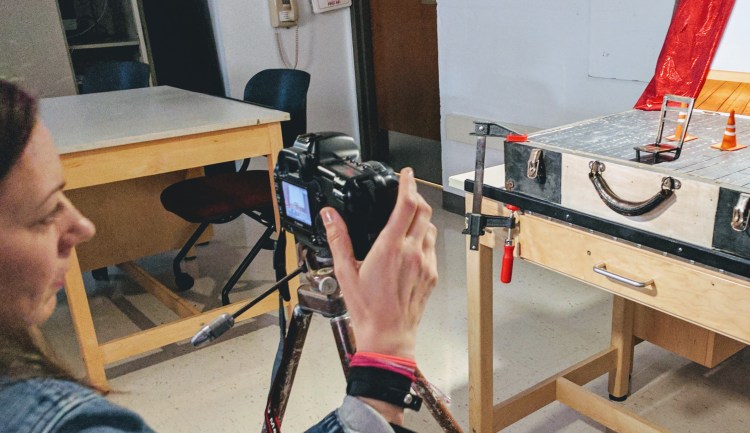
Chris gave us a rapid demonstration of how he shoots still frames on his Canon SLR and animates in Photoshop. After the demo he divided us into pairs.
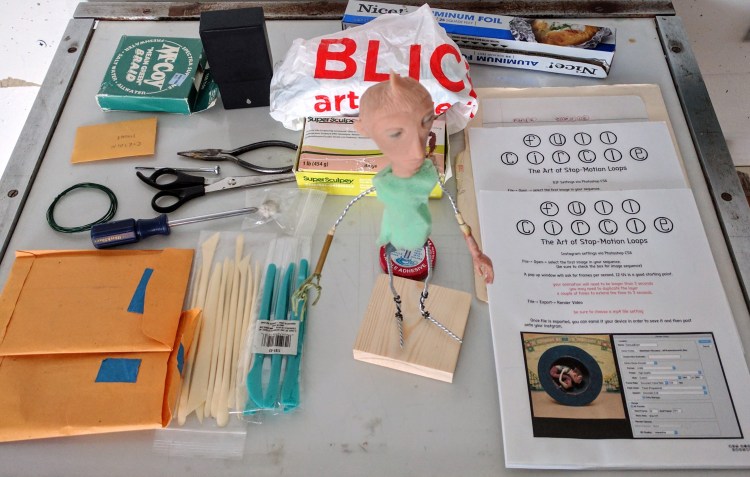
Wire armature, Sculpy, and Chris’s simple tools of the trade.
I got paired with Prof. Brytton Bjorngaard of U of Illinois, Springfield. We tore up scrap paper, bits of a Brillo pad, and using Chris’s model plus some masking tape and florist’s wire we made a film. Our 20-frame film is so extremely short that by the time you say the title, Professor Cigar, it is starting over. See below:
It was a wonderful learning experience. I was lucky to work with Brytton, a whiz at both analog and digital media. A one-woman art and design department, she has taught animation and everything else. She ably used Photoshop’s Healing Brush Tool to clean up the frames where the Professor’s stray wire was showing, see below.
Frame 7 before the wire was edited out.
Seven other short films by newbie animators were created by noon and then we had a mini-film festival. Thanks to KU Prof. Josh Miller, the Program Director for the 2017 UCDA Summit. He did a wonderful job planning the event. Kathy Sue Traylor, the CD Dept Office manager, did a great job at event planning. The wine tour was a hit. Even I, a designated driver, enjoyed it. Nearly 100 conference attendees came from all over the country, a few even flew from China for the event.
Prof. Summer Doll-Myers focusing on a chair for her film.
Do visit Red Nose Studio and check out more wonderful Lo-Fi animation here.
Our last blog post featured recent illustration grad Meredith Shriner. Chris Sickels signed The Secret Subway, one of his children’s books for Meredith as Prof Cunfer looked on. His books are as marvelous as his animations and another way to become acquainted with his extraordinary imagination.
Children’s books illustrated by Red Nose Studio.
There was more to the UCDA conference, but Chris’s workshop was a high point. We will leave you with a a photo of KU CD grad, James Pannafino, now a prof of Interactive Design at Millersville U of PA. He worked with Prof. Denise Bosler, chair of the KU CD Dept. Believe me, they made this little bellhop hop!
Chris Sickels keeps busy making award-winning illustratios. He only does one or two workshops a year. If you ever have the chance to participate in one, do it!
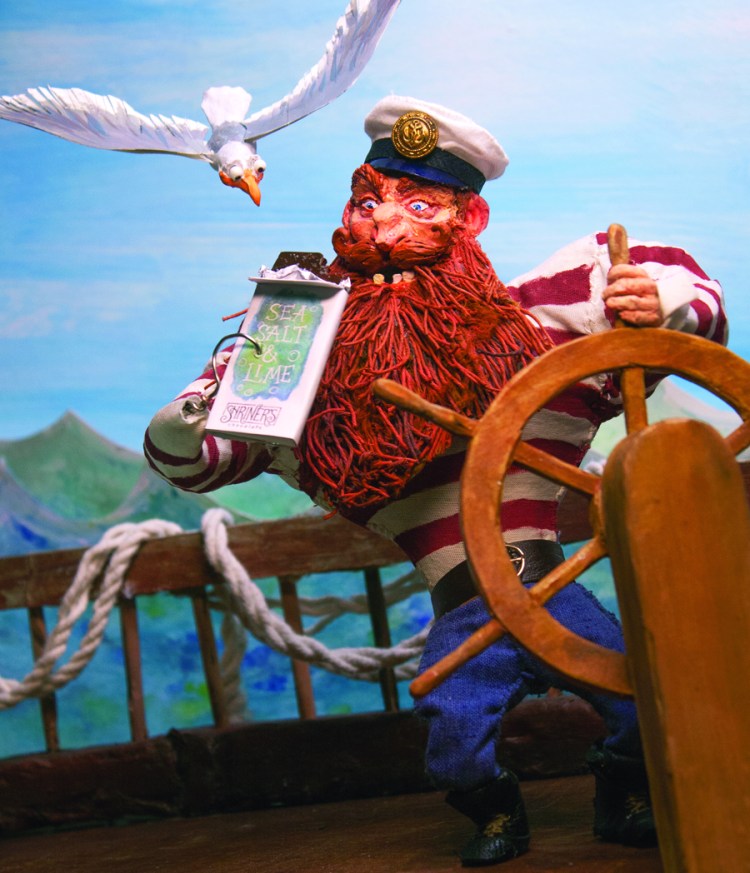
Each year Kutztown University presents awards to the best of our Communication Design Graduates. This year the illustration honors went to Heather Fox and Meredith Shriner. Meredith Shriner’s 3-D sailor, above, graced the poster of the K U Children’s Literature Conference. Created under the tutelage of Prof. Elaine Cunfer, it has been selected for exhibition at the Society of Illustrators, NYC.
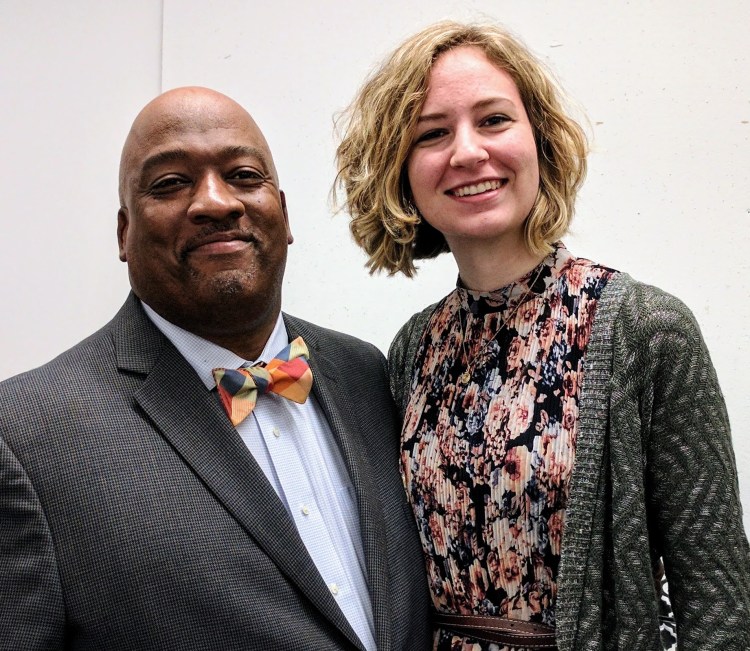
Meredith won the Terry Boyle Award for the most improved illustrator. Terry Boyle was a student a Kutztown whose life was cut short by a car accident on RT 222 back in 1984. Terry had ambitions to be a children’s book illustrator and so her family and friends endowed this award in her honor.
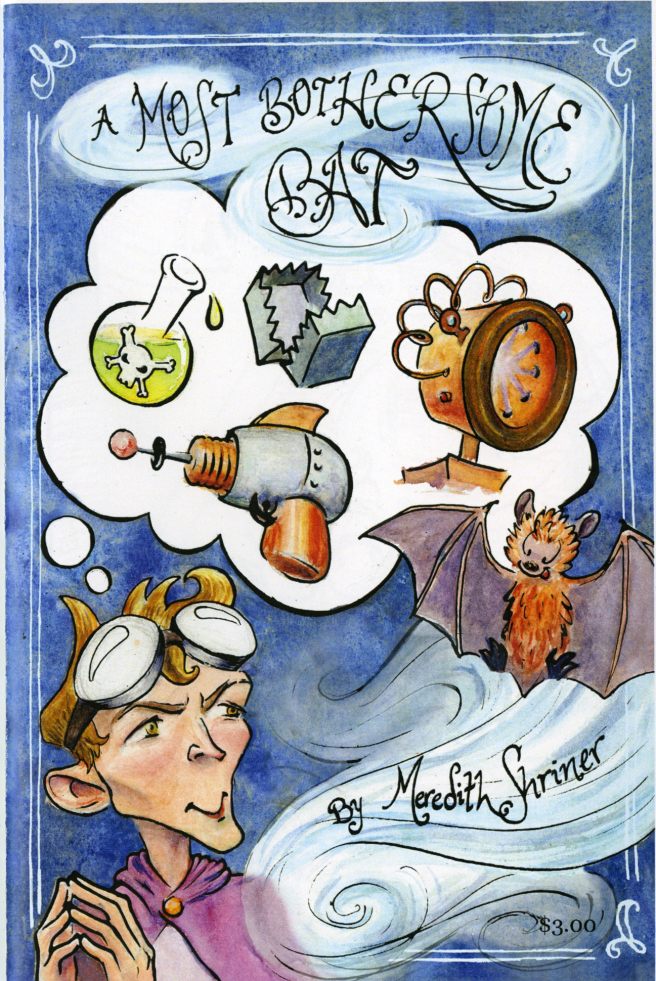
Meredith did a wonderful zine for last year’s MoCCA, Museum of Cartoon and Comic Art event in NYC. Another memorable zine was made by Heather Fox. Heather won 2017’s Don Breter Award for the outstanding student illustrator.
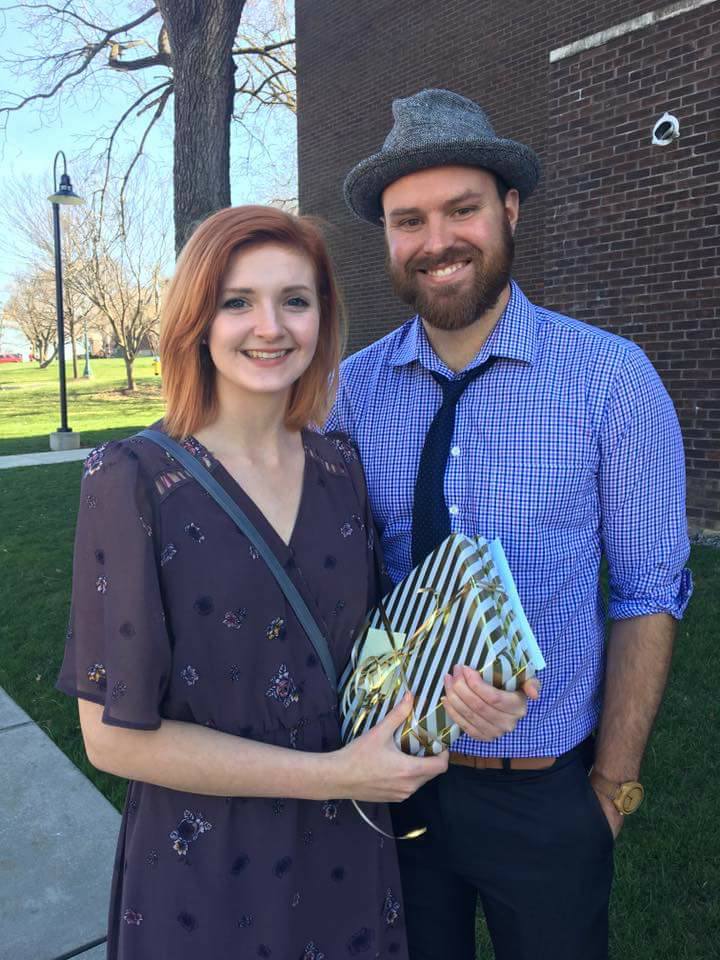
Heather Fox and Jonathan Stutzman, photo from Facebook.
Heather, from Lancaster, PA, did a culturally appropriate illustration for her poster of the PA German colonial publisher, Peter Miller.
Heather has some great news that was revealed last month on Publisher’s Weekly site.
In 2015, Heather and Jonathan Stutzman reworked one of Rudyard Kipling’s “Just So” tales, The Elephant’s Nose. Using Amazon’s print-on-demand publishing service, CreateSpace, they turned it into a real book, available here. As you can see from the brief notice above their next book will be a big deal published by Putnam.
Words by Jonathan Stutzman, art by Heather Fox
Don Breter, by the way, was the chair of the Communication Design Dept in 1989 when I got hired. He was an excellent draftsman and calligrapher and a wonderful man.
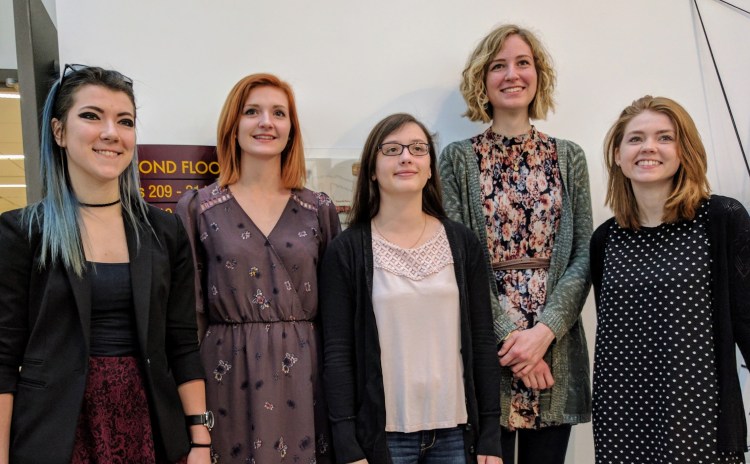
Here is a photo of all 5 Communication Design Award winners. Left to right: Graphic Design Award winner Jamie Hubert, Heather Fox, Interactive Design Award winner Alicia Wrye, Meredith Shriner, and Dianne V. Dockery Advertising Award Ciara Sweeney. It was noted this is an all female sweep of the awards. Since the majority of our Communication Design class is female, this should not be a great surprise. Excellent work all around. We expect great things of them all.
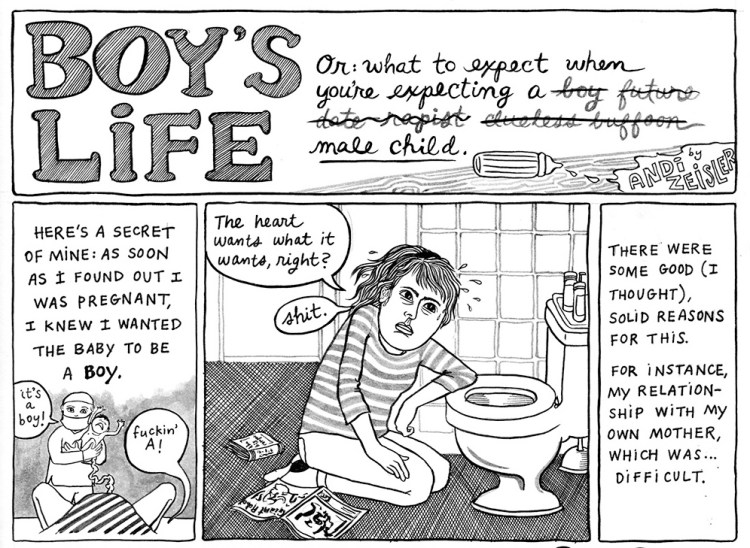
Joan Reilly makes comics. A established illustrator she moved last year from Brooklyn to Kutztown. Imagine that! She is co-editor along with Shannon O’Leary of the acclaimed comics anthology, The Big Feminist But. Originally published via Kickstarter, the book has been republished twice by Alternative Comics.
An exhibition of artwork from the book is now appearing on the walls of Eckhaus Gallery, 157 W. Main, Kutztown, PA. The opening reception is Saturday, April 8, 6-8pm. Info here.
The show features work by many important artists including: Gabrielle Bell, Jeffrey Brown, Vanessa Davis, Shaenon Garrity, Justin Hall, Shannon O’Leary, Sarah Oleksyk, Virginia Paine, Mark Pritchard, Joan Reilly, and many more.
Jeffrey Brown lent his original sketchbook with the comics pages he contributed to the anthology. Observers will note he is one of the few cartoonists who draws his work smaller than the size it will be printed.
KU Student Rachel Wessner looking at Joan Reilly’s original art.
The artwork on display at Eckhaus beautifully drawn. It is clear that the artist care about their work. Kutztown may not become the next Brooklyn, but we are fortunate to have this exhibition in town.
My illustration students, some of whom have ambitions to be cartoonists, had the chance to see the show thanks to Olivia Knowles, one of the Eckhaus directors. My students seems particularly impressed with the story dealing with gender identity by Virginia Paine, below.
As Heidi McDonald of Publisher’s Weekly says on the back of the book, “The Big Feminist But Kicks Ass.” If you can’t make the opening, the show runs until April 16, or ask for the Big Feminist But wherever books are sold.
Collier is a stellar illustrator, best know for his vibrant collage work focusing on the African-American experience, such as Uptown and Rosa. He’s won The Coretta Scott King Honor and Ezra Jack Keats Awards. Trombone Shorty, image below, is a 2016 Caldecott Honor winner. Collier is only one of the four award-winning authors and illustrators coming this year.
We’ll see Caldecott Medal winning illustrator/author Lauren Castillo. In a starred review, Publisher’s weekly praised the artwork above- “Castillo conjures security with her trademark warm colors and solid black contours .” Castillo is a graduate of NYC’s School of Visual Arts and, I think, she shares a Harrisburg studio space with Jonathan Bean, who was a hit at last year’s conference.
From the Animated series Max and Ruby based on Rosemary Wells’s books.
Rosemary Wells is a superstar, perhaps best known for Max and Ruby picture books. Max and Ruby became a hit animated series and there is even an educational app based on the pair.
Rounding out the Keynote speakers is nonfiction writer Deborah Hopkinson. She is the author of over 50 books ranging from picture books to middle-grade history titles.
Besides hearing these superstars, conference attendees have a chance to join in informal chats with Aubry Joi Cohen and me.
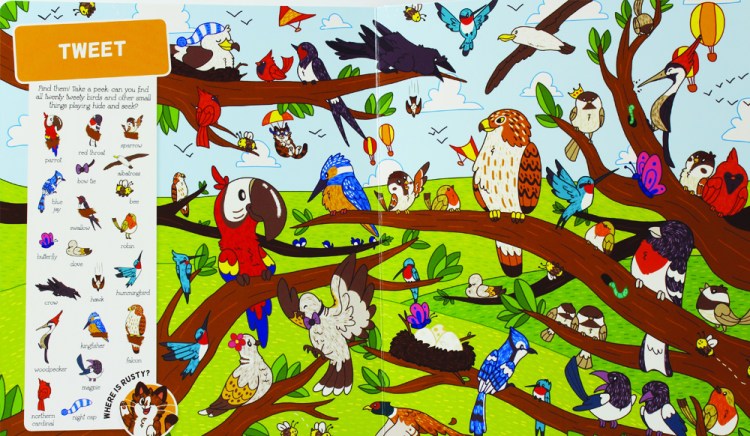
Art by Aubry Joi Cohen
Aubry Joi Cohen is a 2014 grad of Kutztown University’s Communication Design Dept.She did a great job illustrating Seek and Find Animals Around the World while keeping her day job. Aubry is currently a designer for Artskills, an educational art firm specializing anything related to posters: poster markers, poster lettering, and decorative items like stickers. Aubry will talk about how her first book came about. She was contacted by Auzou, a French children’s book publisher, because of her artwork online.
Cover art by Aubry Joi Cohen
Lastly, I will be there. Toon Books has declared my books are a series,- the Giggle and Learn series. My latest is Something’s Fishy. Publisher’s Weekly wrote: “Like McCloskey’s We Dig Worms!and The Real Poop on Pigeons!, this overview of fish big and small (mostly small) takes an irreverent approach to its subject.”
All the books will be sold at a conference discount (20% off) at the KU bookstore through April 1. The full schedule for the Saturday conference is here. A number of activities will be available free to the KU student and faculty community on Friday, March 31, info here.
KU students may attend the full conference Saturday for a reduced fee of $10.00! You can show up Saturday with your student ID and register by 8:30am in the Student Union Building.
What to do? Enrollment is down 20% at Kutztown University from its peak. YOW! Kutztown is the best school for art and design in the state of PA. Full disclosure: I teach at KU.
Illustration by Kathi Ember, Kutztown grad.
Let’s crunch some numbers: Private art colleges are great, but cost a fortune. Take PA Academy of Fine Arts,- A BFA from PAFA? Four years tuition is $150,584. According to Payscale.com, median salary for new illustrator, 1 year out of college is $37,638.
Code Name Kids Next Door was created by KU grad Tom Warburton
Kutztown’s annual tuition and fees for instate students is $9,618 X 4 years = $38,472. So a PA resident saves $112,000 over a private school. One could build a pretty fine studio with that money, or get an MFA.
What about Out-of-Staters? Glad you asked.
Effective immediately, Kutztown University is offering a 40% tuition reduction to all admitted out-of-state students. This reduction will be offered to non-PA residents upon acceptance to KU.. This makes the current out-of-state tuition price roughly $10,850, a savings of over $7,000 from last year.”
Count The Monkeys illustrated by KU grad Kevin Cornell
I think this is great news from our Admissions Office. I am a proud New Jersey native, but Kutztown is now a bargain for Jersey students.
Book covers by KU grad Tom Hallman
Does it make sense to go to art school at all? That is a bigger question. I tell students being an illustrator is like being an actor. There are many people with the requisite skill set. Some have the talent, luck, and personality to succeed. A good number of grads have gone far with Kutztown degrees.
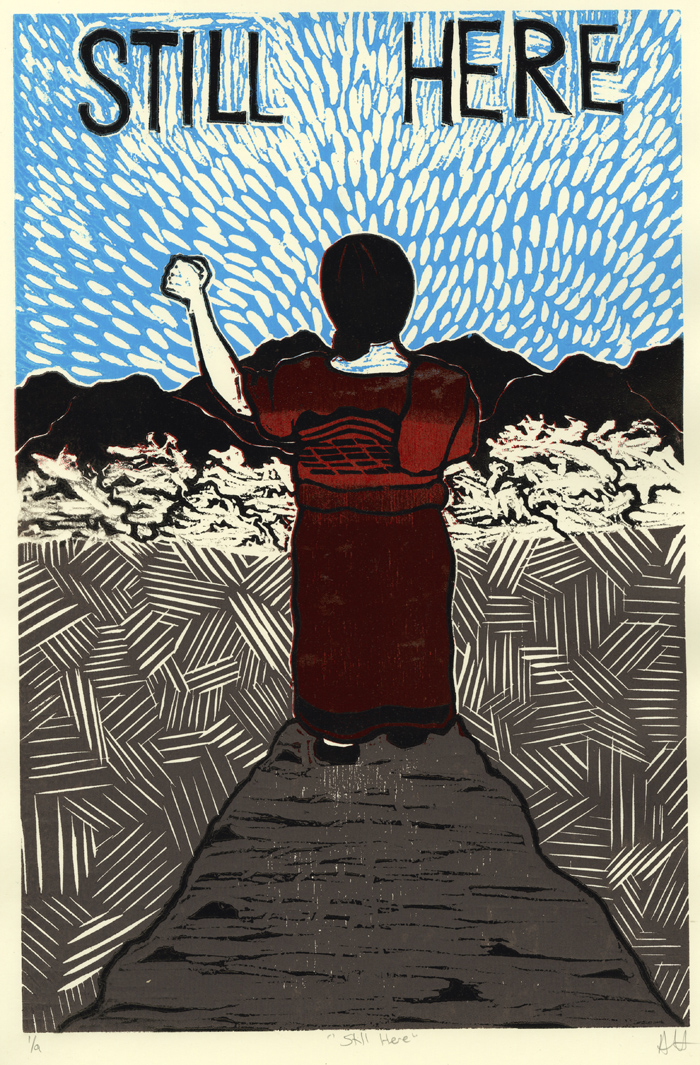
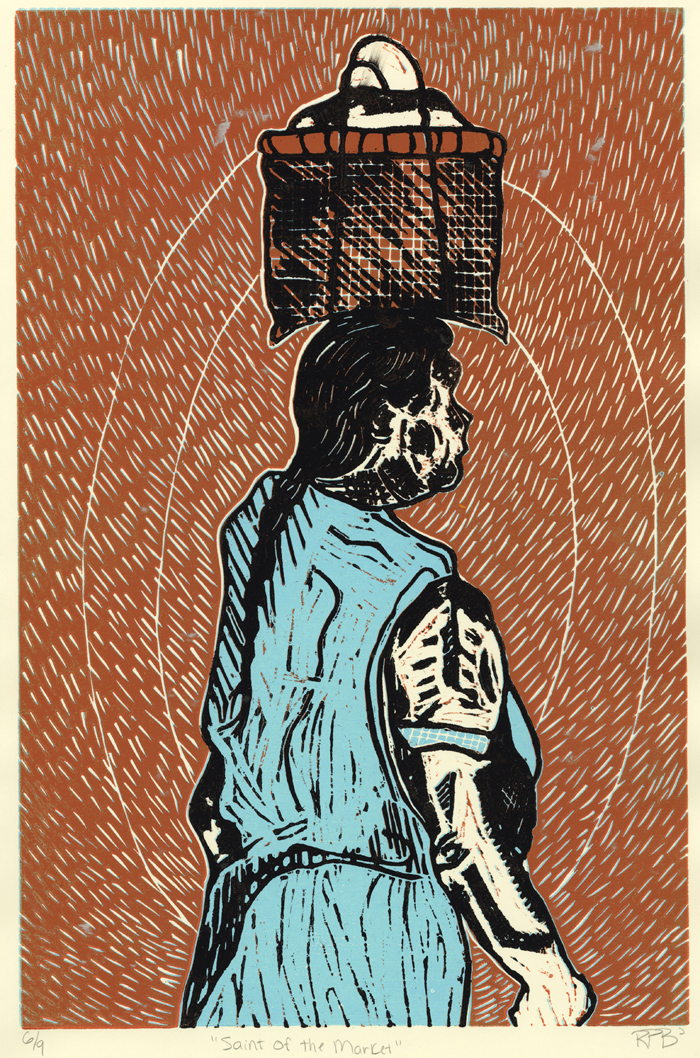
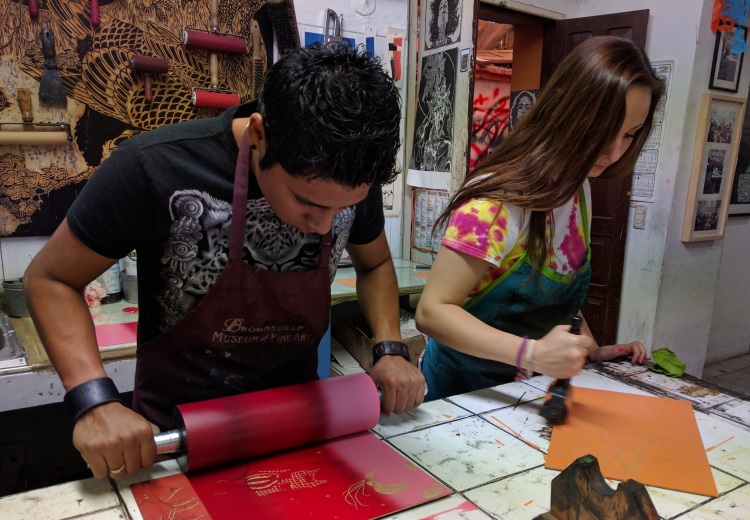
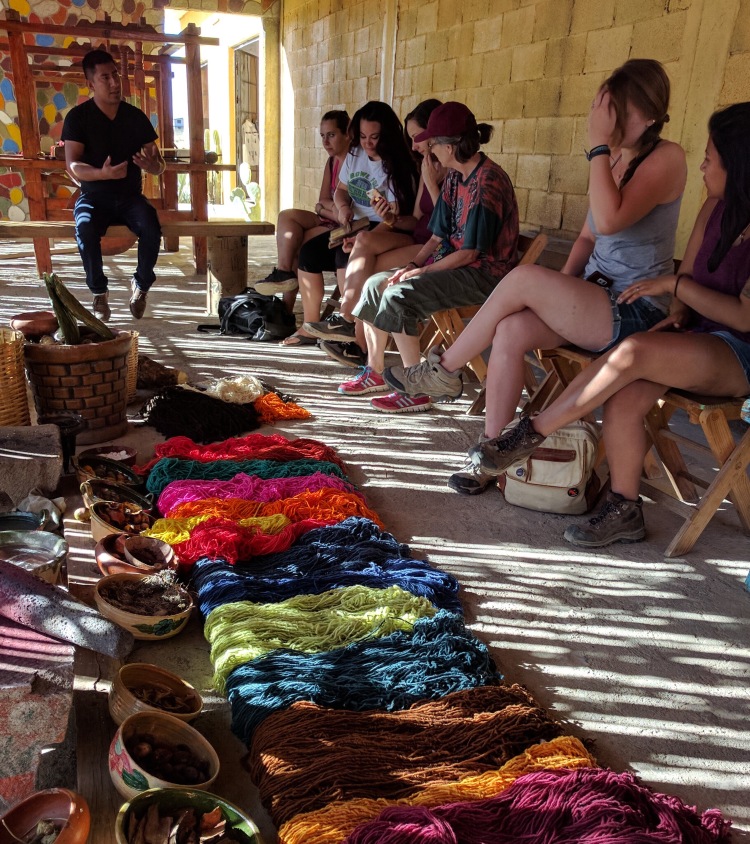
Puentes, Si! Muros, No! –Bridges, Yes! Walls, No! is at Kutztown U’s Student Gallery until Feb 9. Five Kutztown art students joined me for a 17-study abroad course in Oaxaca, Mexico. We just got back last week. Woodblock prints they made in Mexico are on display along with prints from prior Mexico study-abroad students and noted Mexican artists. I am proud of this gutsy group of students, all female, and their successful cultural exchange. We worked in Taller Chicharra with Alan Altamirano, the energetic young artist who came to Kutztown last year.
Saint of the Market by Rebecca Parsons, a sculpture major.
I say gutsy because even in the best of times, college students typically prefer to study abroad in English-speaking countries, think Britain, Ireland, Australia. I’ve taught 4 courses in Mexico, every year it gets harder to recruit students. Last year, as you may have noticed, Donald Trump began his campaign with demeaning insults to Mexico. That said, these students managed to have a rewarding cultural exchange with warm and hardworking people of the great country of Mexico.
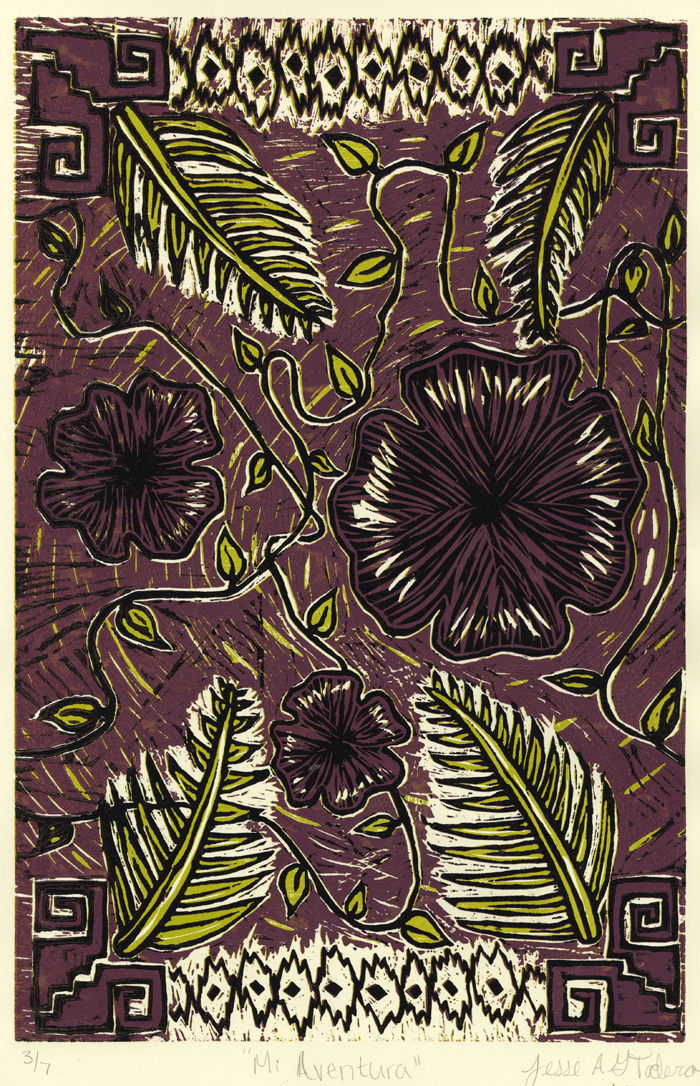
“Mi Adventura” My Adventure, by Jesse Todero
Jesse Todero, a freshman majoring in Art Ed, was taken by flowers blooming in January. Most days the temperatures got into the 80’s.
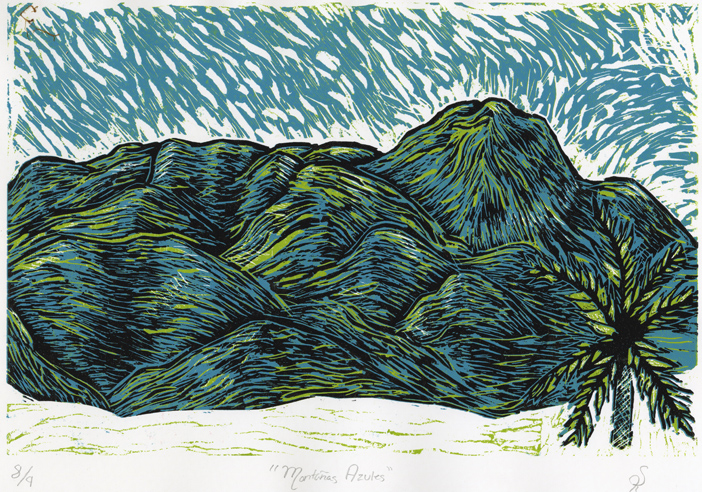
Alan Altamirano and Miranda Pells inking plates in his studio.Weaver in Teotitlan del Valle explains natural dying of wool“Montañas Azuelas” Blue Mountains by Samantha Kahres
Samantha Kahres fell in love with the mountain landscapes of Oaxaca from the moment we landed. Patt McCloskey made a print, too, based on the balloon sellers in Oaxaca’s zocalo, or center square.
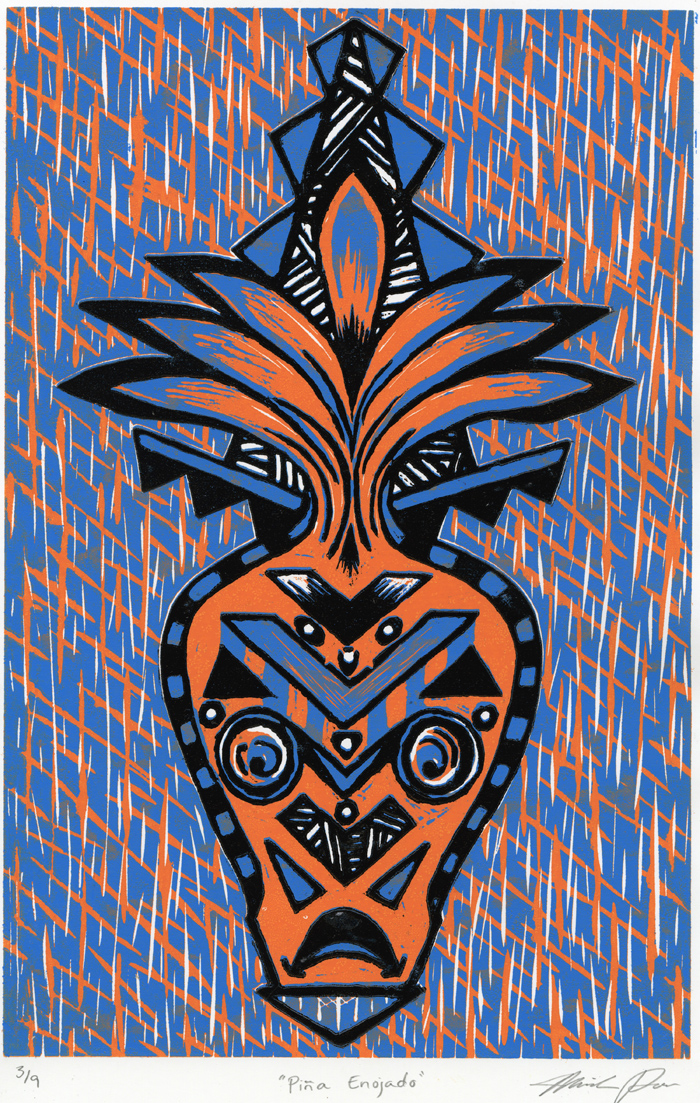
“Globos Sobre Oaxaca” Balloons over Oaxaca by Patt McCloskey“Piña Enojado” Angry Pineapple by Miranda Sells
I am not sure if it was the hot sun and tropical fruits that influenced Miranda Pells. It might have been a motif she saw on the textiles or pottery we studied.
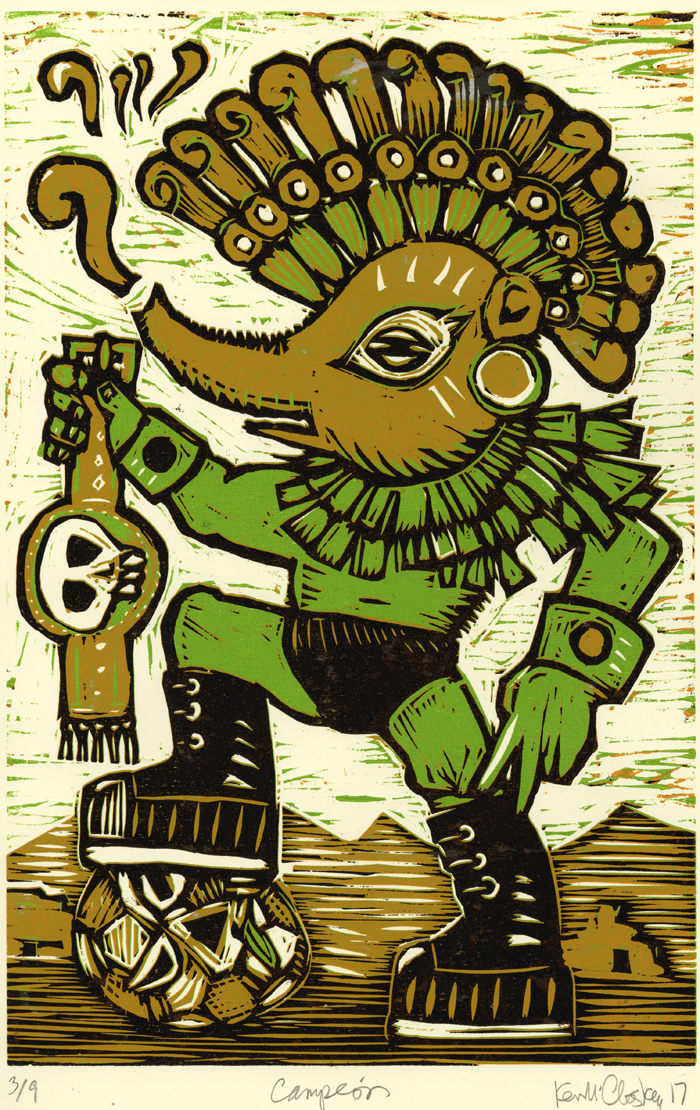
Campeón by Kevin McCloskey
My piece, above, is based in part on a pre-Hispanic sculpture I saw and the night we spent ringside at the Lucha Libre.
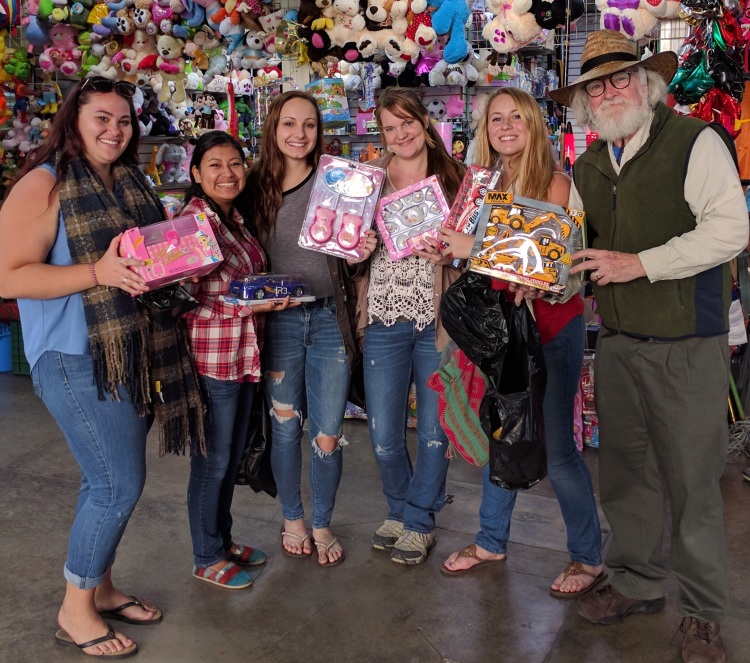
Jesse Torero, Amanda Held, Miranda Pells, Rebecca Parsons, Samantha Kahres and me in Oaxaca’s market. We bought toys for tots and got free ringside seats at Lucha Libre.
It is my sincere hope more U.S. college students will have the courage to visit Mexico, Latin America, Asia, Africa and the Middle East. It is a big world. We need to build bridges, not walls.
As always, all images copyright the individual artists. Opinions expressed are mine and not those of Kutztown University.
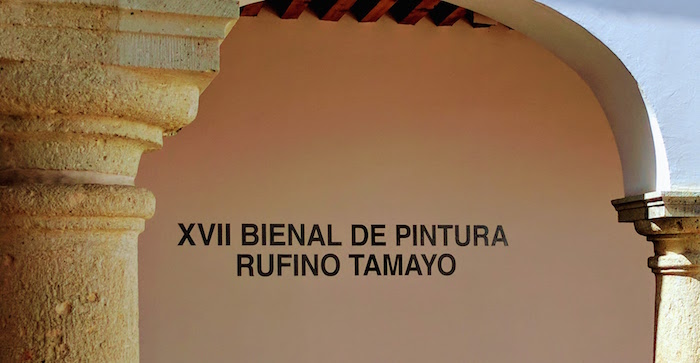
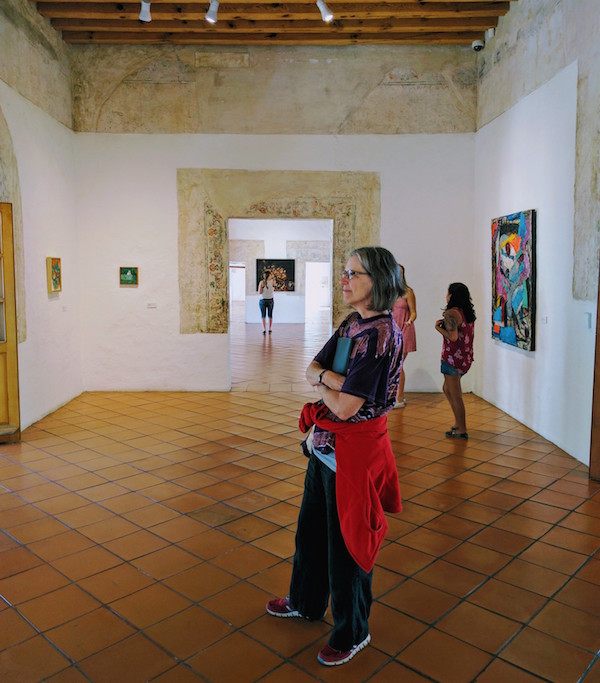
MACO stands for Museo de Arte Contemporáneo de Oaxaca. We had the good fortune to visit during the XVII Rufino Tamayo Biennial Exhibition. Tamayo, born in Oaxaca, was one of the great Mexican painters of the 20th century.The exhibition of 50 artworks ranging from abstraction to realism is a juried show of painters working in the region.
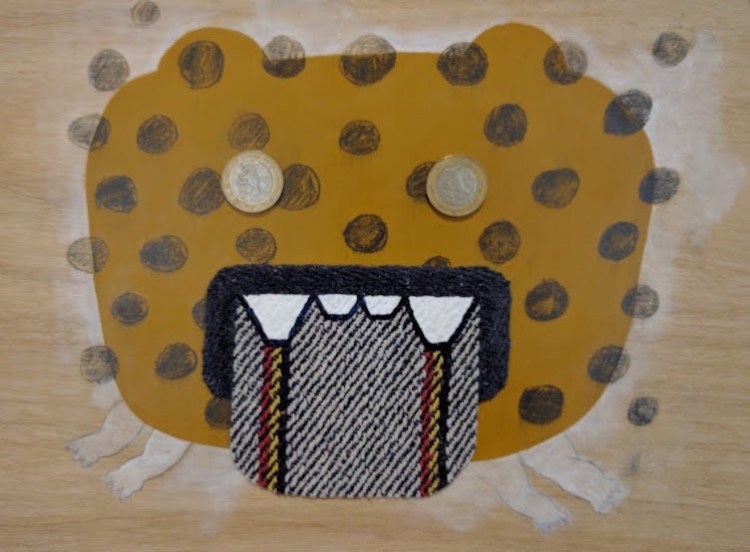
The witty mixed-media work by Victor Suiser, above, is called “Tepeyollotl ruge con la voz de cuatrocientos jergas” Roughly translates, maybe, to “The Jaguar/Earth God roars with the voice of 400 hoodies.” (thanks, Google) Those are ten peso coins for eyes.
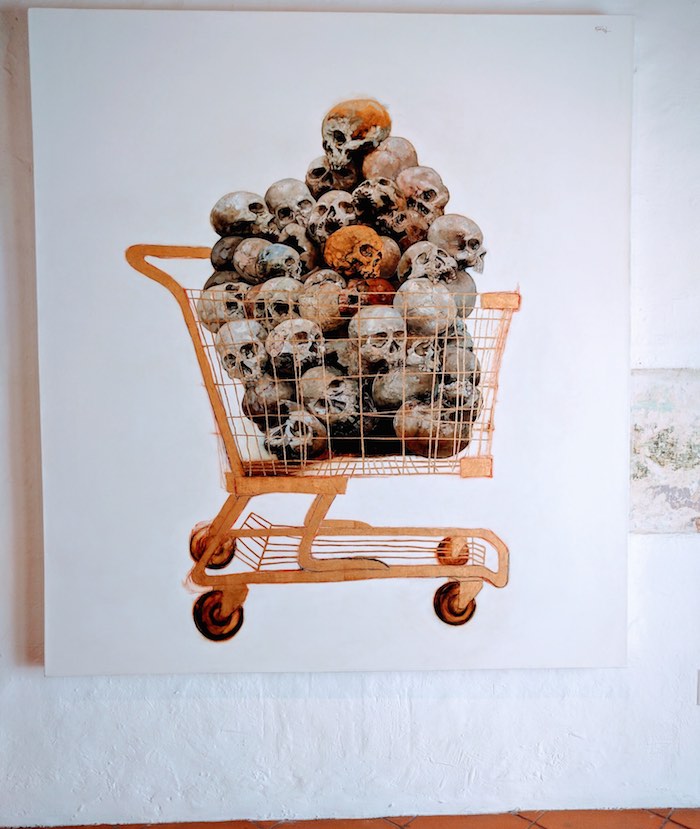
Suave Patria by Sergio Garvel 2016
The work above, Suave Patria, Smooth Country, by Sergio Garvel is oil paint and gold leaf on canvas. It recalls the tzompantli , or skull racks of the Aztecs and Maya. The shopping cart might reference the carts protesters filled with stones during Oaxaca’s street battles of 2006.
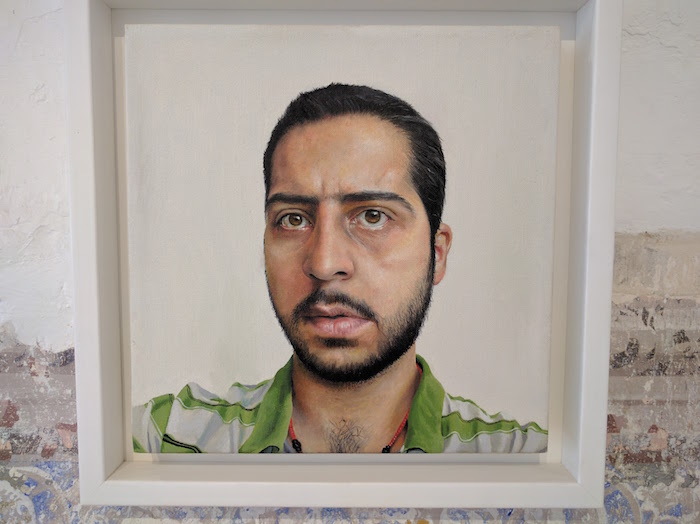
The art students with me pointed out their favorite paintings. Several were drawn to Fernando Motilla Zarur’s photo-realistic self-portrait, oil on canvas, 2015. MACO is worth a visit no matter what is on the walls. The historic building was long ago the home of Spanish nobility. It was said to have been a home of the Conquistador Hernando Cortez, though historians now dispute that idea.
Autoretrato by Fernando Motilla Zarur
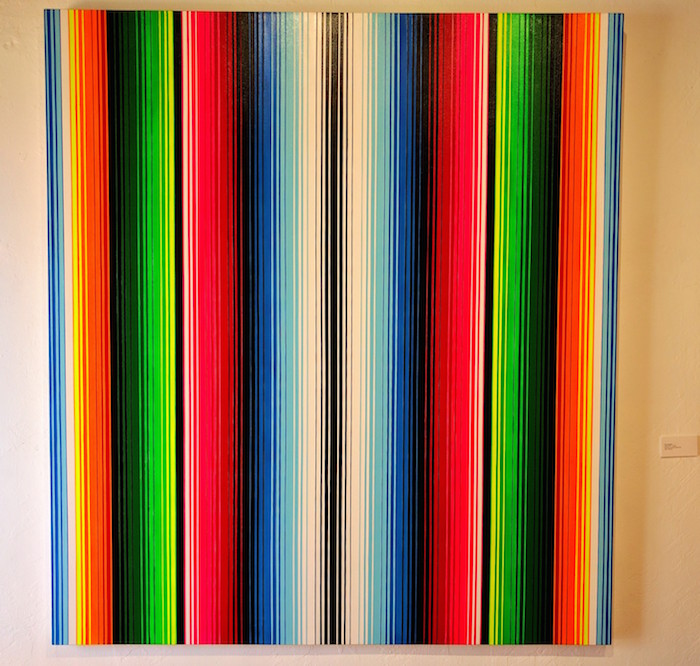
Fragments of 17th century murals adorn the walls. You can see them beside Zarur’s self-portrait(above). Sarape #1 , (below) by Paul Muguet, 2016, was done with spray paint and masking tape. This homage to the humble blanket design in the context of a contemporary art museum is eye-poppping and provocative.
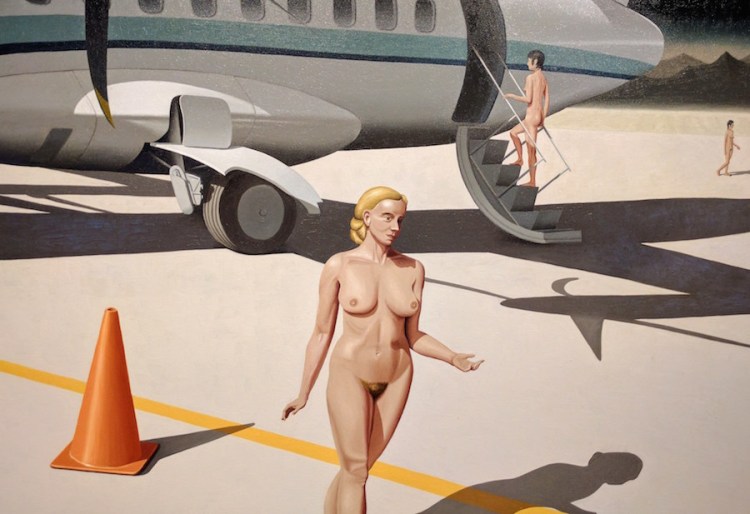
Statuesque nudes on a runway is a jolting idea for a narrative painting. That is the theme of Samuel Melendrez Bayardo work, “El Aeropuerto de Paul,” oil on canvas, 2015.
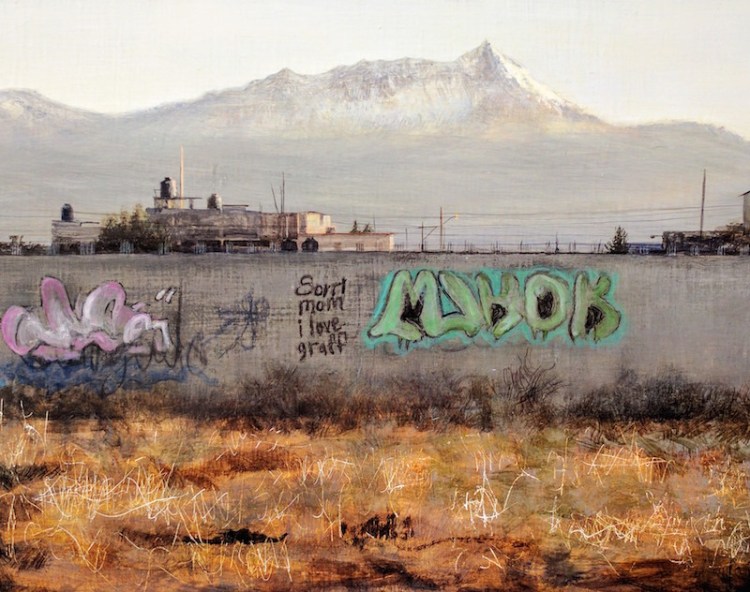
Detail of oil painting by Samuel Meledrez BayardoDetail of work by Veronica Conzuelo Macedo
Veronica Conzuelo Macedo’s “Sorri mom I love graf” (detail, above) is a 21st century spin on the classic Mexican landscape. It is done in egg tempera on linen over wood.
This is just a small sample of the remarkable art in the exhibition. Some images were gritty, some witty, and few, I admit, I could not appreciate. Overall, however, I was struck by the keen technical skill and intelligence of the selected artists.
Second Floor Gallery at MACO
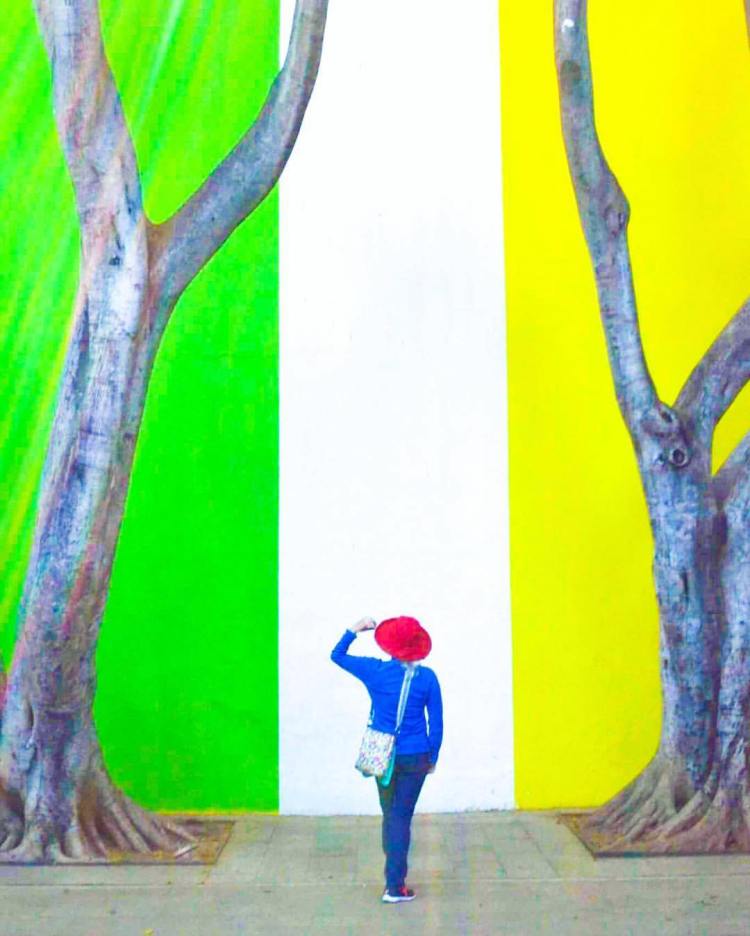
MACO’s facebook page will have details about hours, and current exhibitions. I will leave you with one last image – A photo by Kutztown University student Samantha Kahres of a tourist admiring Siempre Verde (Always Green) by Anja Gerecke in MACO’s back patio.
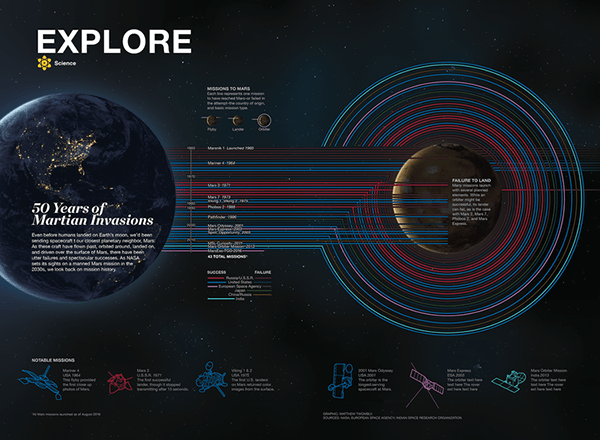
KU Grad Matt Twombly posted on Facebook that he had left his job at National Geographic and begin freelancing in 2015. He was a stellar student and won the Don Breter Illustration award when he graduated in 2008. So, I was curious about his transition and sent him some questions.
1. What was your job title at National Geographic?
Matt Twombly: Graphic Editor. The job was basically designing, researching, and illustrating graphics. One project might call for a data visualization of some kind, say a chart, diagram, or graph, and another might be better suited for an illustration. But I left that in December 2015.
2. Why did you leave NG? Did the recent acquisition by Fox have anything to do with it?
In short, no. It was a hard decision leaving the Geographic. At times I felt like I was crazy and at other times a transition felt necessary. Basically, it came down to reasons outside my professional life. I wanted to buy a house and set up the foundation for starting a family. DC is great, but expensive. Plus, my wife was offered a position up here (PA) in her old school district, which got her out of teaching in DC public schools, something pretty much unsustainable for even the most dedicated. So we took advantage of that offer to move back to PA.
Coincidentally, the merger with Fox and creation of what is now National Geographic Partners happened just as I was leaving, but it wasn’t a motivating factor for me. The magazine was facing some big changes and up against some big challenges, but nothing that the entire magazine publishing industry as a whole wasn’t already up against. With the merger, some good talent left, or was pushed out, but I was still thankful for the job I had. Not to mention the fact that the staff there, and the graphics team especially, was moving ahead and would keep doing some great work.
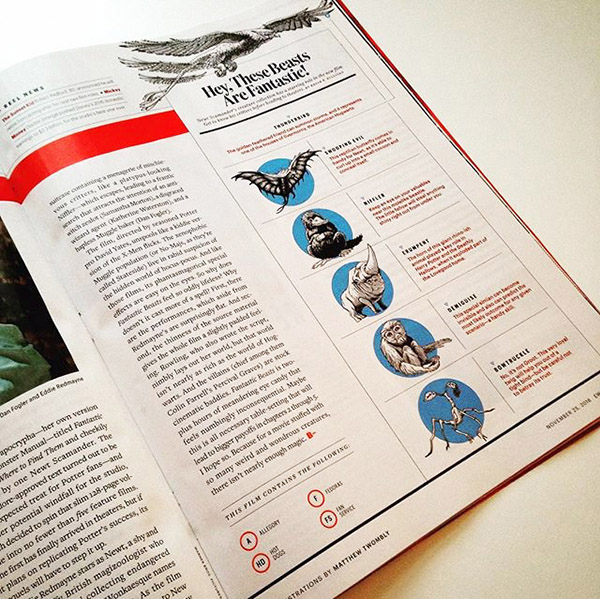
Fantastic Beasts for Entertainment Weekly, 2106
3. What did you learn from freelancers at National Geographic?
The most important lesson I learned is what it’s like for the editor on the other side, – hiring freelancers. That was me for a time. A lot of editors find freelancers they like and keep going back to them again and again. Freelancers we worked with were known for their specialty, either a specific style or a specific subject matter: space art guy, 3D guy, paleo art guy, etc.
Freelancers we used regularly had already established themselves in a particular specialty. But they we all very professional, never missed deadlines, always delivered and didn’t push back on feedback from us. If you get a chance to do a job, do it well and you’ll be asked again some day.
4. How did I you get your first freelance job?
Well, some of my first freelance jobs came while still at the Geographic. Someone might see my work in the magazine. Or word of mouth. Mutual friends or colleagues might recommend me. In my case, the first big job, a poster for the Parks Service in Alaska, came from an ex-employee I had known from the Geographic who already had her own working relationship with NPS.
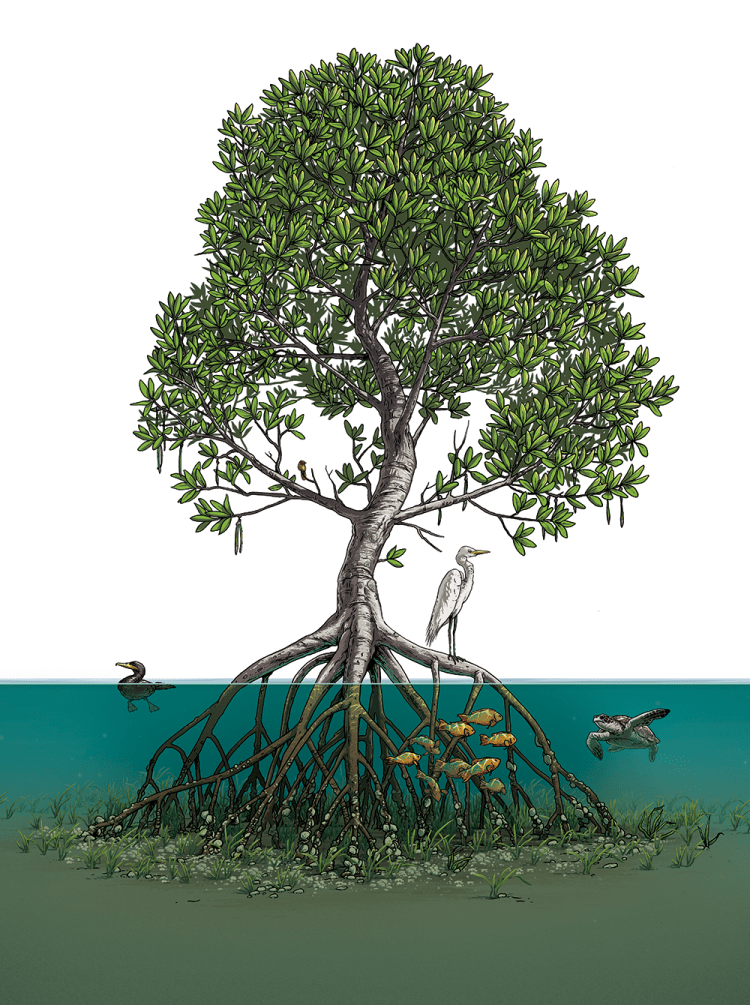
Poster for National Parks Service, Alaska, Archaeology Month, 2016
Not much has changed in how I land jobs now. How I get jobs from National Geographic now probably goes without saying. They know me, know what I’m good at. But I’ve been able to work with some new clients in my first year freelancing. Most of them just by introducing my work to the appropriate editor/art director. Obviously, a lot of people know the Geographic’s work and some are already familiar with my work, so that gives me one advantage. Also, some people from the Geographic (or my first publication, Science) now work at other publications. So in most cases I’ve just sent email introductions.
5. How much time do you spend on self-promotion?
Probably not enough. It can be awkward reaching out, especially to total strangers. And it’s discouraging if you fail to get a response. While I was on staff at NGM, I’d occasionally get a mailer or mass email from illustrators hoping to get work. Most of the time, that didn’t have a big effect on my hiring an illustrator. Part of that is because NGM requires such niche work. But just as much because editors already had a trusted pool of freelancers to draw from. Breaking into that is tough. For that reason, as a freelancer I opt for personal email introductions with a link to my website.
These days most of my self promotion is through social media (Instagram and Twitter) and the occasional email self-promotion.
6. Did typography classes from Kutztown pay off?
Ha, I’m probably the wrong person to ask. At the very least, I think it’s important to have an appreciation for type and all of its crazy intricacies. KU classes were certainly my introduction to that.
The biggest one is continuing with the professional relationships I’ve made this past year. Hopefully expanding that net wider to more publications. I’d also like to diversify my sources of income. What I mean is find other things besides illustration for publications to make money for myself. Whether that means making handmade goods, collaborating with other businesses, or even teaching in some capacity, I’m open to it all. One thing I’ve gotten into is making art prints to sell on Etsy or Society 6. It’s small potatoes now, but it’s fun and personally gratifying. I’d really like to turn that into something bigger!


 Take 2017 grad Heather Fox, for example. She made a zine that debuted at MoccaFest 2016. Then she self-published via Amazon’s CreateSpace. She created a retelling of one of Rudyard Kipling’s Just So stories, The Elephant’s Nose. She collaborated with her boyfriend Jonathan Stutzman on these projects. Now they have an agent and a real book deal with Putman books for Butts Are Everywhere! I wrote more about Heather and her talented classmate Meredith Shriner here.







 The insanely-talented Chris Sickels came from rural Indiana to rural Pennsylvania with a suitcase full of strange characters. He let me play with his dolls. – Me and a roomful of artists attending his workshop for the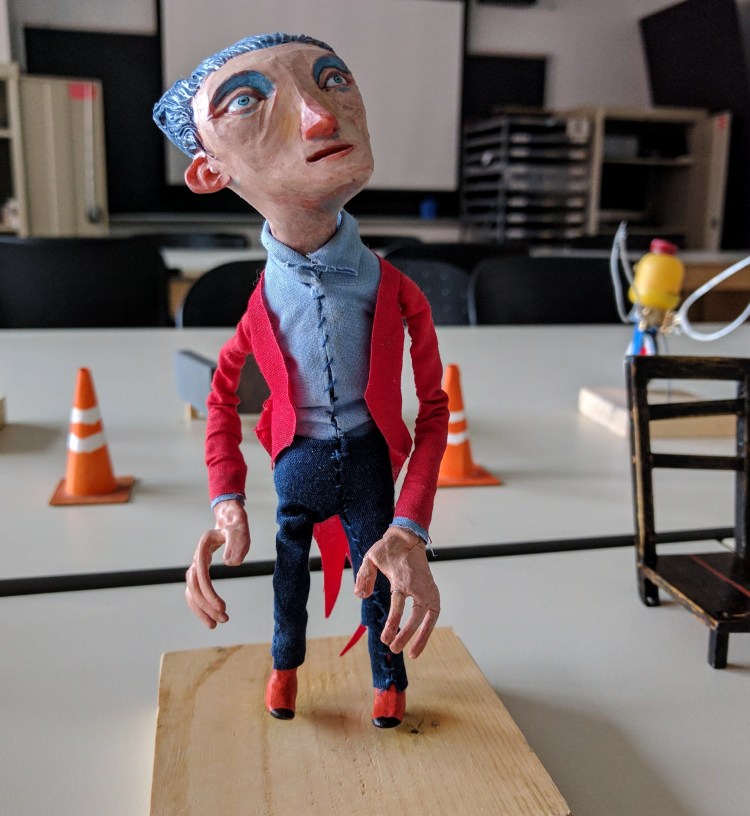


 Our last blog post featured recent illustration grad Meredith Shriner. Chris Sickels signed The Secret Subway, one of his children’s books for Meredith as Prof Cunfer looked on. His books are as marvelous as his animations and another way to become acquainted with his extraordinary imagination.