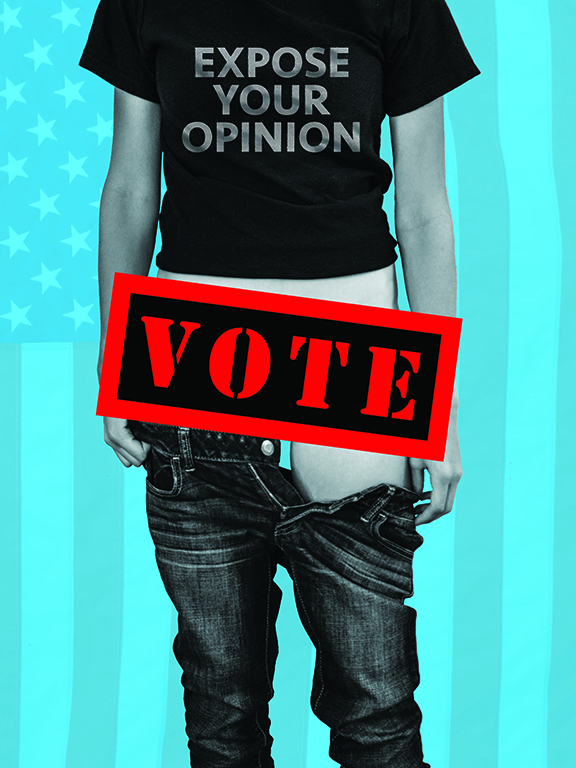
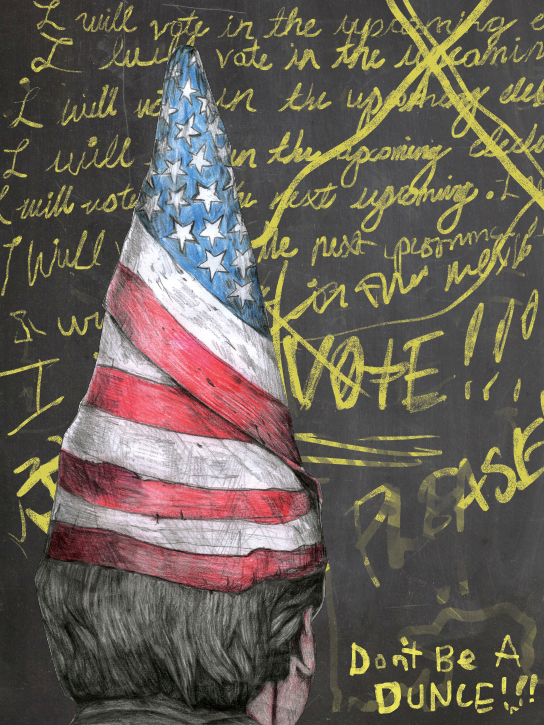
Prof. Holly Tienken’s Poster Seminar class has done some impressive topical work, Get Out The Vote posters. Here are a handful by select seniors: Cambrea Roy, Elaine Knox, Erika Mabus, Jamie Hubert, Julia Wolf, and Malachi Hall.
Elaine Knox
From the assignment sheet: ” The main objective of this project is to motivate citizens of the United States to GET OUT AND VOTE! You will design a NON PARTISAN poster—it is not about Democrats or Republicans, it is not about who is right or wrong, it is not about issues or policy, it is just about VOTING. Your poster needs to call the view to action.”
Erika Mabus
WHY HERE? WHY NOW?
According to Prof Tienken, “Sadly 18-24 year olds historically have the lowest voter turnout. Promoting the movement on a collage campus is one of the best, most direct ways to engage that audience. We are in the final days of one heck of a heated presidential campaigns, it is the perfect time to spread our message!”
Jamie Hubert
Let’s hope one of these posters inspires someone extra to exercise their civic right.
Julia WolfMalachi Hall
If you are on the Kutztown Campus, there are more of these on display in the Sharadin Lobby Gallery. Check it out
You have seen Ted Michalowski’s art on TV. He’s done courtroom reporting for ABC, CBS, CNN, all the major networks. He is an energetic part of the Scranton, PA art scene. When I say he is a ringmaster, it is not a metaphor, he has worked with the circus. His is a 4-time winner of the Electric City ‘s Best Visual Artist award. Once a month Ted takes over the New York’s Society of Illustrators to host their Sketch Night. He arranged recent the Gonzo Sketch night that celebrated the current Ralph Steadman exhibition. Steadman invented the visuals for Hunter S. Thompson’s stories in Rolling Stone that define Gonzo Journalism.
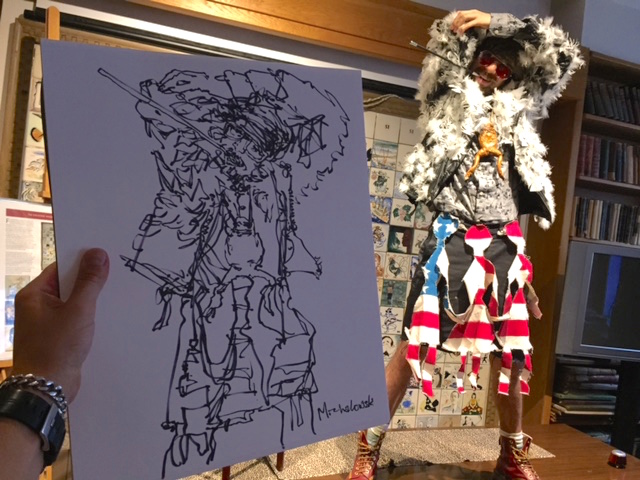
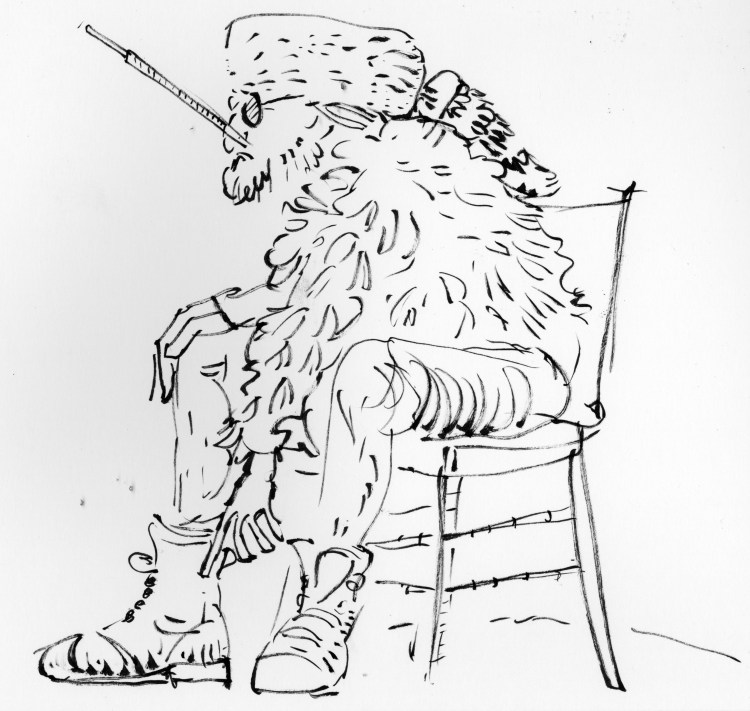
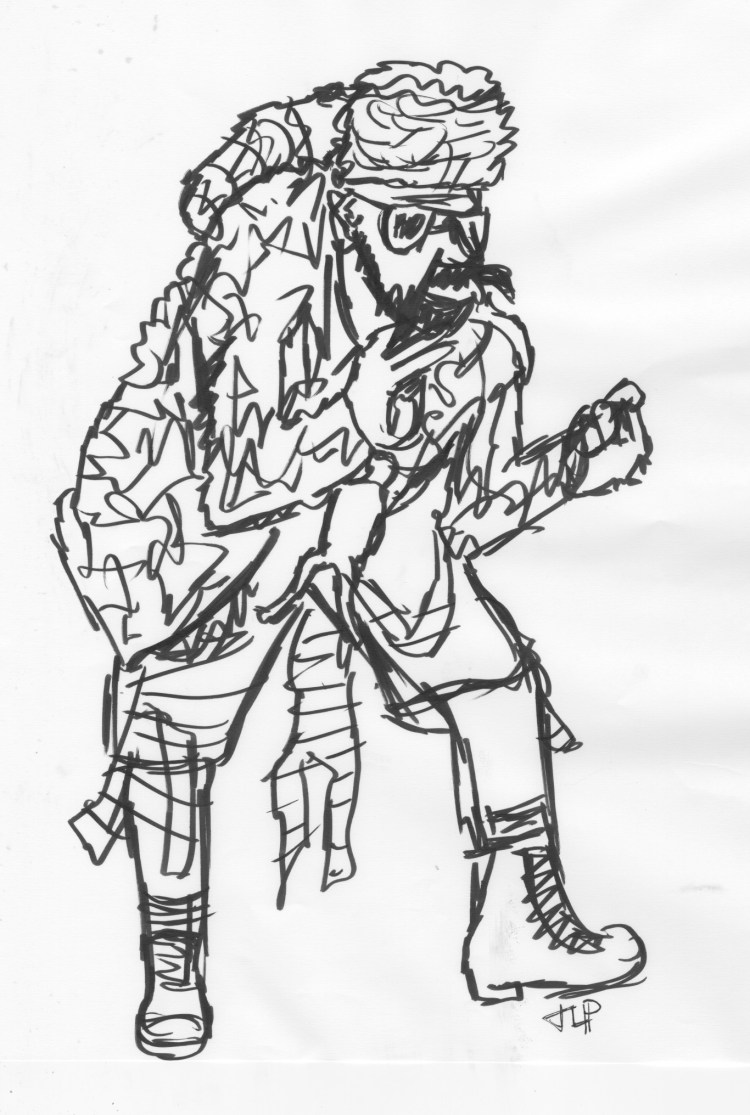
Ted recreated the Gonzo experience for 20 Kutztown illustration students. He brought the perfect Gonzo model, Ariel Krupnik. Ariel wore a coonskin cap, a feather vest, and what appeared to be an American flag kilt. A dead frog hung from his neck. Ariel leapt onto the conference table in the Society’s library and struck a pose. Ted’s bluetooth speakers blasted Elvis Presley’s Viva Las Vegas!
My 3-minute study.
Elvis screamed “Bright light city gonna’ set my soul on fire…” and Ted screamed over Elvis, “One more minute! New pose! Switch hands!” It was magic.
Ted Michalowski sketch of Ariel Krupnik
I first met my friend Ted at the Society of Illustrators. We sat at the same table at an ‘Educators who Illustrate’ conference. There was some gloomy chatter at the table about the state of education and illustration. A fellow prof was moaning how teaching ruined his illustration career. It happens. Not every career choice is win-win. Ted and I make a conscious effort to keep our conversations posi, shorthand for positive. Whenever anyone, myself included, complains about a lackluster student, we refuse to let the conversation end until we consider an amazing student.
Sketch by Jess Paley
One of my amazing students said Ted’s Gonzo drawing lesson was the highlight of her illustration life.
At one point Ted instructed the students to draw with their opposite hands. Then he had students pair up and two people drew on a single page with their opposite hands. I asked Ted where he had learned this mind-boggling technique. He told me it was brand new. He invented it that very moment with the Kutztown students. GONZO!
Kutztown Students in NYC photo by Kathy Sue Traylor
You too can draw alongside Ted at the Society of Illustrators. ($20 entry or $15 for students and seniors.) There is a rotating roster of great artists hosting the weekly Tuesday night event. There is often live music and always live models. Ted is there once a month. Check the Society of Illustrator’s sketch night schedule. Stay Posi.
Gonzo Sketch by Meredith Shriner
Some photos courtesy Ted Michalowski, Thanks. Thanks also to the wonderful staff at the Society of Illustrators, and to Prof. Ann Lemon for organizing the field trip.
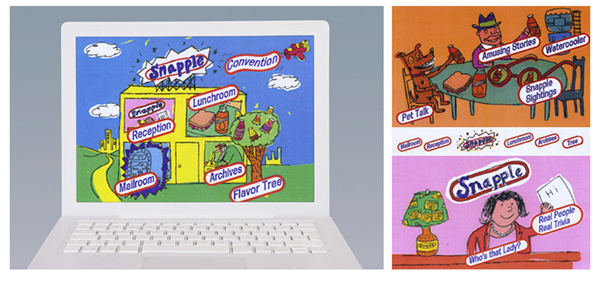
He may not be a household name, but you have seen his work. Dane Lachiusa drew the cartoons that appeared on your Snapple caps, sketched goofy images for Nickelodeon’s earliest website, and drew cartoons that covered the walls of your local Starbucks. He also drew the quirky images you may have noticed on your large soda cup at Blimpies.
Dane Lachiusa talking to KU students at Society of Illustrators
Dane was good enough to come from his home in Brooklyn to talk to a group of Kutztown University students at New York’s Society of Illustrators. He came as a favor to his friend and former co-worker, KU Prof. Ann Lemon.
He was frank and engaging. He passed around his sketchbook. He told us today’s illustration market is competitive. You are not only competing with all the other illustration grads, but also art directors who might do the illustration in a pinch. He ought to know, he’s been an art director, too.
Art by Dane Lachiusa
Dane calls himself a self-taught illustrator even though he studied advertising at NY’s School of Visual Arts and worked as a designer at major ad agencies. Sometimes he needed quirky drawings fast and nothing is faster than drawing them himself. He also drew keyframes for commercials.
Art by Dane Lachiusa
Dane says illustration is a business of relationships. He actively works at building creative relationships by inviting artists he admires to work with him on projects.
For Example: With his new comic book anthology, Welcome To Dadsville, he engineered the opportunity to work with Box Brown , Cole Closser, and a host of other hot comics artists. Dane’s own graphic contribution to the book, entitled Raw Hamburger, can be read here.
The Kutztown students came away inspired by Dane’s energy. To see more of his work check out his website. He has another mind-blowing art project inspired by the work of Pablo Picasso and Henri Matisse. Dane paints homages to the two masters on a single canvas under the name Pablo Matisse. You need to see it to believe it, here.
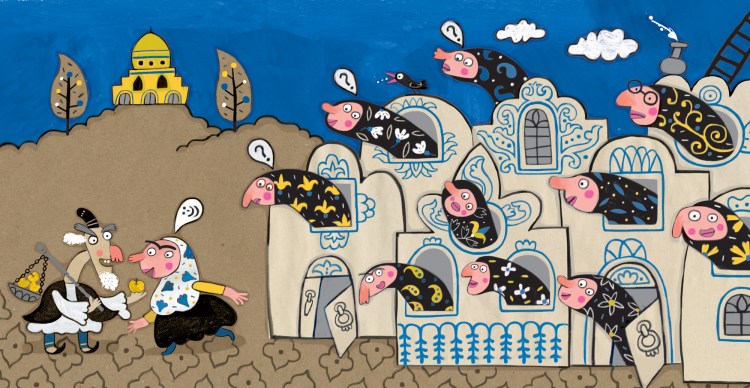
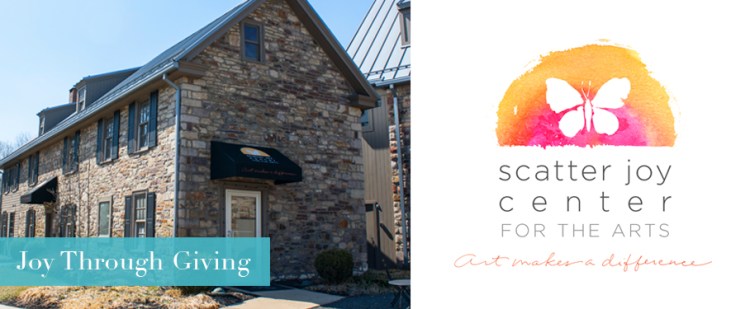
Elham Ataeiazar, work pictured above, came from Iran to work on her MFA at Kutztown. ‘Ellie’ has already illustrated a number of quirky children’s books for a publisher in Lebanon. Her artwork will be on display along with nearly 40 other KU undergraduate work at the Scatter Joy Center for the Arts in Horsham, PA.
“The Kutztown Univerity Communication Design Illustration Showcase” opening is Friday Sept. 23, 5:00 to 8:00pm. The public is invited and the show will hang through Oct.19, 2016.
Scatter Joy is the brainchild of Kathy Davis. Kathy Davis is the well-known artist who started a greeting card business in a corner of her bedroom and found fame and fortune. She also employs a crew of talented illustrators, designers, and letterers. In 2011 we wrote about grad Ashley McDevitt working at the studio. Ashley, who drew the announcement above, isn’t the only KU grad working for Kathy Davis. According to Prof. Elaine Cunfer, who has been instrumental in arranging this exhibition, 4 other grads are at the studio.
Prof Cunfer collected and organized work for students who chose to participate in the exhibition. Undergrad work includes projects done by sophomore through senior year. Kristen Tully (work above) drew the zine ‘Moon and Wolf Girl’ which was the bestselling KU zine at Moccafest in 2015. You can see more of her images here.
2016 grad Adam Liesenring’s work often evokes science fiction. More of Adam’s work can be seen here.
Art by Meredith Shriner, digital painting over scanned pencil.
Meredith Shriner is still on campus. Her junior-level work, above, will be in the Scatter Joy exhibition. More of her work can be seen here.
Kutztown University is proud of its association with Kathy Davis Studio and hopes the relationship will grow in the years ahead. By the way, the studio is looking for a watercolor artist and a hand-lettering artist! Check the careers tab on the Kathy Davis website.
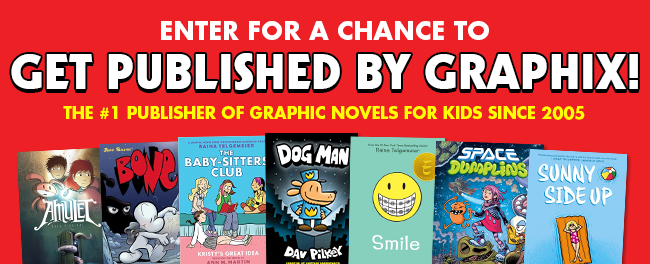
Graphix, the young adult and children’s comics imprint of Scholastic announced a contest at Comic-con. Some contests are scams; they charge high entry fees, or insist you give up rights to your characters at time of entry. This one looks wonderful. It is only for unpublished creators. The prize is publication and a $15,000 advance. I’ll explain what an advance is in a minute, if you don’t know already.
Cover of Raina Telgemeier’s new fall 2016 book.
The deadline is April Fool’s Day, 2017, but it is no joke. Comics for kids are a red hot commodity. According to Publishers Weekly Raina Telgemeier‘s Ghosts, her next graphic novel for kids will have a first printing of 500,000 copies. Telgemeier’s book Smile has been on the NY Times bestseller list for 218 weeks! I read her Sisters and loved it.
Graphix would love it if this contest uncovers the next Raina Telgemeier, or Cece Bell, or Gene Luen Yang.
A panel from Cece Bell’s award-winning ‘El Deafo.’
If you haven’t read a graphic novel for kids recently, pick up anything by Telgemeier or Gene Luen Yang or Cece Bell’s El Deafo. These books are all quite brilliant and deal tastefully with serious issues including gender roles, racism, and disability. It is heartening that such great storytellers are having financial success.
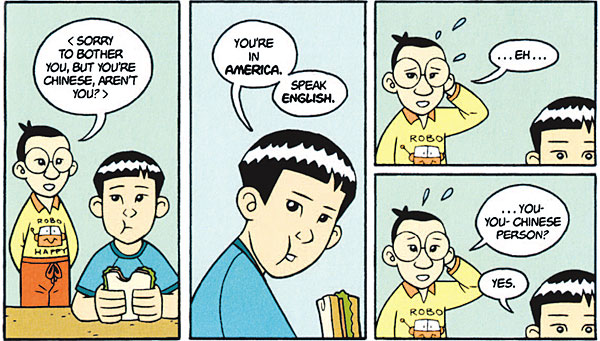
From Gene Luen Yang’s ‘American Born Chinese.’
Back to the Contest: The contest website explains what they are looking for: “Since our founding, the focus of Graphix remains on creator-driven graphic novels appropriate for children and teens that bring exceptional art, rich content and strong storytelling to realistic fiction, memoir, fantasy and beyond.”
David Saylor, founder of Graphix, has a short video that clarifies this search further on this page. He is looking for up to 5 new artists. The $15,000 is better than the typical advance a new artist might get.
OK, That $15,000 prize. What is an advance?
What exactly is an advance? Same as in the record business, an advance against royalties. Remember when Bruce Springsteen sang, “a record company, Rosie, just gave me a big advance.” It’s money up front. For the sake of simplicity, let’s say you have a contract for 10% royalty on a $10 dollar book. You’ll get 1 dollar for every book sold. Suppose you got a $10,000 advance when you signed the contract. You will not get any royalties until book number 10,001 is sold. If you sell 15,000 copies, the publisher will send you a check for $5000.
‘Boxers’ and ‘Saints’ by Gene Luen Yang
There is an interview with graphic novelist Gene Luen Yang at the TED Ed blog. the whole interview is interesting. Here is one important thing he says that I try to convey to my ambitious illustration students:
“When I was really little, I wanted to be in animation — I wanted to be a Disney animator; that was my lifelong goal. And then after I started collecting comics in fifth grade, I slowly switched over. I think it solidified for me when I was in college and I took a summer-long animation class, and during that summer, I produced like two, three minutes of animation total. That’s when I realized that animation is so labor-intensive that it’s actually very difficult for one person to have control over an entire project. I mean, comics is really labor-intensive as well, but at least it’s manageable enough that one person can do it. If you really want to, you can do the whole thing all on your own.”
That’s great advice. My advice: Read something new by one these stars of this genre. I am recommending this contest to my illustration students. What if Graphix doesn’t select your work? Well, there are other publishers focusing on graphic novels for young people. You’ll have a project ready to go.
William Grill shares his new book with Bobby Byrd of Cinco Puntos Press.
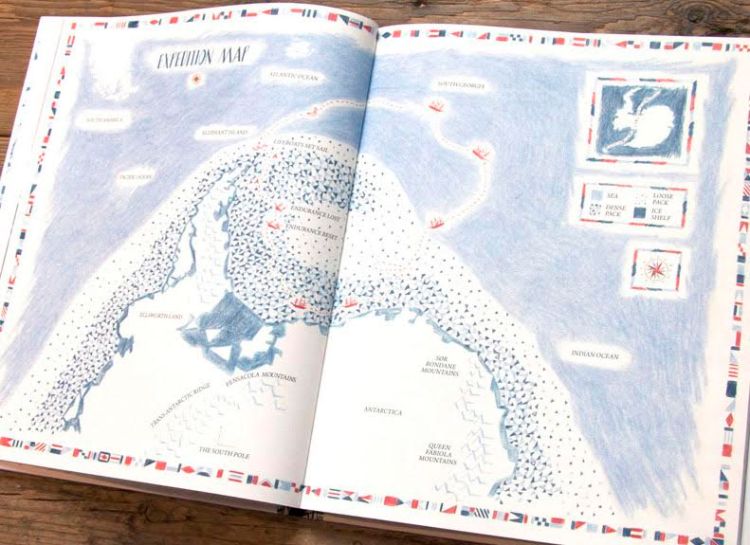
I recently had the honor of being on a panel for reluctant readers at the ALA Convention in Orlando. The other panelists were Jim Ottaviani, M.K. Reed and a charming young Englishman, William Grill, who goes by Will. Will told the assembled librarians that he was a reluctant reader himself. He has dyslexia. As a kid he’d slog through a novel, but he loved to read maps, atlases, and illustrated coffee table books. Today at 26, he makes the sort of book he would have happily read as a child. His oversized picture books are light on text, but filled with maps, diagrams, and visual information.
Will won the Kate Greenaway Medal, Britain’s version of the Caldecott Medal, for the best picture book of the year. That book was Shackleton’s Journey, about the epic 1914 journey to Antarctica. It is published by Flying Eye Books.
The book began as a junior year project at Falmouth College. He visited New York while still in school to pitch the idea to U.S.publishers. He met several editors and art directors. They told him to keep working on his art and “perhaps visit again in ten years.”
Back in England, he exhibited the original Shackleton art at an annual exhibition for new illustrators called ‘New Blood.’ Will explains, “Shackleton’s Journey started as a relatively small third year university project. However, it later grew into an 80 page book after being spotted by Flying Eye Books at the D&AD (Design and Art Directors) show. As well as wanting to create an unconventional picture book, I saw the project as a chance to channel the way I draw in my sketchbooks into a more finalised piece of work.”
His new book is The Wolves of Currumpaw. He got the idea when he came upon an old leather-bound book in a used bookstore in the village of Peterborough, England.
E.T. Seton Photo from Wikipedia
It was a work by Ernest Thompson Seton written in 1898. Seton was born in England, but raised in Canada, where he became an expert outdoorsman.
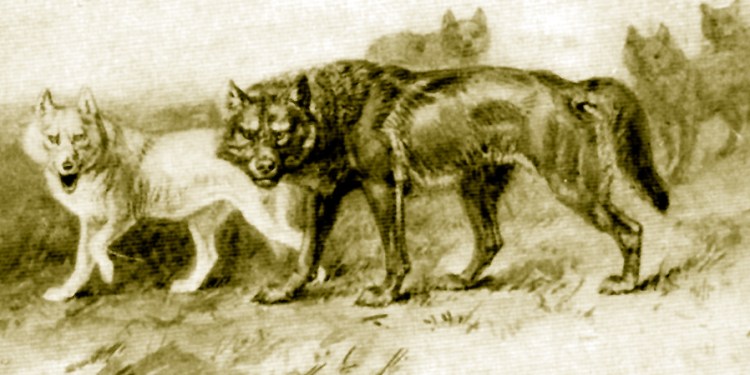
Ernest Seton’s illustration for his story Lobo The King of Currumpaw
In the 1890’s Seton moved to New York City to work as a writer and illustrator. He missed the great outdoors. Seton heard about a $1000 reward to kill a legendary wolf, Lobo, the King of Currumpaw, in New Mexico. Lobo was said to be so smart one trapper insisted he was a werewolf. Seton headed west to kill Lobo. I will not spoil the story. Like his Shackleton book, The Wolves of Currumpaw is 80 pages. This is more than twice the length of a typical 32-page picture book. The pages are airy, some resemble a storyboard with dozens of vignettes on a page.
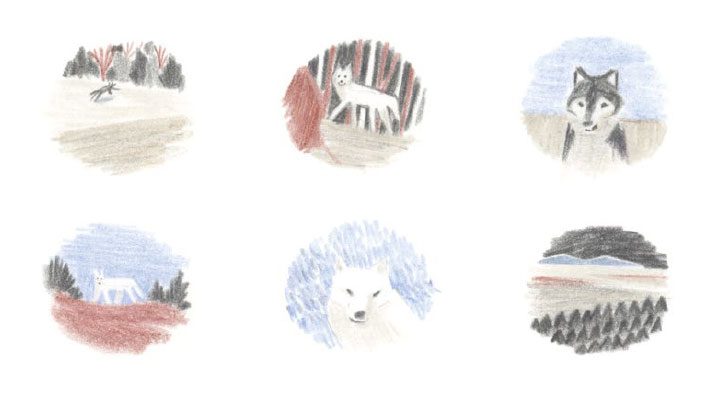
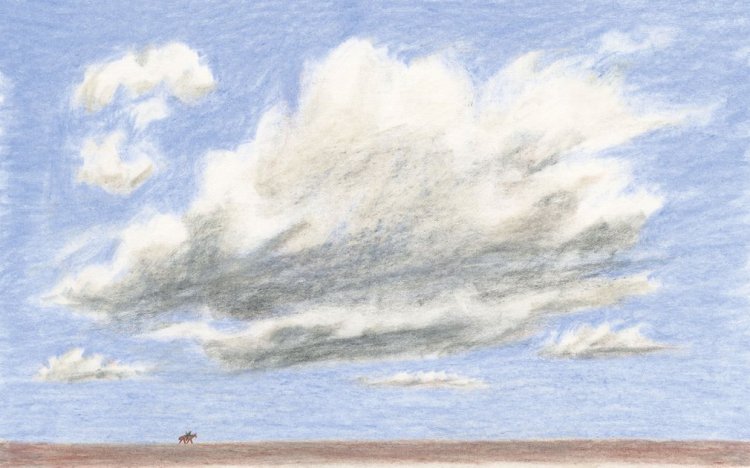
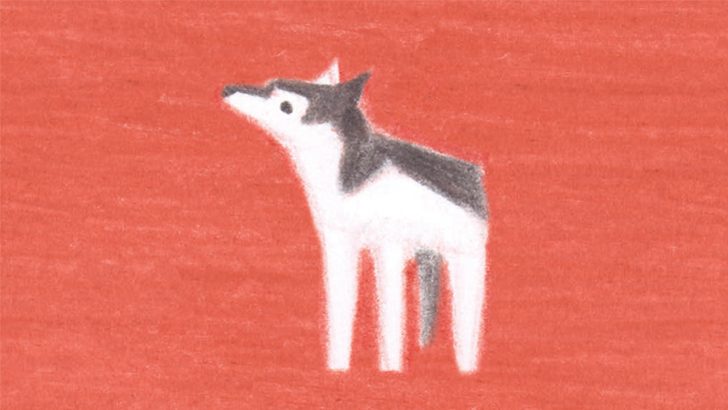
Other pages are wordless, atmospheric images that maintain the immediacy of the artist’s sketchbook. He uses Faber-Castell Polychromos colored pencils in his sketchbook and for the finished illustrations.
William Grill didn’t go to Antarctica to sketch for his first book. Some of his best reference for that project came from old Pathe newsreel footage of Shackleton’s voyage. But he did go to New Mexico and camped out and sketched in the same valley where Seton tracked Lobo over a century ago. He spent a week drawing at a wolf rescue station.
Will’s work is simple yet remarkable. The writing is spare. The drawings are marked by sincerity and a keen sense of observed details. The term I hear used to describe illustration created by actual observation and drawn on paper, unfiltered by Photoshop, is mid-century. It refers to the mid-twentieth century, which doesn’t seem so far away to me. Will’s style is often compared to the great Raymond Briggs.
William Grill is often compared to Raymond Briggs.
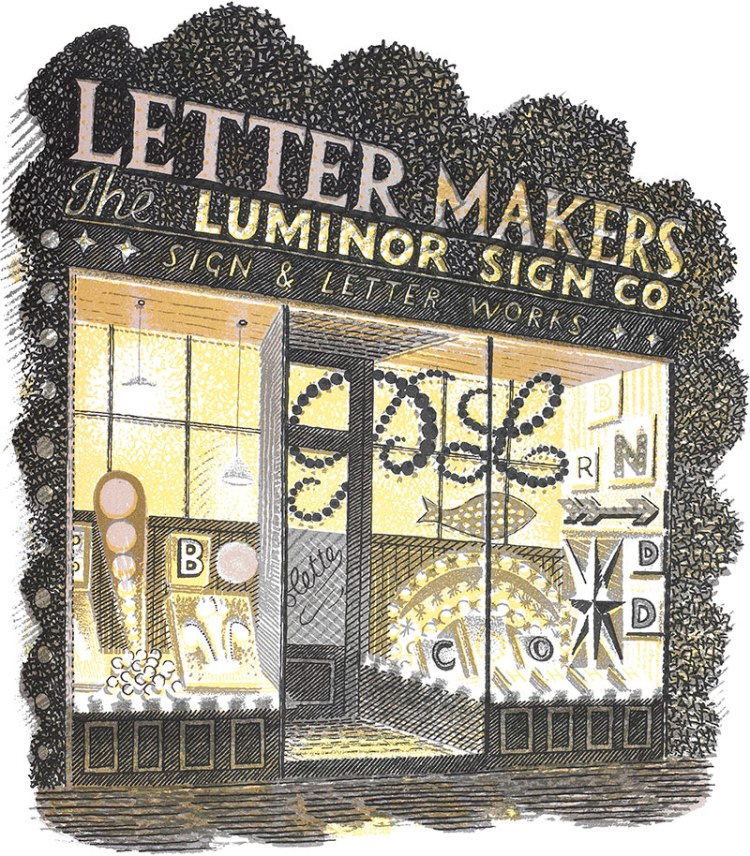
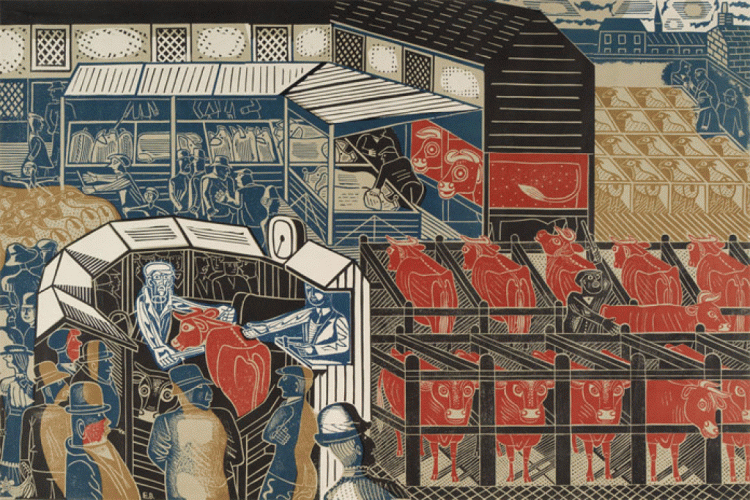
I asked him if there were other British artists who influenced him. He named two, Eric Ravilious and Edward Bawden. I had to look them up.
Here are links to bios of Ravillious and Bawden. It is great to meet a talented young artist following in the footsteps of these midcentury masters. More work by William Grill can be found on his website. There is also a fascinating interview about his wolf project on his publisher’s site, here. I also recommend the Guardian page where he shares his sketchbooks. It gives give a great overview of his artistic process.
William Grill signing for fans at ALA Orlando,2016
The reviews for The Wolves of Currumpaw have been great. Publisher’s weekly calls it “A powerful, cinematic work of naturalistic fiction that deftly outlines the importance of respecting nature.” I think it is the perfect book for reluctant readers. I know we will be seeing more from William Grill.
I’m not the only one thinking about pigeons and art. I found this teacher’s art blog that touches on Duke Riley’s “Fly by Night” and my “Real Poop on Pigeons.”
Language Arts – Nonfiction, Reading For Information
Social Studies – History (WWI And WWII Carrier Pigeons)
Possible Art Concepts: Art History – Pablo Picasso, Duke Riley, Rachel Berwick, John Beck, John James Audubon
Drawing, Painting, Sculpture, Installations, Casting, One Point Perspective
For pigeons, there seem to be a lot of haters out there. Some haters may even think pigeons capable of this. Hate might be a strong word, but until a recent turn of events, I was one such hater. Let’s just say, I refrain from feeding pigeons or sea gulls and don’t appreciate people who do. I am always fearful of being (for lack of a better phrase) “pooped on”. The first turn of event was a visit to a MOMA (Museum of Modern Art) Store, where I found a book entitled, The Real Poop On Pigeons by Kevin…
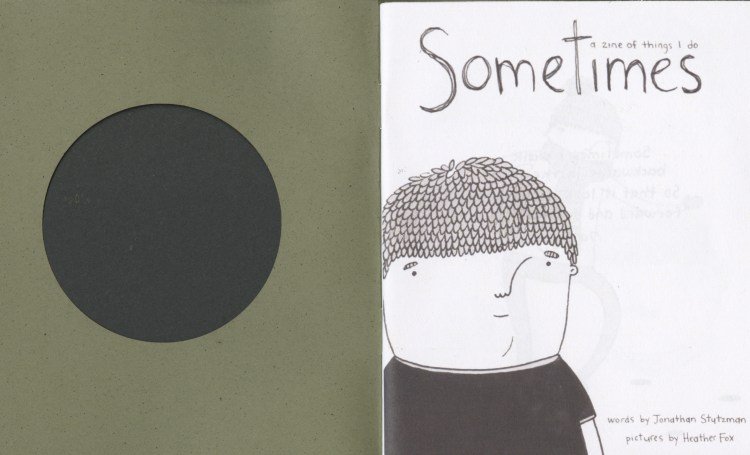
Sometimes, a zine of things I do, by Jonathan Stutzman with art by Heather Fox.
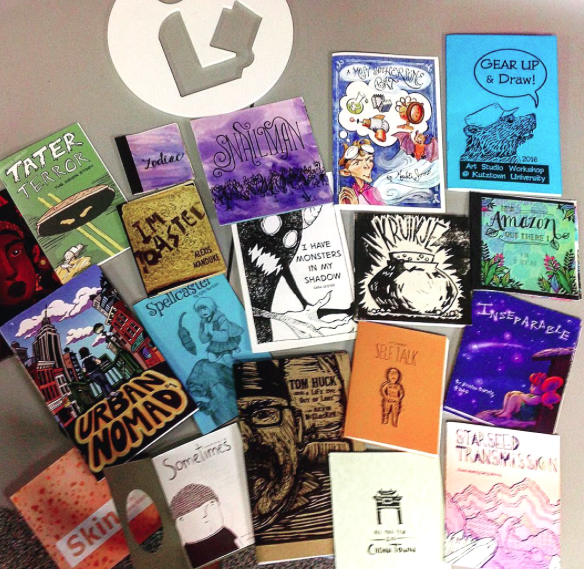
Zines by Kutztown students will form the beginning of a new Zine Collection at Kutztown University’s Rohrbach Library. Other academic institutions have famous Zine Libraries including Barnard College and Hampshire College. Kutztown is starting small.
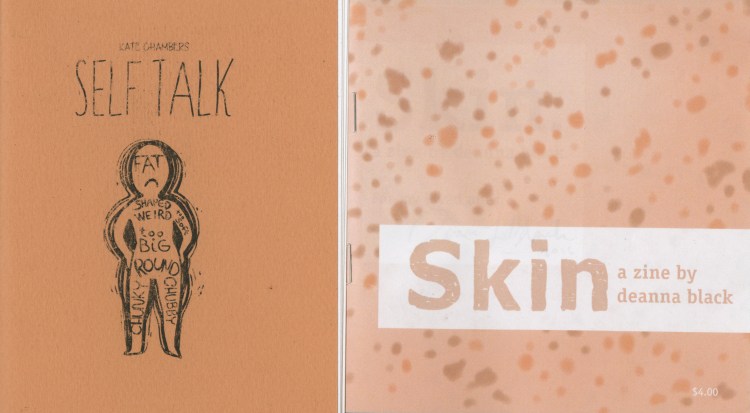
A zine, rhymes with seen, is a small book or pamphlet. Merriam Webster defines a zine as “often homemade or online publication usually devoted to specialized and often unconventional subject matter, such as a feminist zine.” The works above by Kate Chambers and Deanna Black offer insights on body image and are great examples.
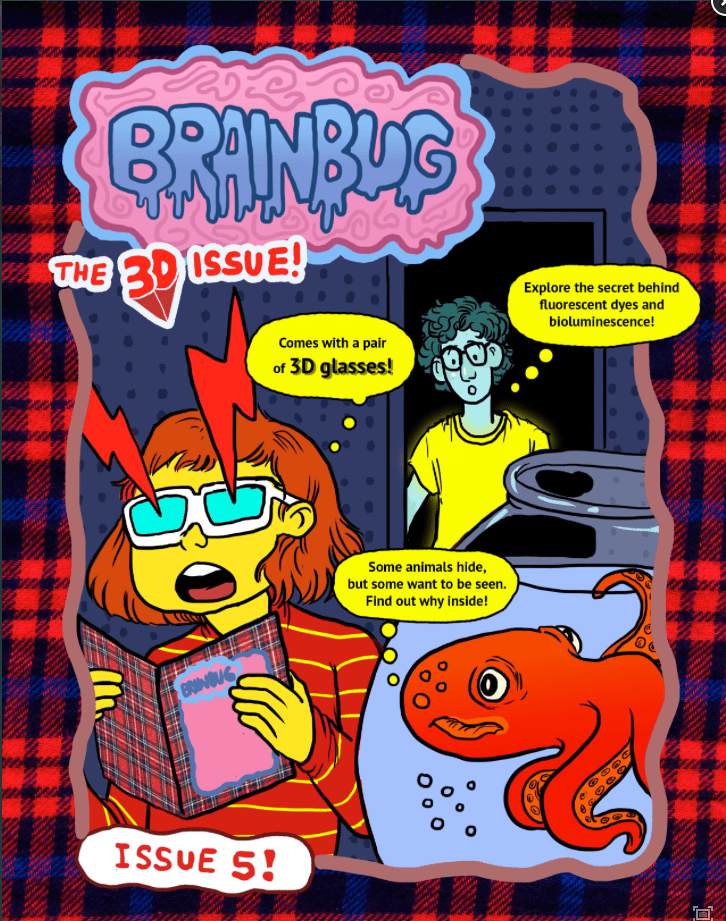
Jesse Warner, student and co-founder of Brain Bug, proposed the idea to librarian Bruce Jensen. Bruce responded with enthusiasm telling Jesse,” Your idea of a zine library in Rohrbach is brilliant! KU’s a perfect place for one, with so many knowledgeable zine-loving faculty and supertalented zinemakers hereabouts.”
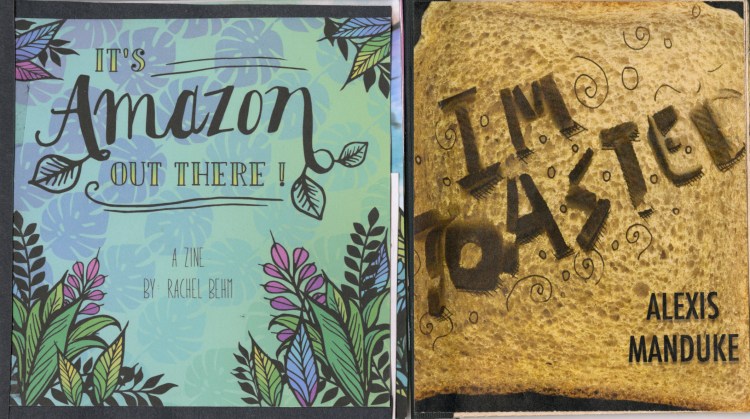
Zines by Rachel Behm and Alexis Manduke
Zines are harder to catalog than the typical book. Some have odd dimensions and many have no pages numbers. The Rohrbach librarians will have there work cut out for them. Hopefully by the fall, KU zinesters will find their work in the library.
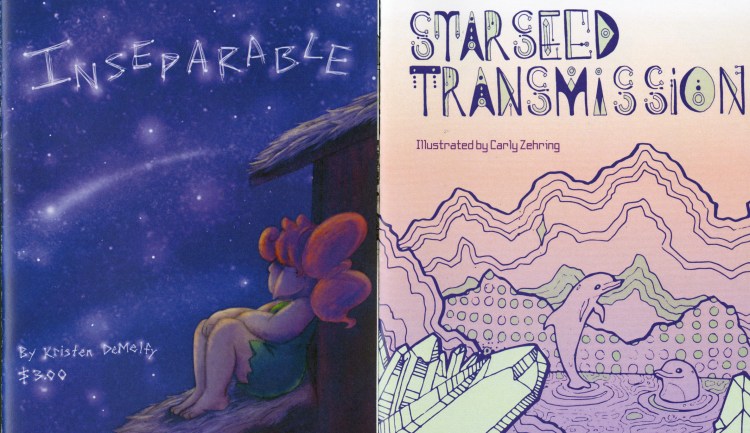
Fantasy and SF zines by Kristen DeMelfy and Carly Zehring
If you are a student or faculty and have an idea for a zine, you need not be in a special class. Just do it! The library’s new ‘maker space’, now called STEAMworks has printers and the rare extra-long staplers needed for binding a simple zine. STEAMworks is located in room RL 18. Maybe we can have a zine workshop in the fall.
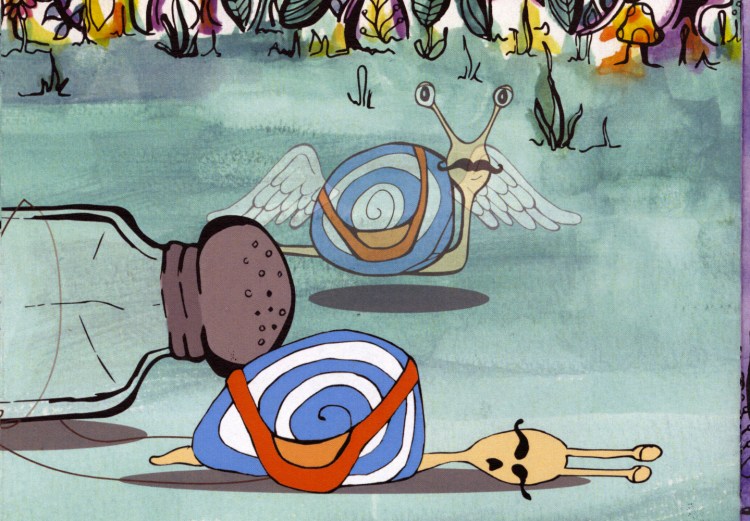
Zines do not have to be serious. Spoiler Alert: Next image is the final death scene from a very funny zine, SnailMan by Kate Desiderio!
As my zinester son, Daniel McCloskey always says, ” Zines are a great calling card for an artist. Zines have a life of their own.” Very often the original reader will think of a friend who likes a particular sort of story and pass it on. And so on.
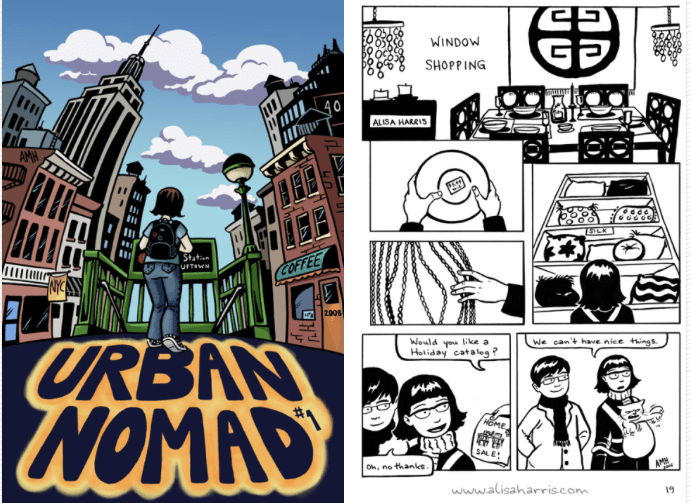
At least one former KU student has become something of a zine star. Alisa Harris studied here before transferring to SVA in NYC to major in traditional animation. Her Urban Nomad is a step up from a zine, but we will have issue #1 from 2008 at Rohrbach. It tells of her journey from Pennsylvania to New York. Urban Nomad is a simple autobiographical tale that might inspire other young artists to head to the big city. It is available at select bookstores like Bluestocking in NYC. Alisa’s website has more info about the project.
photo: Bruce Jensen
Are you a Kutztown grad who made a zine? If you would like to donate a copy to be lovingly housed in the new zine library, get in touch with Bruce Jensen at Rohrbach Library.
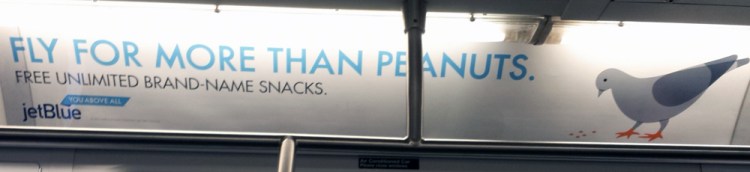
Pigeons to the left of me. Pigeons to the right. OK, I wrote a book about pigeons, so I’ve been thinking about ’em. BUT! I am astounded by how often pigeons cross my path. On the NYC subway, my entire car was filled with pigeon-themed ads for Jet Blue.
Arnold Zwicky defined the phenomenon “Frequency Illusion”- once you’ve noticed a phenomenon, you think it happens a whole lot, even “all the time”. Your estimates of frequency are likely to be skewed by your noticing nearly every occurrence that comes past you. “
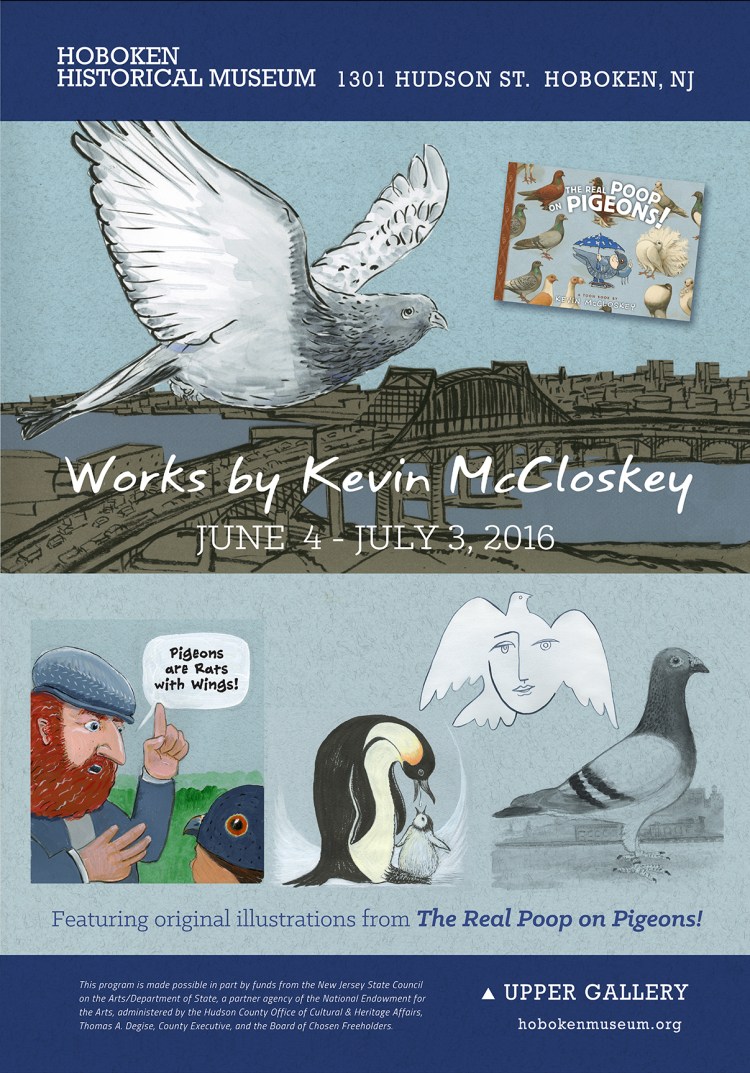
Seen my pigeons? I’m having an show at the Hoboken Historical Museum. McKevin Shaughnessy designed this cool poster for the event, adding to the pigeon image barrage.
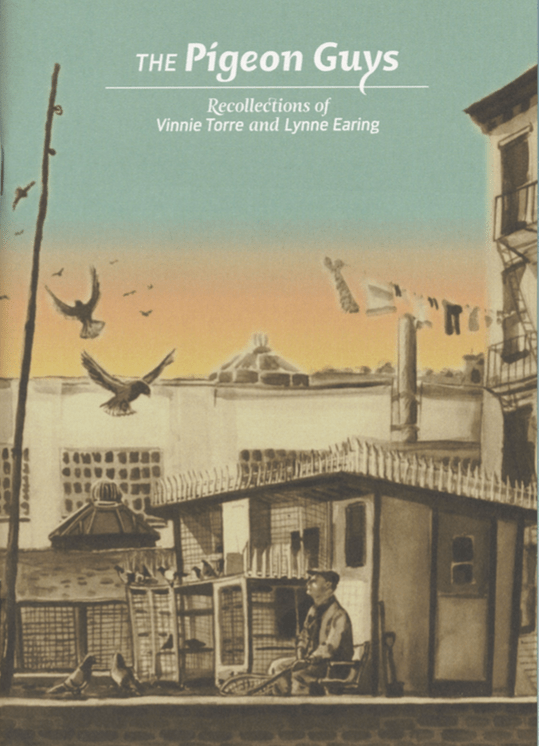
My pigeon history began when I sketched a pigeon racer on his Hoboken rooftop. I put that image in my 1986 book, Walking Around Hoboken. That same drawing would later appear on the cover of The Pigeon Guys.
Holly Metz was editing a series of chapbooks for The Hoboken Historical Museum and asked me to illustrate this project about the city’s last pigeon racers. I spent a morning at Vinnie Torre’s loft on Monroe St. and he told me some amazing stuff about pigeons.
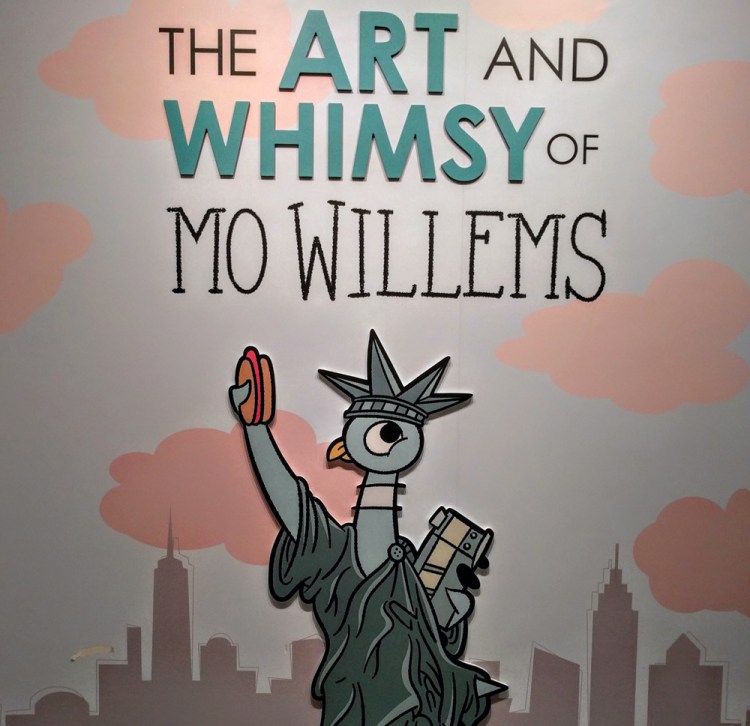
Prof. Ann Lemon took a snapshot of another NYC subway poster for Dinosaurs Among Us at the Museum of Natural History. The headline: You’ll Never Look at a Pigeon the Same Way Again. Of course, I was asking for pigeon overload when I went to the Mo Willems’ exhibition at the NY Historical Society. Good show, Mo.
A student sent me a link to Bert Doing the Pigeon. If I’d seen it before, how did I forget it?
Patt and I, Takoma Park MD Library, photo Bruce Guthrie
I have been visiting schools, libraries, bookstores, with a stuffed pigeon on top of my hat. So, I am getting what I deserve. The one time I went looking for pigeons, but failed was the first weekend of Duke Riley’s pigeon art performance at the Brooklyn Navy Yard.I got a wonderful view of the Brooklyn Bridge, but that night the rain and fog kept the pigeons cooped up. If you are anywhere near Hoboken, or a public library, check out The Real Poop on Pigeons.
Emma Brooks and Al Bronokowski made history as the first MFA’s in Communication Design. This MFA is the first terminal degree offered at Kutztown University. I, myself, was once in a first MFA class at another college, so I know it takes a leap of faith to embark on something so new. Emma and Al are to be congratulated. They learned a lot and produced fascinating work.
Emma’s thesis project was called ‘Kindred Memories’ a collection of illustrated pattern designs based on her family history. The imagery on dinnerware and curtains above, for example, are based on her great-grandfather Martin Schicker, an outdoorsman who collected luna moths.
Emma said her education was transformative. She completed her thesis under the able direction of Prof. Denise Bosler. “I came here to get an MFA so I could teach. I realized designing is what I want to do!”said Emma. “Maybe I will teach someday in the future, but now I really want to design patterns.” More of Emma’s work can be seen here.
Emma Brooks explaining her thesis for Kutztown faculty and Dean Mowder.
Al’s final project was not so illustrative, but no less impressive. He did an interactive project with Prof. Josh Miller. Al said his breakthrough came when Prof. Josh Miller told him, “Interactive design doesn’t have to be just web design, it can be so much more.”
Al created an immersive multi-sensory experience based on Arcadia National Park. The experience included multiple projectors, natures sounds, and even scents meant to evoke the features of this particular park. It reminded me of the Holodeck on Star Trek.
Screenshot from AlBronakowski.com
Al explains it on his website: ” I constructed an interactive table that uses an infrared camera and reacTIVision software to track fiducial symbols on the bottom of objects. The table also includes servos and multicolored LEDs that are controlled by an Arduino and react to the fiducial symbols. The interface projects information about the park onto three walls and the table top.” He wrote the program that controls the entire project in Processing. I must admit that is all Greek to me, but the end result was remarkable.
More of Al’s work including video of his thesis project can be found here.
The Kutztown University MFA in Communication Design Program is still looking for a few good students to begin classes next fall. More info can be found here.


 You have seen Ted Michalowski’s art on TV. He’s done courtroom reporting for ABC, CBS, CNN, all the major networks. He is an energetic part of the Scranton, PA art scene. When I say he is a ringmaster, it is not a metaphor, he has worked with the circus. His is a 4-time winner of the Electric City ‘s Best Visual Artist award. Once a month Ted takes over the New York’s Society of Illustrators to host their




















 I got a wonderful view of the Brooklyn Bridge, but that night the rain and fog kept the pigeons cooped up. If you are anywhere near Hoboken, or a public library, check out The Real Poop on Pigeons.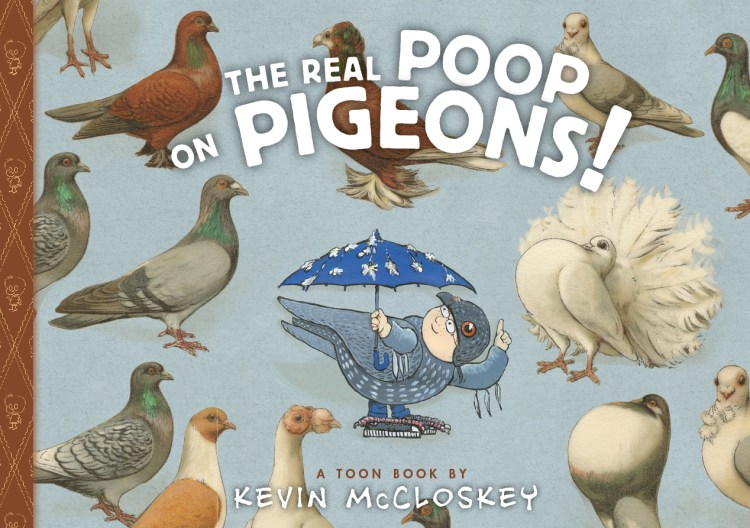
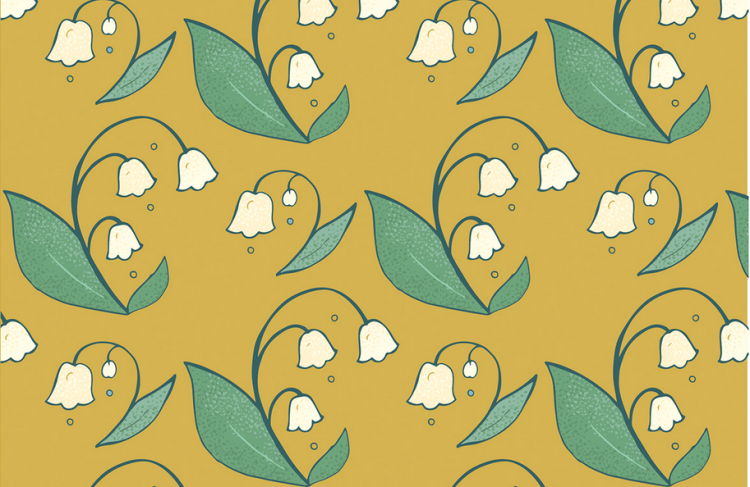

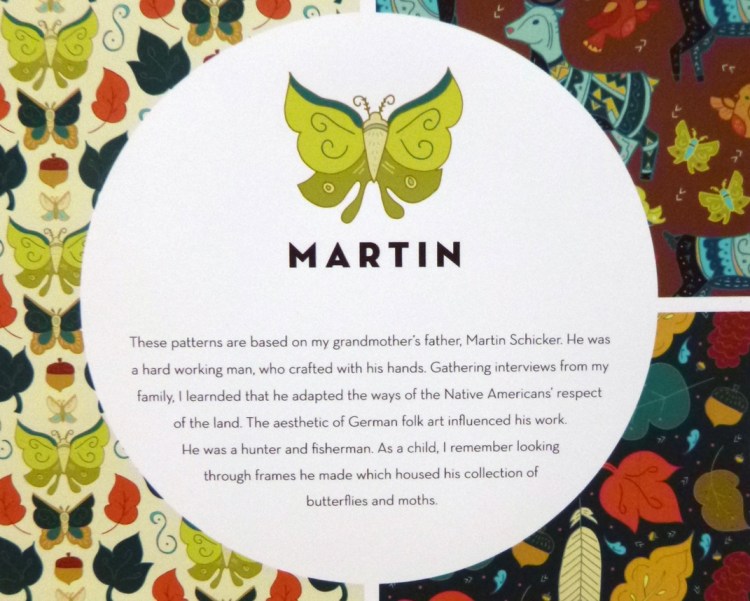

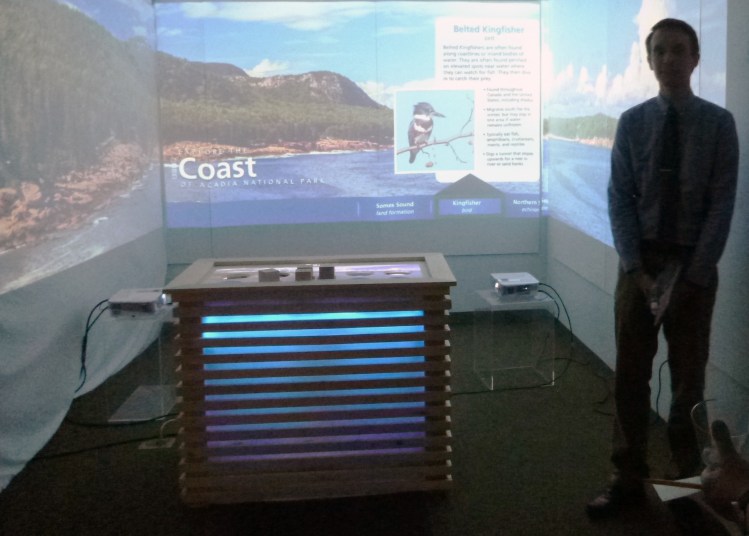
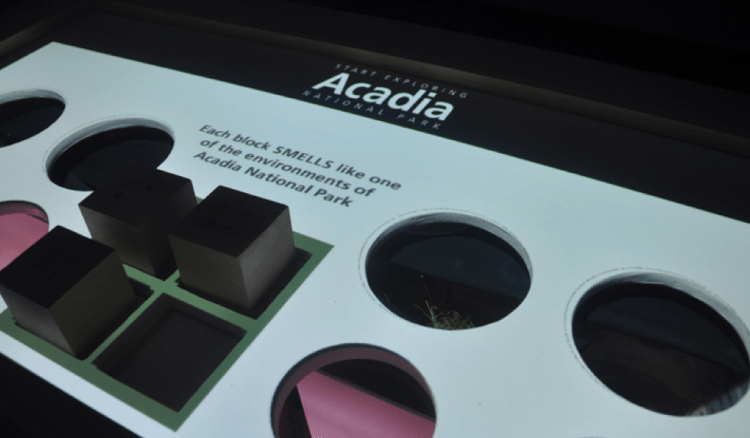
 Illustration Concentration