Lapiztola Stencil Collective, Spray for Us.

20131103-154218.jpg
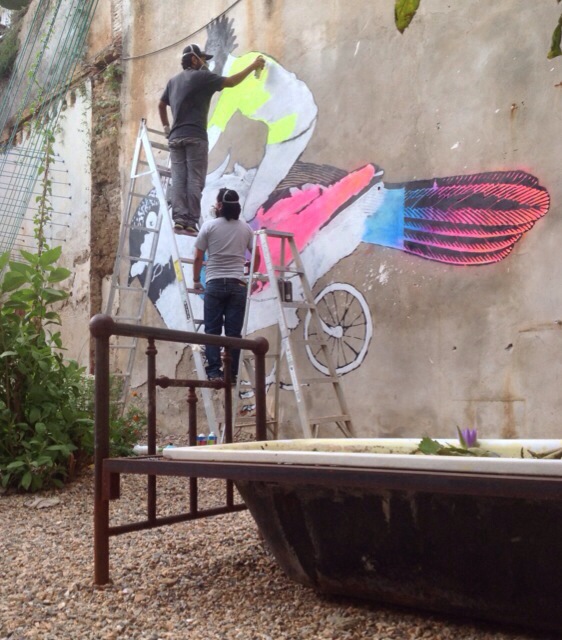
Yankel and Roberto of Lapiztola at work in Oaxaca. photo: K McCloskey

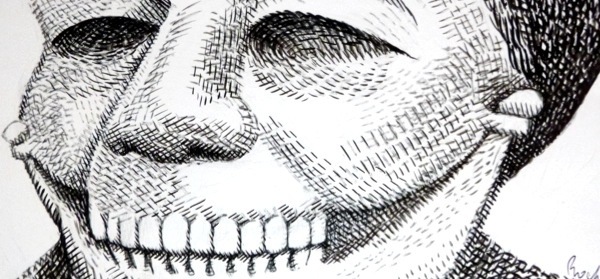
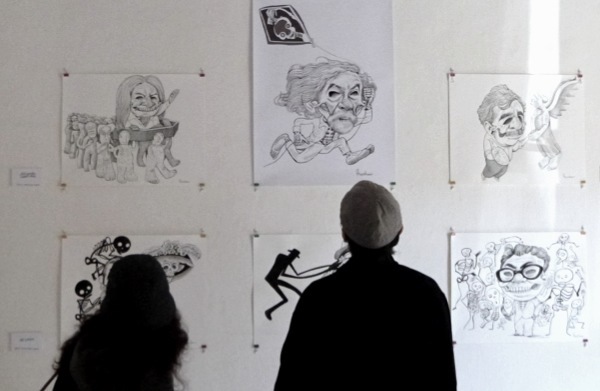
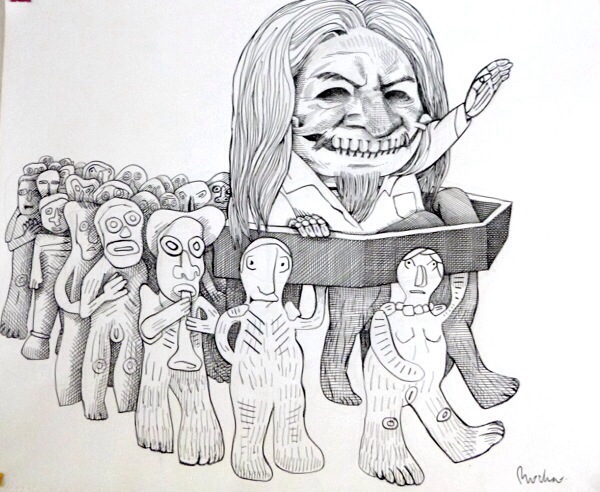
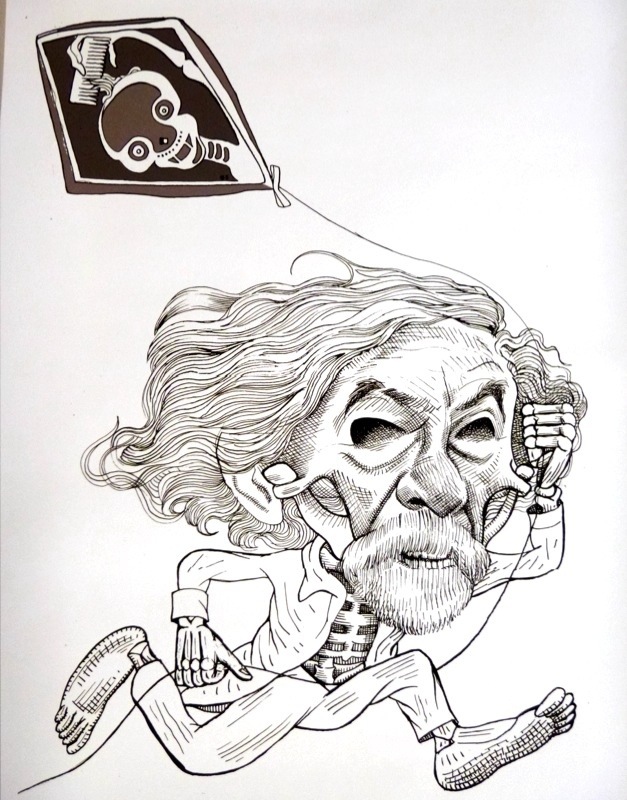
Lapiz = pencil.  Pistola = pistol. Lapiztola is a stencil collective in Oaxaca. The pun suggests the pencil is as mighty as the pistol. Their artwork has been described a visual poetry. In October, one of Lapiztola’s crew,  Yankel, was on a conference panel in Oaxaca about the city’s street art collectives. Yankel had spent much of the day on a ladder wearing a respirator mask spray-painting a luminous sparrow on a wall at Matria Art Garden a few blocks away. Another artist in the audience proclaimed his love for Lapiztola, but added compared to more radical street collectives he found their stencil murals “decorative and appropriate for restaurants.” –Decorative?  OUCH!

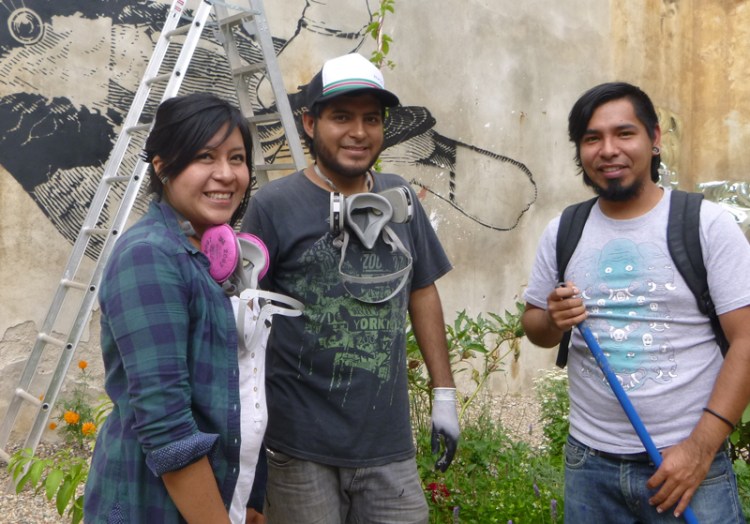
Rosario, Yankel and Roberto of Lapiztola.

Walls are where you find them. Yankel responded, sure, Lapiztola might accept invitations, but they would never let a restaurant owner dictate subject matter. They might even get reimbursed for their paint, but they don’t profit from their work.

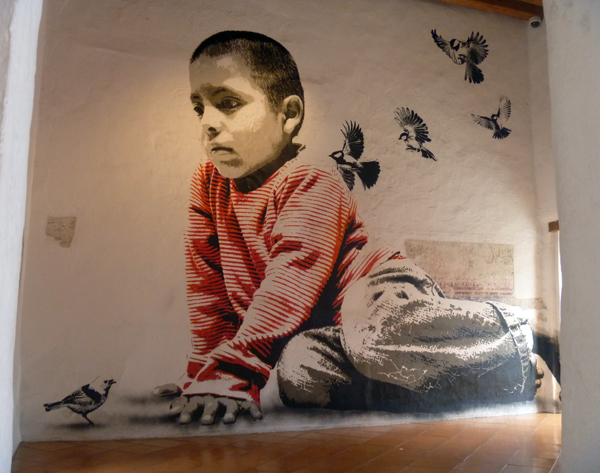
Reflejos de Huida, stencil, 2013, Lapiztola.

Yankel talked about a piece that had appeared in MACO, the Museo Arte Contemporanea de Oaxaca. Reflejos de Huida featured a little boy and birds escaping from a cage. Their inspiration was a real boy they met on the streets who lived a life of extreme stress. Even more than most children he dreamed of escaping the confines of his domestic life.

20131103-160351.jpg
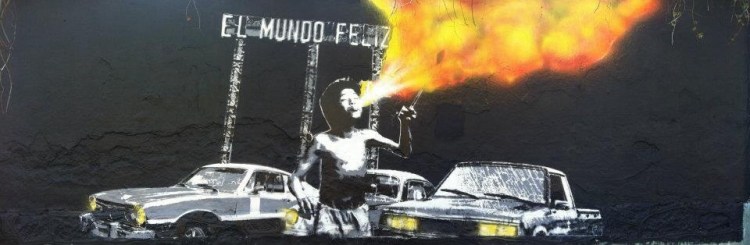
El Mundo Feliz /Happy World shows a fire-eating child at an intersection. © Lapiztola

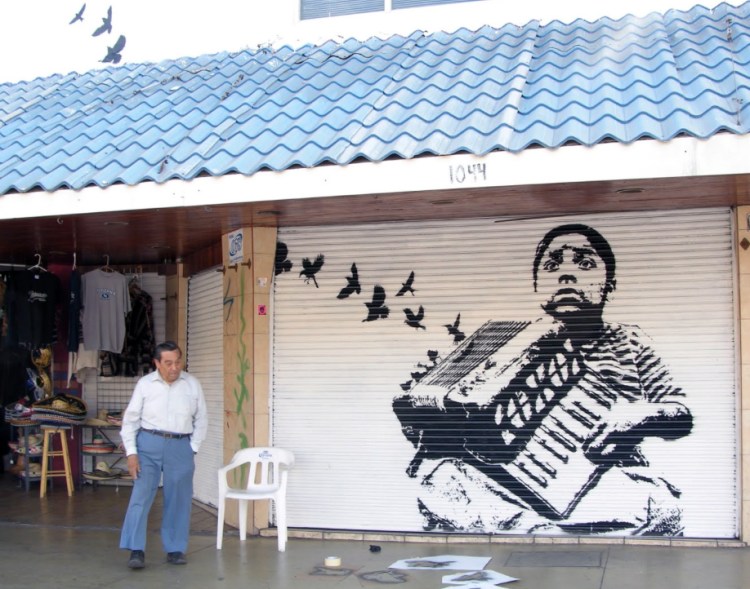
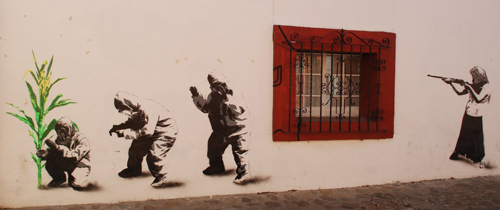
Lapiztola’s art includes the iconic imagery of M-16’s, molotov cocktails, and skulls found in Oaxacan street art since 2006. Lapiztola, however, adds their own visual vocabulary: birds; street musicians; indigenous children. Their work often deals with street-level domestic issues like child welfare and displays a special empathy for Mexico’s children.

Mural image from Lapiztola's tumblr.
Mural image from Lapiztola’s tumblr.

Rosario and Roberto are trained in graphic design, while Yankel studied architecture. Due to their mix of backgrounds the collective’s projects are both graphically crisp and site-specific, taking full advantage of a particular wall’s potential.

A shop gate in Tiajuana © Lapiztola from their
Shop gate project in Tijuana. Mexico © Lapiztola from their blog.

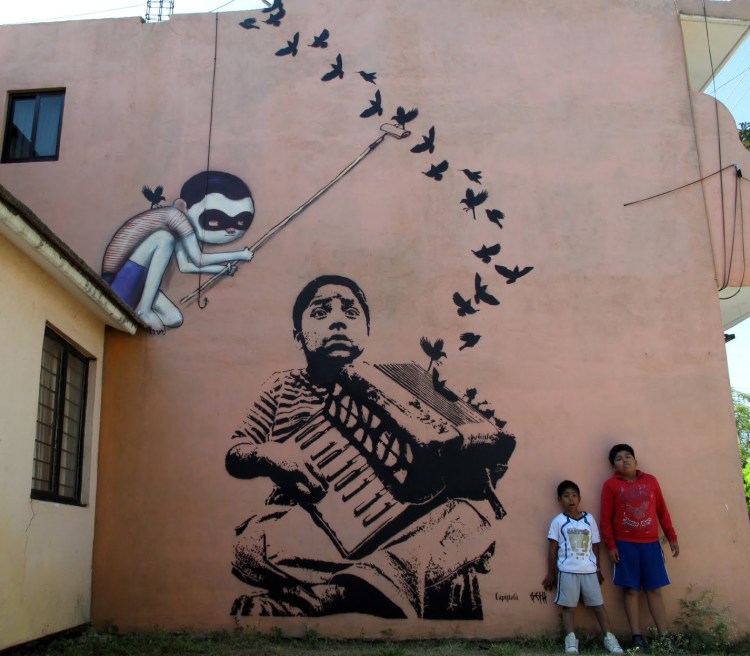
One of the wonderful things about stencils is how the elements can be repurposed. Below Lapiztola reused their accordion playing boy (spraying through the reverse side of the stencil) to collaborate with French artist Seth Globepainter.

Seth (left) with Lapiztola

Lapiztola’s artwork looks clever online. Clever is good, but in person, their large-scale visions are more than clever. They are fantastic. They have clarity, visual impact and soul.

Commentary on Genetically Modified Corn, Lapiztola, Oaxaca.

Check out Lapiztola on Facebook and via their blog. For more info, see Jeffrey Pena’s fine interview with Lapiztola at Curbs and Stoops.

Kate Santee, Illustrator and Roller Girl!

Kate Santee in Kutztown T center, racing against Jerzey Brigade photo © by Tom Gaylord.
Kate Santee in the Kutztown tee, racing against Jerzey Brigade photo © by Tom Gaylord.

Speaking of curious networking, another KU grad, Kate Santee, tells me she got to illustrate a book through folks she met in her role as roller derby racer! Kate recently illustrated a chapter book for young readers. First in a series, Silly Nomads From Palmerston Close is written by Jan L. Lewis and Marcus Mohalland. 

Cover art by Kate Santee © 2013 Mohalland Lewis, LLC

Kate’s freelance design work has been picking up. I asked about roller derby and she was good enough to explain the sport.  “I logo1still skate with the Lehigh Valley Rollergirls.  We play home bouts at Independence Family Fun Center in Schnecksville. I usually play as a blocker, whose job is to prevent the other team’s jammer from getting through the pack. The jammer’s job is to lap the other skaters in a pack, and they score points for each skater from the opposing team that they pass.” 

On the Lehigh Valley RollerGirl site I learned Kate Santee, a former KU honor student was chosen as November’s  “Rough and tumble player of the month” and she is part of the “Special Vixens Unit.”

Silly Nomads?

Silly Nomad illustration by Kate Santee ©
Silly Nomad illustration by Kate Santee © Mohalland Lewis

Kate wrote, “One of the authors is an acquaintance of a woman I skate with; she gave him my business card, and he sent me an inquiry through my website. The project was originally going to be one book, but the authors decided it would be more appropriate for their target audience to make it a series of three shorter books. I’m currently working on the second book and intend to illustrate the whole series.” 

The Silly Nomads are two Jamaican brothers who get into a series of misadventures when they decide to live like desert nomads. My favorite episode occurs when the boys decide they need a cardboard tube from a roll of toilet paper. Mother must have already disposed of the tube, so the boys proceed to flush an entire roll of toilet paper down the toilet.

The clogged toilet episode drawn by Kate Santee © Mohalland Lewis 2013

Book signing in Bethlehem, PA on Dec 20

Silly Nomads is available on Amazon. Or better yet, if you’d like a signed copy, Kate Santee and both authors, M. E. Mohalland and J. L. Lewis will be at Bethlehem’s famed Moravian Bookshop, Fri. Dec. 20 from 4-6pm.  If you can’t make the signing, the Moravian Bookshop will likely have copies on hand for Christmas gifts.

Networking Pays Off for Maddie O’Neil, Cowboy & Illustrator

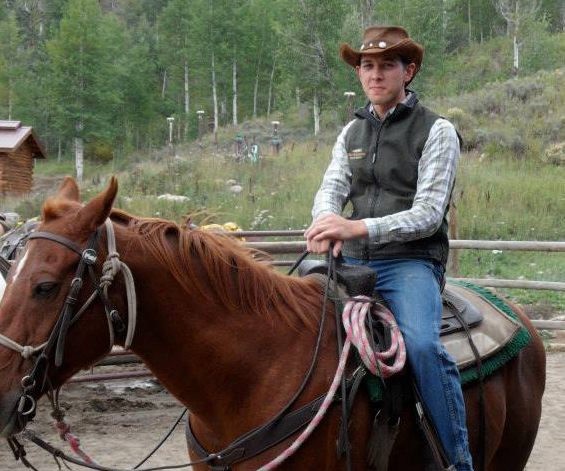
Madison O'Niel at Vista Verde.
Madison O’Niel at Vista Verde.

Maddy O’Neil won the Don Breter Illustration Award when he graduated from Kutztown in May.  The honor student attended KU on a full scholarship. For his honor’s thesis he did a great job illustrating a children’s picture book. Oddly enough, his first job after graduation with his BFA was as a ranch hand at a high-end dude ranch in Colorado. I asked Maddy what he did as a ranch hand at Vista Verde Ranch.

maddy2“Pretty much anything that needed to be done outside. Mowing, putting up fences, splitting firewood, fixing anything broken, etc. Vista Verde is absolutely gorgeous, so being outside all day was a blessing. We also got to interact with lots of the guests.  The ranch had many activities that the staff and guests would both take part in: barn dances, horseshoe tournaments, and music nights.  I got to be a dance partner at the barn dance. It was a fantastic place to work and I had a legitimate excuse to wear cowboy boots on a daily basis.”

Cover for Maddy O'Neil's Willie the Moose.
Cover for Maddy O’Neil’s Willie the Moose.

“During orientation at the ranch we were able to share about ourselves to get to know everybody a little better. I shared that I had a design degree and a passion for illustration. Steph, the director of hospitality and head of public relations stopped me one day in passing and said she had an idea to do a children’s book related to the ranch. She asked me if I wanted to be involved. I was obviously excited and began work right away. We met weekly to talk about the story and artwork, but for the most part I had total creative control over the project.”

All illustrations courtesy Maddy O'Neil.
All illustrations courtesy Maddy O’Neil.

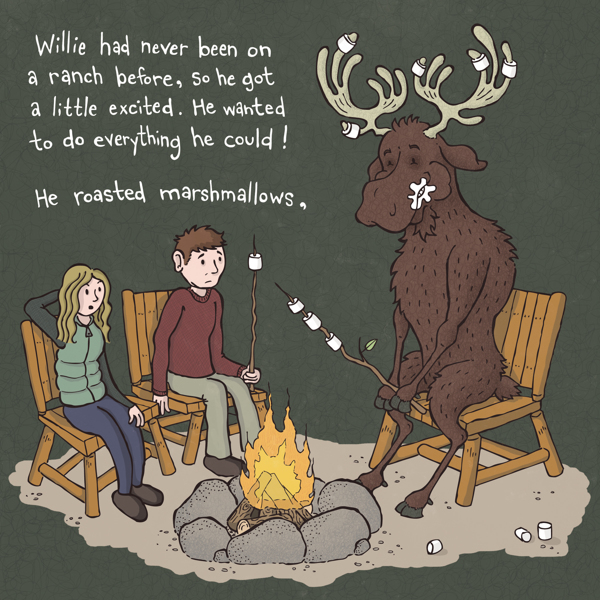
Maddy created what Steph of Vista Verde calls ” a charming story of a sweet moose trying to find his place at a little dude ranch in Colorado.” She wrote, “When Maddy revealed the book at our end of season staff party the room was filled with laughter that just wouldn’t end.”

Willie has an identity crisis! by Madison O'Neil.
Willie has an identity crisis! by Madison O’Neil.

Maddy’s success proves the power of networking no matter where one ends up. More Willy the Moose artwork can be seen on Maddy’s Behance page. Willie the Moose is now published in full color and available for 19.95 at the Vista Verde web site.

Willie as Ranch hand by Maddy O'Neil.
Willie as Ranch hand by Maddy O’Neil.

Maddy has returned back East to pursue his design and illustration career. We expect great things from him. Maddy has a great attitude, super people skills, and newly acquired horse and moose sense.

Speaking of curious networking, another KU grad, Kate Santee, tells me she got to illustrate a book through folks met as a roller derby racer! If I can get permission to use her artwork, I will share more.

BIG SNOW in Kutztown, PA -Dec.6

All art in the post © Jonathan Bean

Jonathan Bean now lives in Harrisburg, PA, but he grew up in Fleetwood and so, of course, he has often been in Kutztown. The gifted illustrator and author is returning Kutztown to share his new picture book Big Snow at Firefly Bookstore, Friday, Dec 6th from 6-8pm.

BigSnowcover
Big Snow has wonderful reviews. Publisher’s Weekly writes “another terrific offering from Bean   -his subtly rhythmic prose and elegant, astute watercolors hit just the right notes of comedy, suspense, and fantasy.”

“This delightful picture book… begs to be read aloud.” – School Library Journal

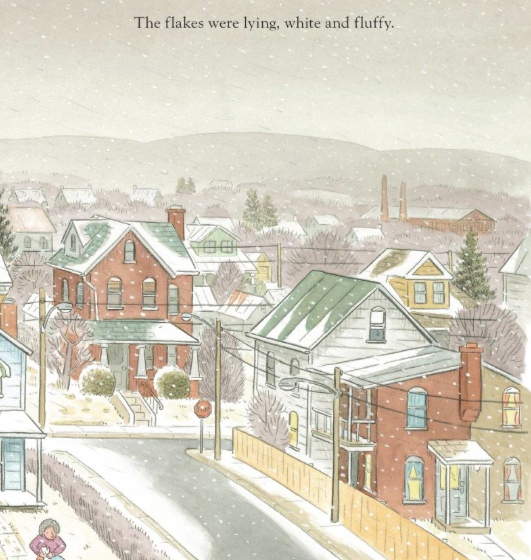
flakes
The town pictured in Big Snow looks a lot like Kutztown. We see lovely watercolor images of familiar-looking row houses, several Lutheran church steeples, the smokestacks from the old foundry. Matthew Williams of Firefly Books pointed out the most conclusive evidence, “Look at the water tower,” he said, “and you will see the letters ‘K U T Z’!

kutztower

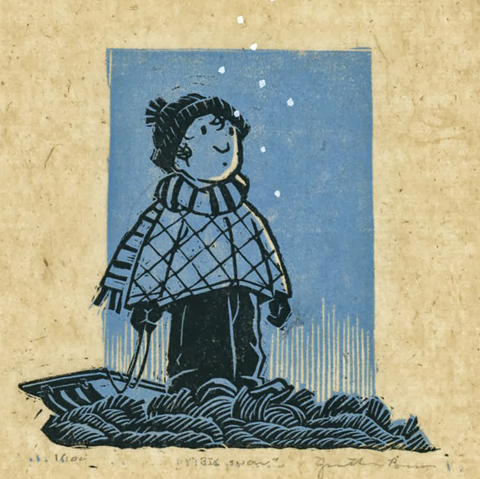
Jonathan Bean’s prints can be seen in Harrisburg at Robinson’s Rare Books and Prints. He also sells prints at his online Etsy store. One of his charming works is the limited edition linoleum print of the Big Snow boy.

Firefly Bookstore, 230 W. Main, Kutztown is a wonderful place, a true independent bookstore, supportive of local authors and illustrators. I love the place. Meet Jonathan Bean there 6 – 8 pm on Friday, December 6th. There will be children’s activities and cookies.

Note: Lisa Scheid of The Reading Eagle wrote an interesting story about Jonathan. It is worth reading and can be found here.

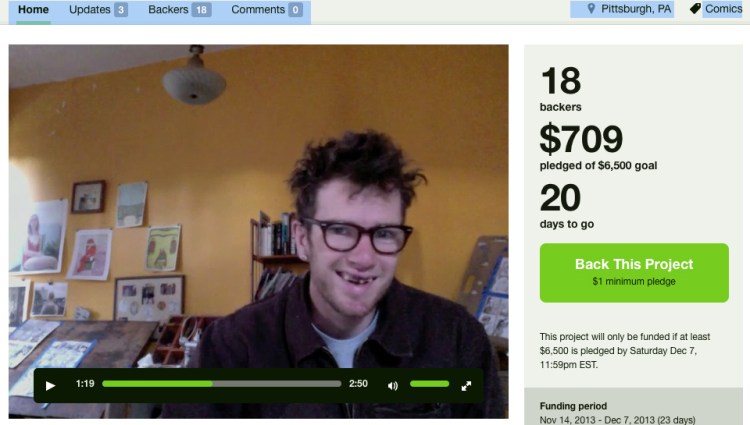
Daniel McCloskey, Smiling Artist Missing Teeth.

From a Screenshot at Noon, Dec.2

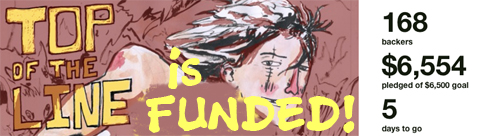
UPDATE: Dan’s Kickstarter got funded. Thanks. Julie Sokolow wrote a fine article at MichaelMoore.com that really helped.

DAn
Full disclosure: That’s my boy! Daniel McCloskey is a cartoonist and founder of Pittsburgh’s Cyberpunk Apocalypse Writer’s Project. On Oct 22, Dan was riding his bike when his front wheel fell into a deep, narrow pothole. Dan flew over the handle bars. He did a face plant on the black asphalt of River Ave, part of Pittsburgh’s Three River Heritage Trail.

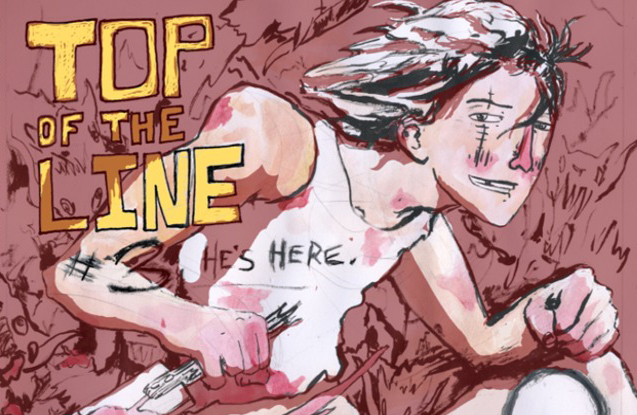
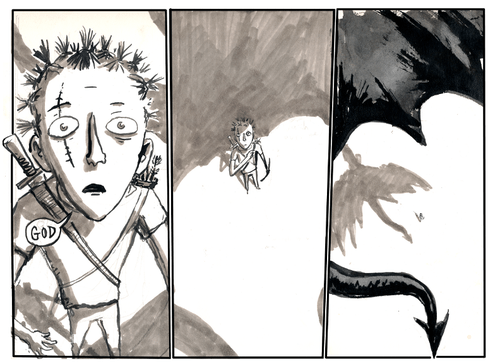
Oddly enough, the hero of Top of the Line also has missing teeth.

A Good Samaritan, a kayaker named Beth, called an ambulance and stayed by his side. Dan’s chin was split open in two flaps, but surgeons at Allegheny Hospital sewed it back together nicely. He still has a wire brace keeping his remaining front tooth in place.

From Top of the Line © Daniel McCloskey
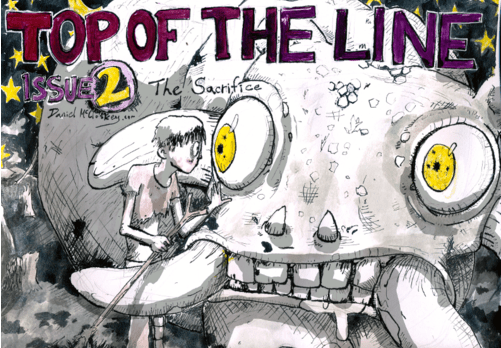
Recently Dan has been drawing monsters for his new comic book series, Top of The Line. He is going through with his launch of the project via Kickstarter. Here is the link.

Bonus books contributed by Pittsburgh's  Small Press Community.
Bonus books contributed by Pittsburgh’s Small Press Community.

Cyberpunk Apocalypse Drawathon

Pittsburgh’s arts and comics community is supporting Dan in his hour of need. On Nov. 20 Dan is kickstarting his Kickstarter with a Draw-a-thon. Dan promises to draw live for 24 hours, streaming at danielmccloskey.com. There will be guest comics artists like Jason Lex, Nate McDonough author of Grixly and Nils Skeletonballs dropping in throughout the day to give out bonus rewards. Award -winning poet Tameka Cage Conley  will be there. Thomas Scioli will have a special signed edition of Final Frontier. Artnoose and Brett Kashmere are contributing projects, too.

cover2

All or Nothing
If you have never supported a Kickstarter project, you will need to sign up. As Kickstarter’s site explains it: If the project reaches its funding goal, then backers are charged. If the project falls short, then no one is charged. Funding on Kickstarter is all-or-nothing.

 Top of the Line © Daniel McCloskey
Top of the Line © Daniel McCloskey

Dan’s fund totals are up since I grabbed the picture above, for the latest check here. If you’d like to read Top of the Line, FREE! online, start here. Watch out for monsters and monster potholes!

Daniel McCloskey, photo © by Sarah La Ponte
Daniel McCloskey, photo © by Sarah LaPonte  sarahlaponte.com

Daniel is among the millions of uninsured Americans. He has a big hospital bill on his hands, but Allegheny Hospital is helping him with the costs. He might get it down to a few thousand dollars. He noted, “It is, however, pretty awesome to live in a world where a motorized vehicle can take you to nearby professionals who have the ability and equipment to relieve your pain, painstakingly sew your face together for 3 hours, and save what teeth can be saved.”

Bak’s Book: Island of Memory


bak9

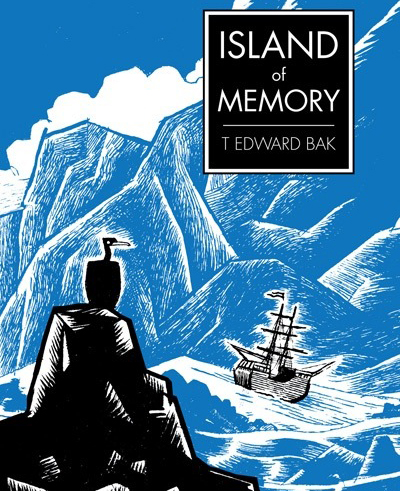
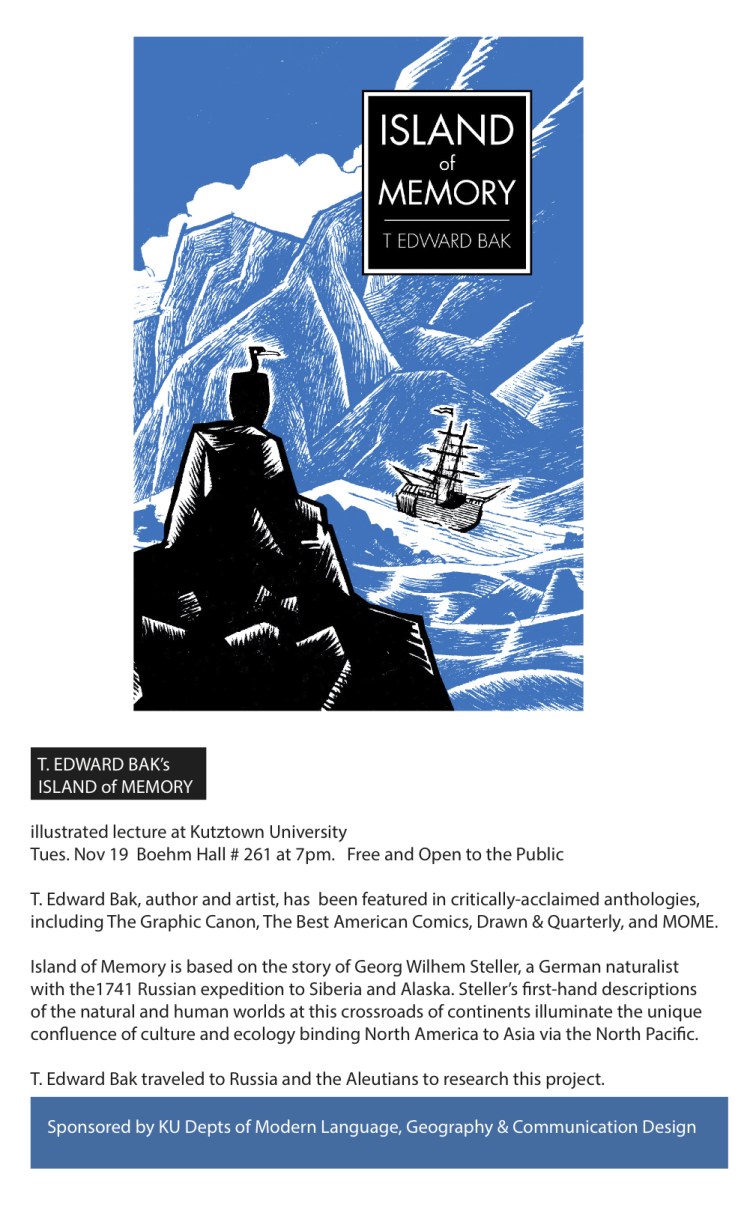
The adventurous graphic novelist T. Edward Bak is coming to Kutztown University to speak about another adventurous explorer from the 18th century.  Bak’s ‘Wild Man’ tour includes stops at the Center for Cartoon Studies in Vermont, SAW in Gainesville as well as KU. The KU event is Free. Boehm, Lecture Room 261, Tues. Nov. 19 at 7:00 pm.

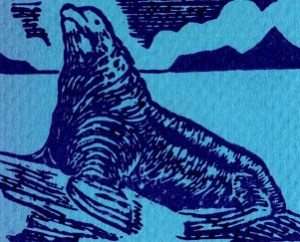
Letterpress print of Stellar Sea Lion © T Edward Bak

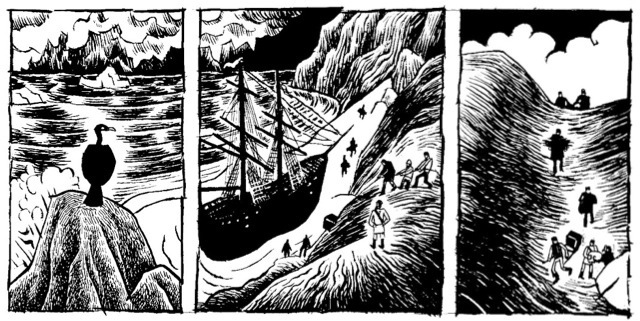
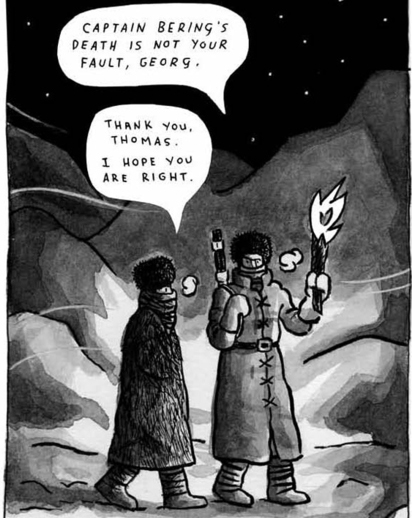
Bak, who now calls Portland, Oregon home traveled to Alaska’s Aleutian Islands to research “Island of Memory.” The 72-page graphic novel is based on the adventures of the German naturalist  Georg Wilhelm Steller.

20131108-154900.jpg
Steller worked on the ill-fated Russian expedition led by Vitus Bering that explored Alaska in 1741. Steller discovered a number of species of birds and animals unknown to Europeans. The Steller Sea Cow became extinct within a 25 years of his initial description of the docile beast. The Steller Jay, though, is still common on the Pacific coast. It’s similarity to the American Blue Jay led Steller to rightly conclude Alaska was not an island, but part of the North American continent.

bak2

Bak’s publisher, Floating World, puts it this way, “Steller’s first-hand descriptions of the natural and human worlds at this crossroads of continents illuminate the unique confluence of culture and ecology binding North America to Asia via the North Pacific.” Island of Memory is “Part natural history, part adventure yarn and part experimental narrative, this …fever dream is the artistic realization of Bak’s inquiry into the socio-ecological consequences of empire.”

bak4

Bak’s Island of Memory is a labor of love, and only the first installment of a planned four-volume epic work on Steller. In an interview with designer Francois Vigneault, Bak recalled when he first visited to Alaska to work on a ship, “I flew to Sitka, and the minute I stepped off the plane, I realized ‘I’ve been headed here my whole life. I’ve been on a trajectory my entire life to come here.’

detail from  Bak's Alaska sketchbook/
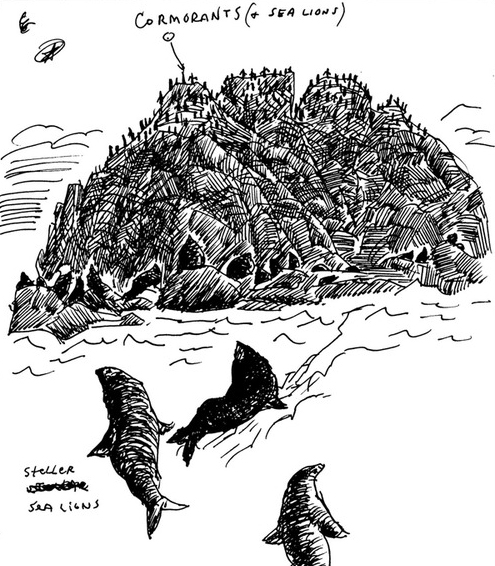
Steller Sea Lions detail from Bak’s Alaska sketchbook

I got on the ship, and the first morning I woke up to the announcement: “We’ve got humpbacks starboard!” and there were humpback whales breaching beside the boat. I ran to the window and flipped out. So there are humpbacks every day. Constantly around the boat, breaching around the boat. There were sea lions constantly. Sea otters! We saw sea otters, like rafts of sea otters, floating out in the passage. And of course there are bears everywhere on the shore, and moose everywhere, wolves and orcas and Dalles porpoises, so many crazy birds. Anyhow, all of this was completely overwhelming for me. I had no idea what to expect. I expected to see wildlife, but not anything like this.”

Bak’s Island of Memory presentation touches on art, ecology, geography and the humanities. The event is co-sponsored by Kutztown’s Modern Language, Geography, and Communication Design Depts. A book signing will follow his illustrated presentation.MemoryZ

Paul Pope’s Battling Boy

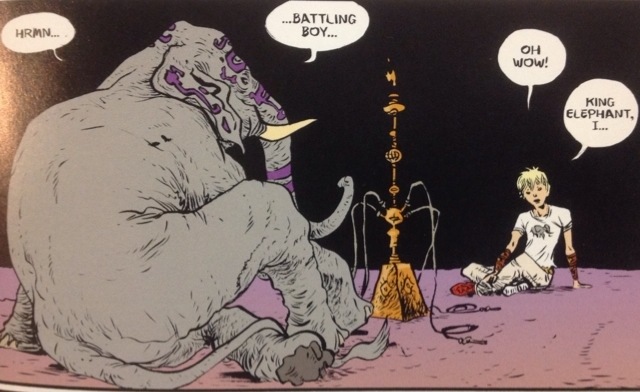
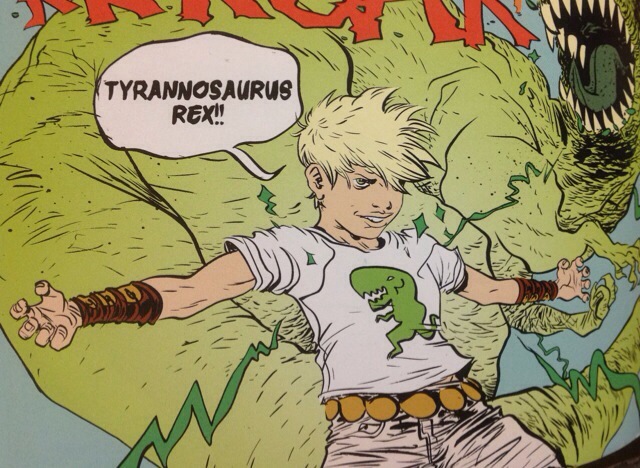
20131108-182958.jpgBattlling Boy arrives to an earth-like place with some baggage, literally. He finds 12 T-shirts packed in his suitcase each bearing the image of a different animal. A smart kid, he realizes, “these were painted with inks made of pulverized moonblood! I am supposed to wear these into battle.” Each T-shirt imbues him with the power of the pictured animal.

20131108-184108.jpg
B.B. is second generation superhero. His father is a busy guy, he wears an operatic costume that channels Thor and Batman. Early on in the story another aging superhero, Haggard West, a sort of Rocketeer with wrinkles, dies at the hands of Sadisto. Sadisto, with a name like that you have got to be bad! Pope draws his demonic villians with verve.

20131108-185353.jpg
Pope’s drawings of elephants evoke Heinrich Kley’s pachyderms in motion. Pope’s individual frames are each splendid, in sequence they become absolutely stunning.

20131108-224947.jpg
Just as today’s films are edited at a faster clip than yesterdays, Battling Boy’s pace is ramped up from that of superhero comics’ silver age. Of course, individual readers can slow the motion down a notch, or even back up if need be. I found the story compelling and I know I am way older than the target audience. The violence is cleverly staged to shock without gore. This book is library safe, but still exciting. And Battling Boy has pluck. I hope to see him again.

Battling Boy, written and drawn by Paul Pope, with surberb coloring by Hillary Sycamore, is published by First Second. More images from the book can be found here.

Nils Balls and The Ship of Soiled Doves.

“Soiled Doves” is Civil War slang for prostitutes. Hold that thought. We’ll get back to the prostitutes shortly.

20131104-111851.jpg
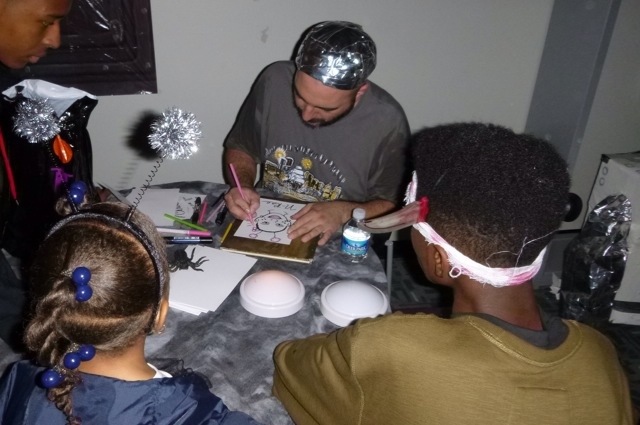
Meet Nils Balls. He is the guy wearing a tin foil helmet in the Carnegie Library on Pittsburgh’s Northside. He’s seated with a fairy princess and a teen zombie who has a knife through his head, drawing free caricatures for the Library’s Halloween Party.

At Syracuse University Nils majored in film. His writing teacher was the now star George Saunders. Being a working class kid from Pittsburgh at what he calls a “rich kid’s school” Nils felt like a fish out of water. Saunders inspired him to stay true to his blue-collar roots.

20131105-115105.jpg
Syracuse has a great illustration program, but Nils never set foot in an illustration class. Still, the fact that there were so many first-rate illustrators on campus made a difference. The school paper, The Daily Orange had a comics page with as many a 20 student drawn comics. Nils began drawing “The Brighter Side of Sunshine” in his freshman year. He shared the page with artists like Ben Marra, Dan Meth, and Nick Gurewitch who created the Perry Bible Fellowship strip.

He graduated from Syracuse in 2001 and returned to Pittsburgh. He works for Mellinger’s beer distributer. He loves his job and if he needs 3 days off to draw or go to a comics convention, his boss is supportive.

20131105-105904.jpg
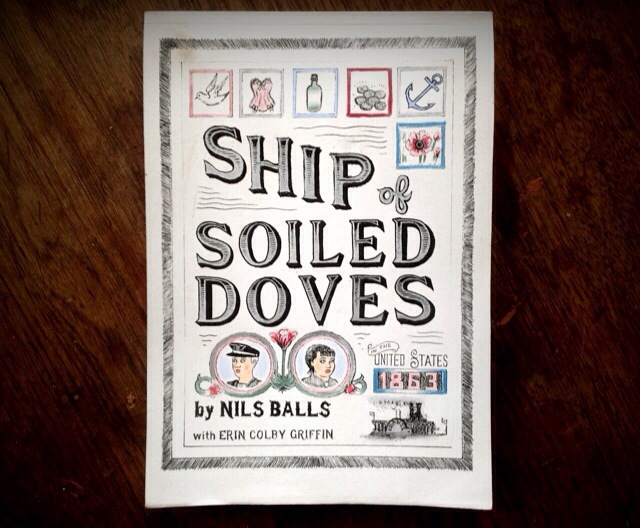
He is the cartoonist for Pittsburgh’s Northside Chronicle. He contributes to local comic anthologies and showcases his artwork on his website, skeletonballs.com. His most recent achievement is the graphic novel, Ship of Soiled Doves. The story began when Nils and Erin Colby Griffin had a conversation over a beer or two about a little-known event during the U.S. Civil War. In 1863 the new steamship Idahoe was docked in Cincinnati. The captain got orders from General Morgan of the Union Army to proceed to Nashville to pick up some V.I.P’s.

20131105-122856.jpg
Turns out Gen. Morgan wanted to marginally reduce the number of prostitutes in Nashville and the Idahoe was ordered to relocate 100 ‘soiled doves.’ Much of what occured on the journey downriver is lost to history, but Griffin and Balls conjure up a remarkable tale of love, lust, mutiny and adventure.

20131105-120511.jpg
Drawing the 150-page book took over 3 years, Nils learned a lot arcane 19th century slang for sex and sex organs ( syrup of squill? ) but some terms were so obscure, they got edited out. For a better description of the story or to purchase a first edition of The Ship of Soiled Doves visit Copacetic Comics. It is a masterpiece of historical proportions.

20131105-114544.jpg Nils has worthwhile links on skeletonballs. He lists a number of Pittsburgh newspapers and newsletters. He tells aspiring cartoonists to offer their work for free. Yes, Nils has heard the viral arguments against free work, but says it might take a decade to find your groove in comics.

Elsewhere on his site he links to over three dozen other Pittsburgh cartoonists. Asked why Pittsburgh has such a vibrant comics scene, Nils said, “One reason is when Ed and Jim got successful, – they didn’t leave Pittsburgh for New York,”referring to Ed Piskor and Jim Rugg. Nils also credits another pillar of the Pittsburgh comic community Bill Boichel, of Copacetic Comics for nurturing and sustaining local talent. Nils Balls is one of the many hardworking and gifted Pittsburgh artists who deserve a wider audience.

20131105-223723.jpg Nils Balls photos by Kevin McCloskey. All artwork copyright Nils Balls.

20131105-145404.jpg

Irving Herrera, the Artist and his Models

20131022-173831.jpg
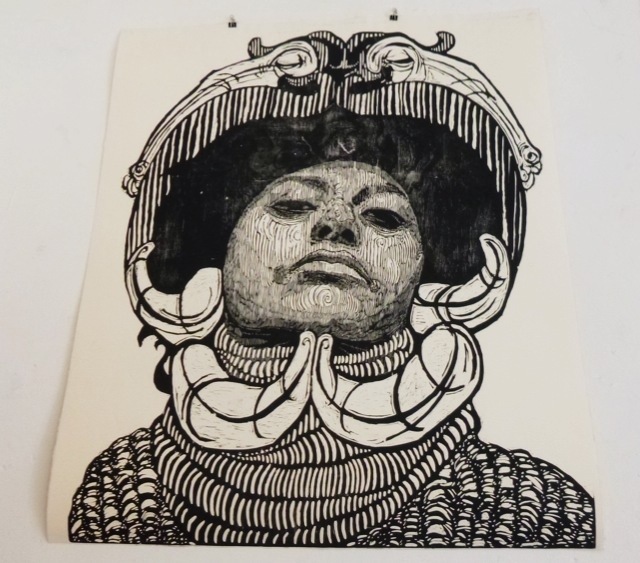
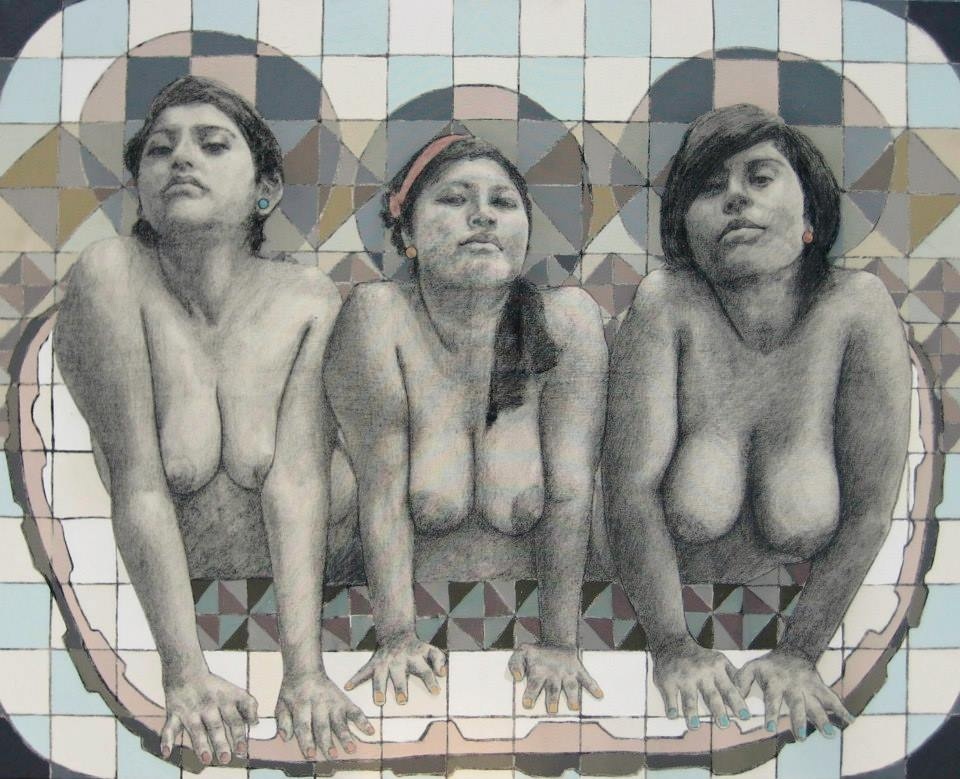
Irving Herrera creates wonderful images of beautiful woman. What is so remarkable about his artwork is that he appreciates the beauty of the indigenous and mixed-race woman of Oaxaca.

20131022-174806.jpg
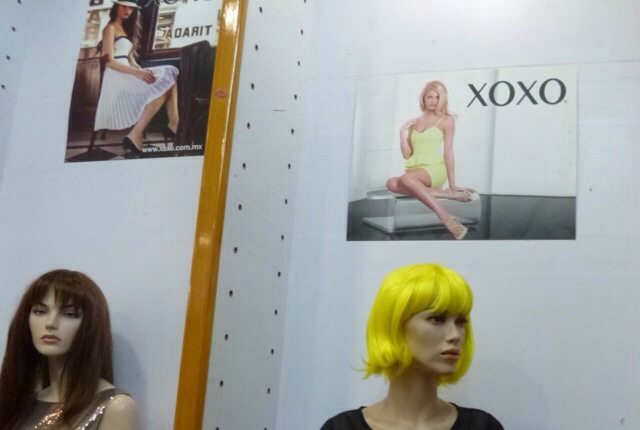
Throughout Mexico the leggy newscasters you see on T.V. and the models on billboards, calendars, and magazines often look like pure-blooded Europeans. I took a walk looking for examples and found this mind-boggling image in the lobby of a liposuction clinic.

20131022-220746.jpg
And here is a more typical image from a dress shop window…

20131022-221602.jpg
Such images of so-called ‘female perfection’ bombard the men and women of Oaxaca daily. Dark, broadbodied Indigenous women might play the sympathetic maids, but not the love interest in telanovelas (soap operas.) Irving was born to an indigenous Mixteco family in the high mountain village of Huajuapan de Leon in 1984. He came to Oaxaca and studied with the master printmaker Shinzaburo Takeda.

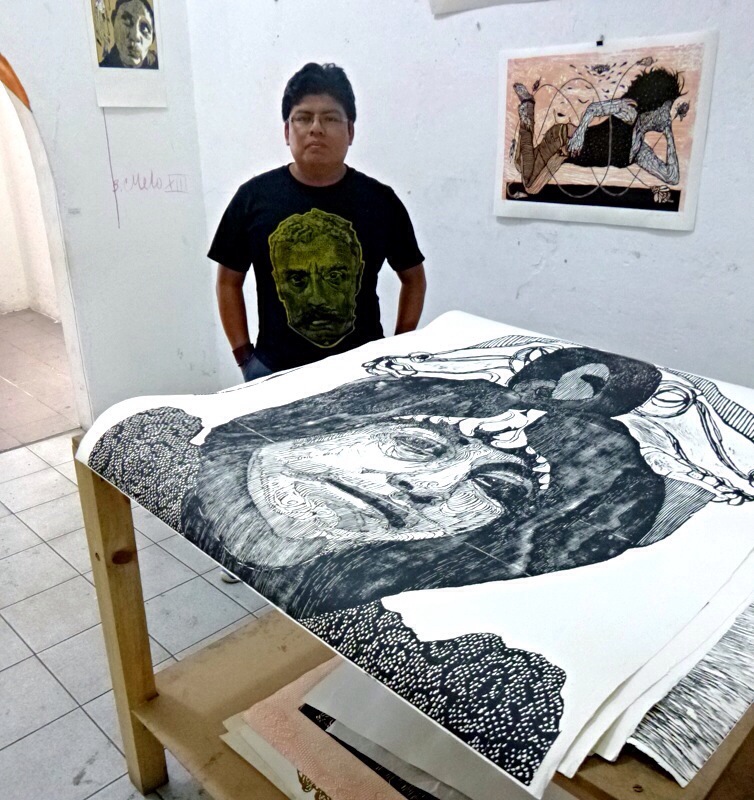
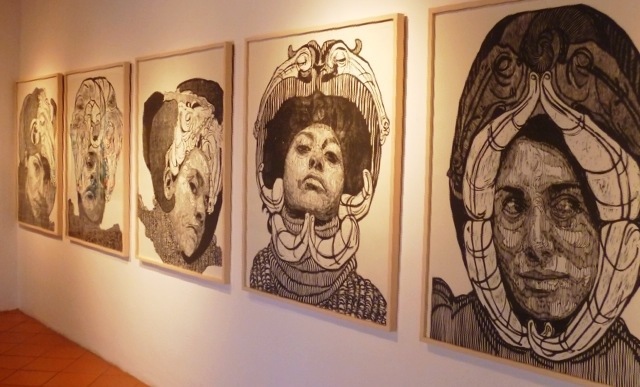
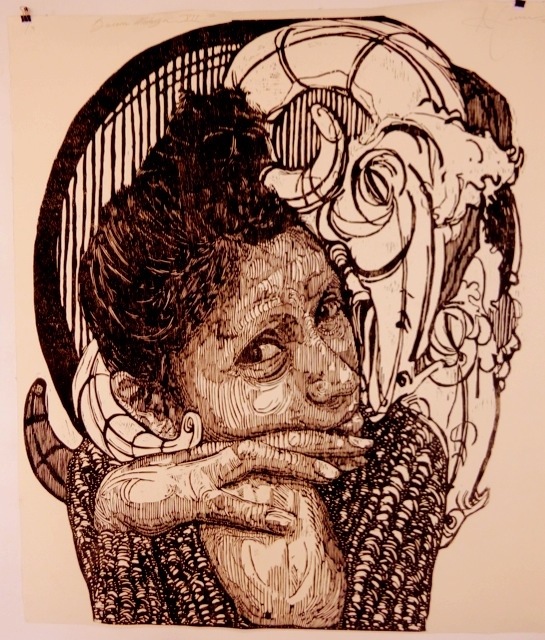
20131022-182332.jpg Today, Irving Herrera is an artist on a roll. He illustrated the current issue (Oct. 2013) of the magazine, El Jolgorio. It is a special Oaxaca Poetry issue and can be downloaded here. Irving recently had a roomful of his prints exhibited at MACO, The Museo del Arte Comtemporaneo de Oaxaca. He has twice won ‘Young Creative Artist’ grants from the State of Oaxaca to complete the series of oversized portraits he calls, ‘Senora Matanzas.’ I don’t know how to translate this, maybe,’ Killer Women?’

20131022-182403.jpg
He told me he carves these portraits from models directly into the wood in a matter of hours. Then he crowns the portrait with the bones of a slaugthered animal, often a goat. The senoras’ seductive expressions are jarringly juxtapozed with the formal posture and dress of the Porfiato (Mexico’s version of Victorian era.) Irving says he’s mixing memories from the slaughterhouses of his boyhood town and the prints of Jose Guadalupe Posada. This past weekend Irving travelled into the mountains accompanied by his beloved teacher Maestro Takeda. The two artists were honored guests at a regional festival in Irving’s pueblo, Huajuapan de Leon, were the woman are so very beautiful.

20131022-230329.jpgIn Oaxaca, Irving Herrera and his talented companeros of Gabinete Grafico studio can be found at 307 Xincotencatl.

Art Oasis in Mexico City

20131013-114205.jpg

Maestro Gerardo Torres Gonzalez (center) tends an oasis in one of the world’s largest cities. Mexico City’s Bosque de Chapultepec is home to many wonders including Emperor Maximilian’s castle. Below the castle in a grove of eucalyptus trees you will find a house called Quinta Colorado. In the patio every Saturday and Sunday there are art classes. At the center of this school is an extraordinary art teacher, Maestro Torres. Anyone who finds their way to his class is welcome. The classes are free. Maestro Torres gets support for the project from the Instituto Nacional de Bellas Artes , the famed Mexico City art school where he studied.

20131013-111958.jpg
Carolina, one of the youngest artists in the open-air class.

Mexico has a long tradition of open-air and free art education. It was especially big in the 1930’s. It is wonderful to see the tradition continue. Maestro Torres told me he has been in the park for 6 years; before that he taught  classes for 11 years at another location. He has a truly amazing in his capacity to teach a class of diverse students of mixed abilities. Some of his students arrive with recycled copy paper and a single pencil. Others bring watercolors and proper sketchbooks. When I visited one young artist , Luis, was painting in oils. Maestro Torres works with what he gets, and treats every student with respect. Over the years I have observed many art teachers in action. This man is special.20131013-114118.jpg
My friend Diego works as a civil servant in a skyscraper at the metro stop Zapata.  Weekends he gladly rides the train a few extra stops to Chapultepec Park. Diego has no expectation of quitting his day job to become an artist. He told me the art class means so much to him because his office work is so very routine. At Quinta Colorado, Diego has a chance to do something creative and forget the stresses of his week.

Carolina, a talented little girl came with her grandfather, who sat behind her on a stone wall reading a novel while she painted. There was one older fellow with gray flecks in his beard and long hair tied up in an odd knot like a Hindu monk. His fingernails were painted black and he didn’t say much. Maestro Torres greeted every student with enthusiasm, and hopped from table to table giving encouragement and technical demonstrations.

Alberto, age 7, uses crayons for his art.

Maestro Torres believes that copying photos is a fruitless way to learn to draw. He told me there must be a balance between observation and imagination. He has developed a number of quick exercises to facilitate imagination. One he calls the ‘Constellation.’ He peppers a page with random dots. Then with the side of a pencil, or a hexagonal bar of graphite, he connects some of the dots creating a balanced, but abstract, tonal composition. He then takes a quick breath. I noticed at this point he sometimes looks up into the trees for an instant. Then he finds something on the page. If he is working with a child, he might draw an animal. If he is working with an adult he can create a complete figurative drawing in a matter of minutes. He dates his drawings, signs them with a carved stamp and gives them freely to his students.
20131013-114219.jpgThe maestro is a firm believer in keeping a sketchbook. In fact, he keeps two. He was good enough to share these pages. Even his tiny pocket-sized Fabiano notebook demonstrates his mastery of the human figure and his delightful drawing ability with brush, pen, and pencil. Maestro Torres is working on a book about his teaching methods. I look forward to seeing it.  When I return to Chalputelpec Park, I know where to find him. Gracias, Maestro.

20131013-114246.jpg

20131013-114233.jpg

20131013-114338.jpg

20131013-114302.jpg

20131013-114401.jpg