Elizabeth Catlett 1915-2012

Mother and child, terra-cotta, approx. 14 inch tall. Elizabeth Catlett

Elizabeth Catlett died last week. She was an African-American artist and member of the Taller Grafica Popular, the famed Mexico City printmaking collective. Her Mexico City friends included Frida Kahlo and Diego Rivera. The U.S. obituaries generally referred to Ms. Catlett as a sculptor. In fact, the NY Times headline is Elizabeth Catlett, Sculptor With Eye on Social Issues, Is Dead at 96.

I was familiar with Catlett’s graphic work, but I’d never seen her sculpture. Oddly enough, I came across this one, above, when I went to MOMA to see the Diego Rivera show. The terra-cotta Mother and Child is small but has a monumental feel.

MOMA museum label for the print below.

I’ve written about my  2009 pilgrimage to the Taller Grafica Popular. I was struck then by how many international artists had produced work there, Elizabeth Catlett included. Art Historian Melanie Herzog wrote the book about Catlett, and a fine essay by Herzog on Catlett’s TGP work that can be found here.  This is a brief excerpt in which Catlett talks about her TGP experience:

“The criticism in the Taller was always positive, like somebody would say, “I think that you have a very good design, and it’s very clear, but why did you hide the hands?” And so they would say, “I can’t draw hands.” “Well, I’ll help you, or I’ll draw the hands.” Or they would say, “This symbolism has been used over and over, it’s time we had something new,” and so then they would have a general discussion of what you could use. . . . And it didn’t matter how many people worked on something, as long as it came out the best we could make it.”

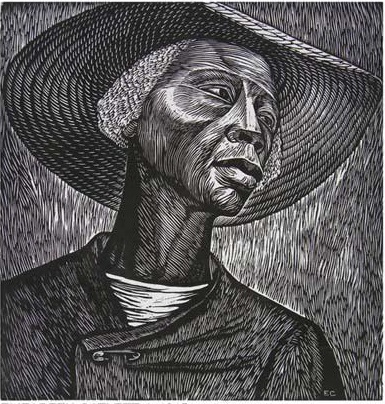
Sharecropper, Elizabeth Catlett, printed with Jose Sanchez, TGP, Mexico City.

Sharecropper is one of Catlett’s master works. The safety-pin holding the coat together is a nice detail; I only noticed it now. Every deliberate mark Catlett made on this print adds up to a portrait of dignity.

Update: View a larger sampling of Catlett’s artistic output in all its diversity at Ourstorian.

The two Elizabeth Catlett works on view at the MOMA.

Honorary Doctorate for KU C.D. grad

Eric Scheaffer from: http://www.signature-theatre.org

Today at an otherwise ho-hum University Senate meeting we learned Eric D. Scheaffer, a BFA grad from Kutztown’s famed Communication Design program will receive an honorary doctorate from his alma mater on May 12 at commencement. The Fleetwood native has had extraordinary success in live theatre in the Washington D.C. area and beyond. He has been profiled several times on the PBS Newshour. The musical genius Stephen Sondheim declared Scheaffer’s interpretations of his musicals are his personal favorites.

Scheaffer’s many awards include six Helen Hayes Awards for Outstanding Direction, six Helen Hayes Awards for Outstanding Musical, and the Washingtonian of the Year Award. His Signature Theatre earned the 2009 Tony Award for the Outstanding Regional Theatre.

“Since cofounding Arlington’s Signature Theatre company in 1990, he has reveled in repeated waves of positive buzz that echoed in New York, Los Angeles, and London. One critic wrote that Schaeffer “seems to pull a bigger rabbit out of his hat every year.” –Washingtonian Magazine.

courtesy: http://www.milliondollarquartetlive.com

Scheaffer has also had four successful productions on Broadway, most recently Million Dollar Quartet. This show recreates the legendary rock and roll night when Johnny Cash, Jerry Lee Lewis, Carl Perkins and Elvis Presley jammed together at Sun Records in Memphis, Tennessee. Million Dollar Quartet can still be seen in New York on Broadway and in other major cities. And if you are heading toward D.C., the Signature Theatre’s spring line-up can be found here.


Chip Kidd Plays Covers

“Majoring in Art at the state university appealed to me because I have always hated Art, and I had a hunch if any school would treat the subject with the proper disdain it would be one run by the government. Of course I was right.”  

   – Chip Kidd, The Cheese Monkeys: A Novel in Two Semesters.

Detail from poster by Madison O' Neil, Kutztown student.

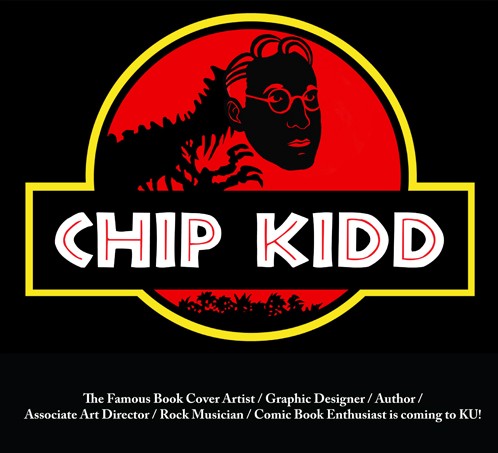
Chip Kidd is coming to Kutztown University. America’s best known book cover designer, he was even an answer (in the form of a question) on Jeopardy! His visit is brought to us by the hardworking students of Kutztown’s AIGA chapter. The event is FREE. Weds. March 28. Time: 7pm. Room 200 at Academic Forum. A sample of Chip Kidd’s greatest hits can be seen here at Time. By the way, the university referred to above is not Kutztown University. It is fictional and located in someplace like Happy Valley.

One of Chip Kidd's award-winning cover designs.

Chip Kidd is the author of the eagerly awaited new hardcover Batman graphic novel, Death by Design, with art by Dave Taylor, due out this June. Below is a sneak preview of the cover.

ELVIS Face on Tortilla! FAKE!

Elvis Tortilla ©2012 Kevin McCloskey

The ELVIS Tortilla is a fake, a hoax! I made it to publicize the lecture, Rockin’ Las Americas. I apologize if anyone takes offense. I am a big fan of Elvis and of Mexico. The Elvis Tortilla wasn’t easy. Jesus and Hello Kitty are easy; they make toasters especially for their fans. Elvis takes real effort. (See Below.)

Refried Elvis: The Rise of the Mexican Counterculture is a fascinating book about Elvis’s influence on Mexico’s Rock scene. It’s published in Mexico with a less catchy title: Rebeldes con causa: La contracultural mexicana y la crisis del estado patriarcal, (Rebels with a cause: The Mexican counterculture and the crisis of the patriarchal state.)

Refried Elvis, published by University of California Press.

Author Eric Zolov is coming to Kutztown to give the 2012 Esther Willits Lecture on April 3. Dr. Zolov is a Professor of Latin American History at SUNY, Stony Brook. He may be the foremost academic expert on what Mexicans call “La Onda” (The Wave) the music-driven counterculture that swept through Mexico and Latin America beginning with Elvis. That’s why I went to the trouble of creating the Elvis Tortilla.

Failed attempt to cut a tortilla frisket.©2012 KMc

My first try involved sketching Elvis at 8 inch tortilla scale. I placed a profile cut from one tortilla on a second and tossed them in the pan. I went with wheat tortillas, corn might have worked better. When I tried to remove the profile, the base tortilla came apart. That’s when I resorted to Photoshop. I burned a tortilla until it was as black as Elvis’s hair. I put that on the scanner along with a lighter tortilla. Then I fashioned a mask based on my original sketch. I had trouble masking, but I sat in the student lab alongside Photoshop pros, Jerry Cavill and Mike Mangigian, who helped me out.

Below is the final poster with the Photoshopped tortilla. Dr. Zolov’s lecture should be fascinating; I hope he brings some records. Tuesday, April 3, 261 Beohm, 7pm. Kutztown University. Hasta Pronto!

Wyatt Glennon’s art to hang in Museum of American Illustration

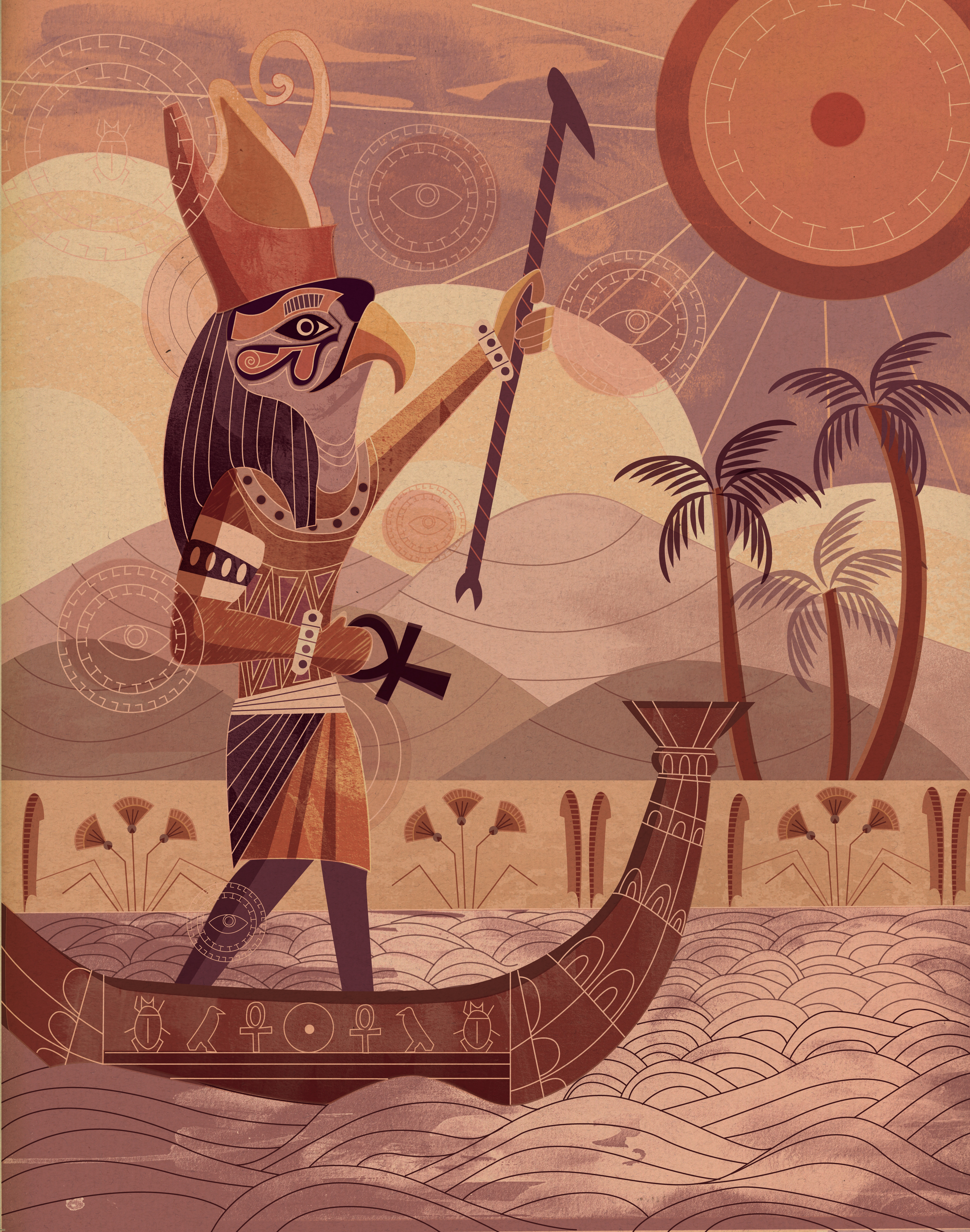
Egypt © 2011 Wyatt Glennon.

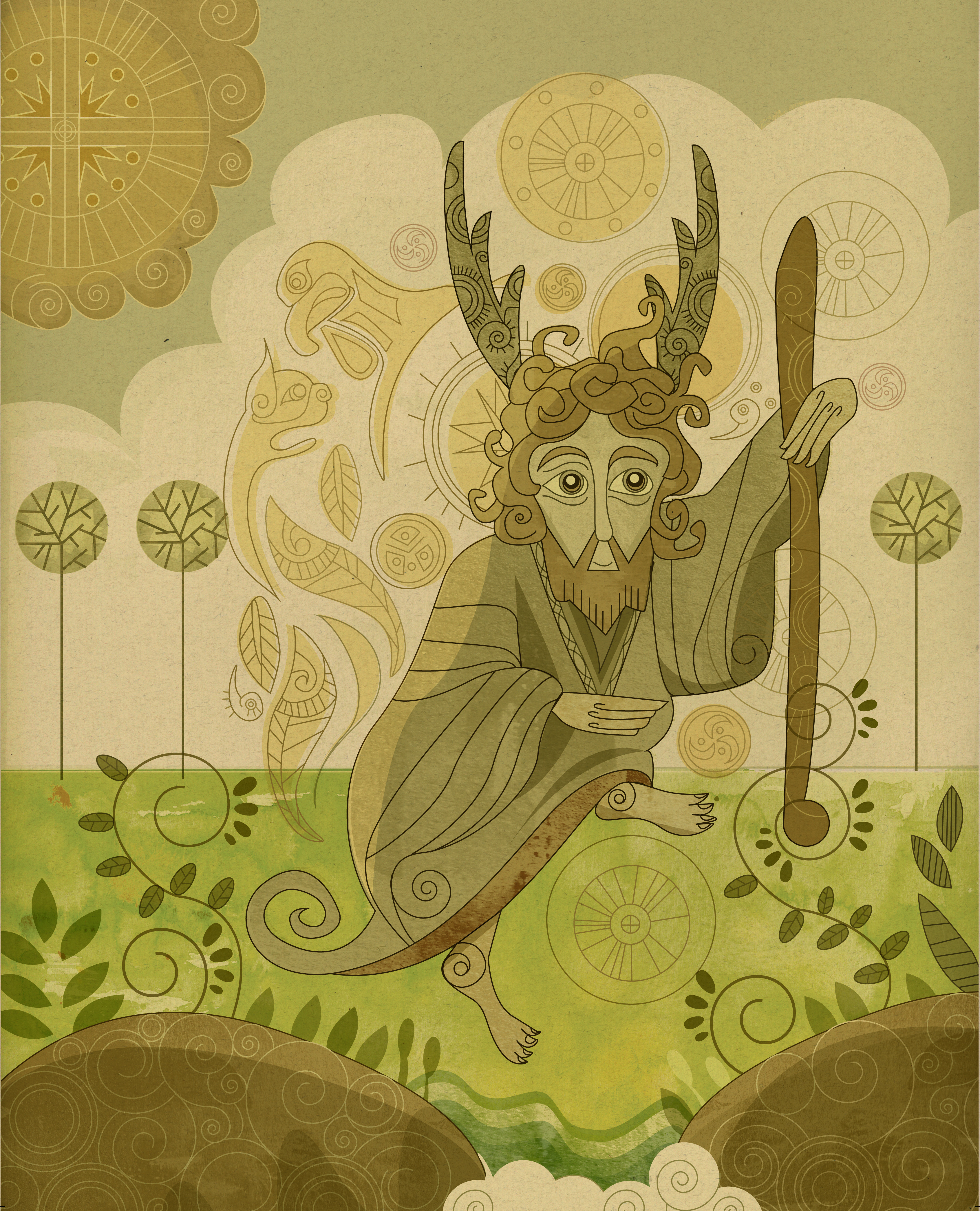
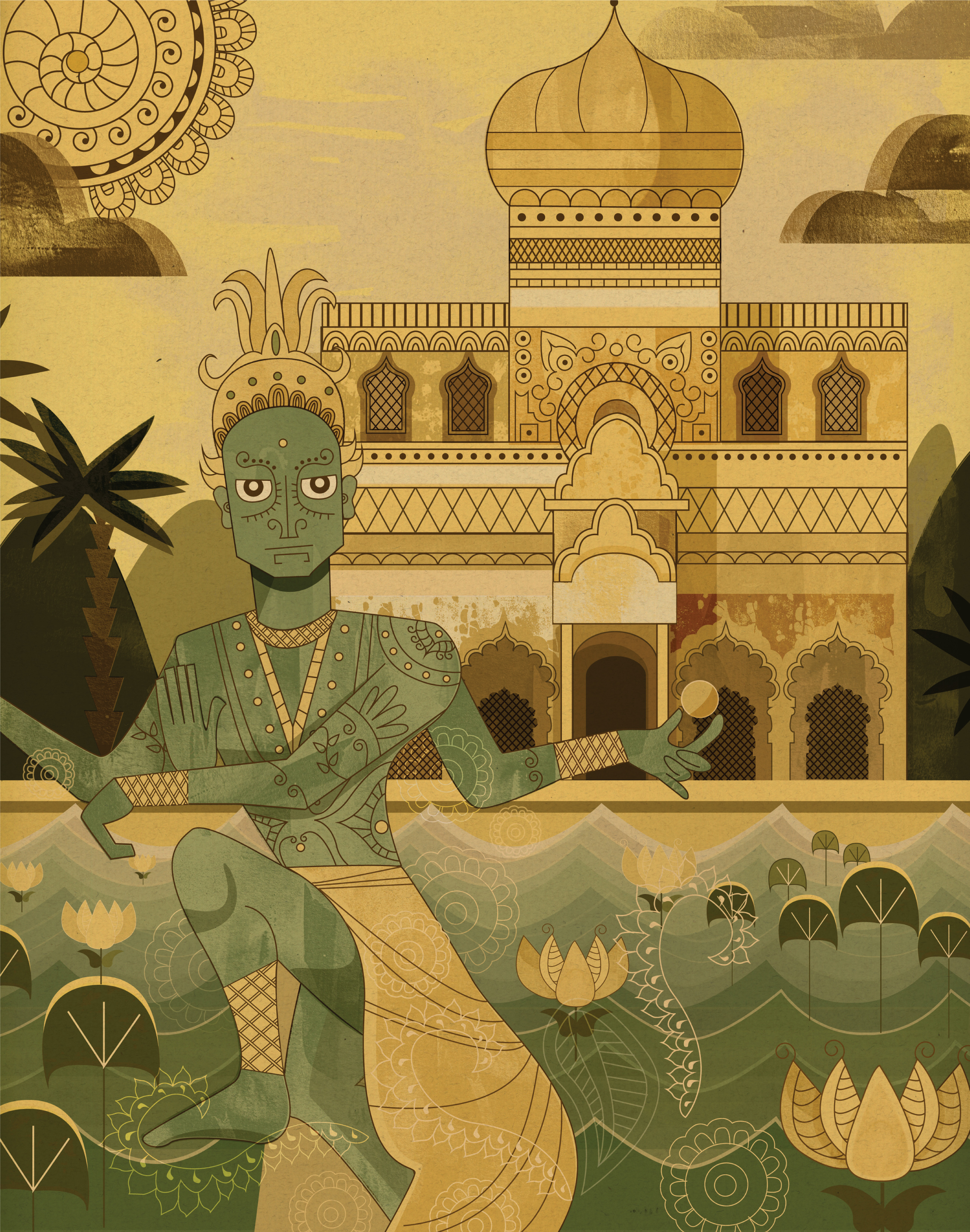
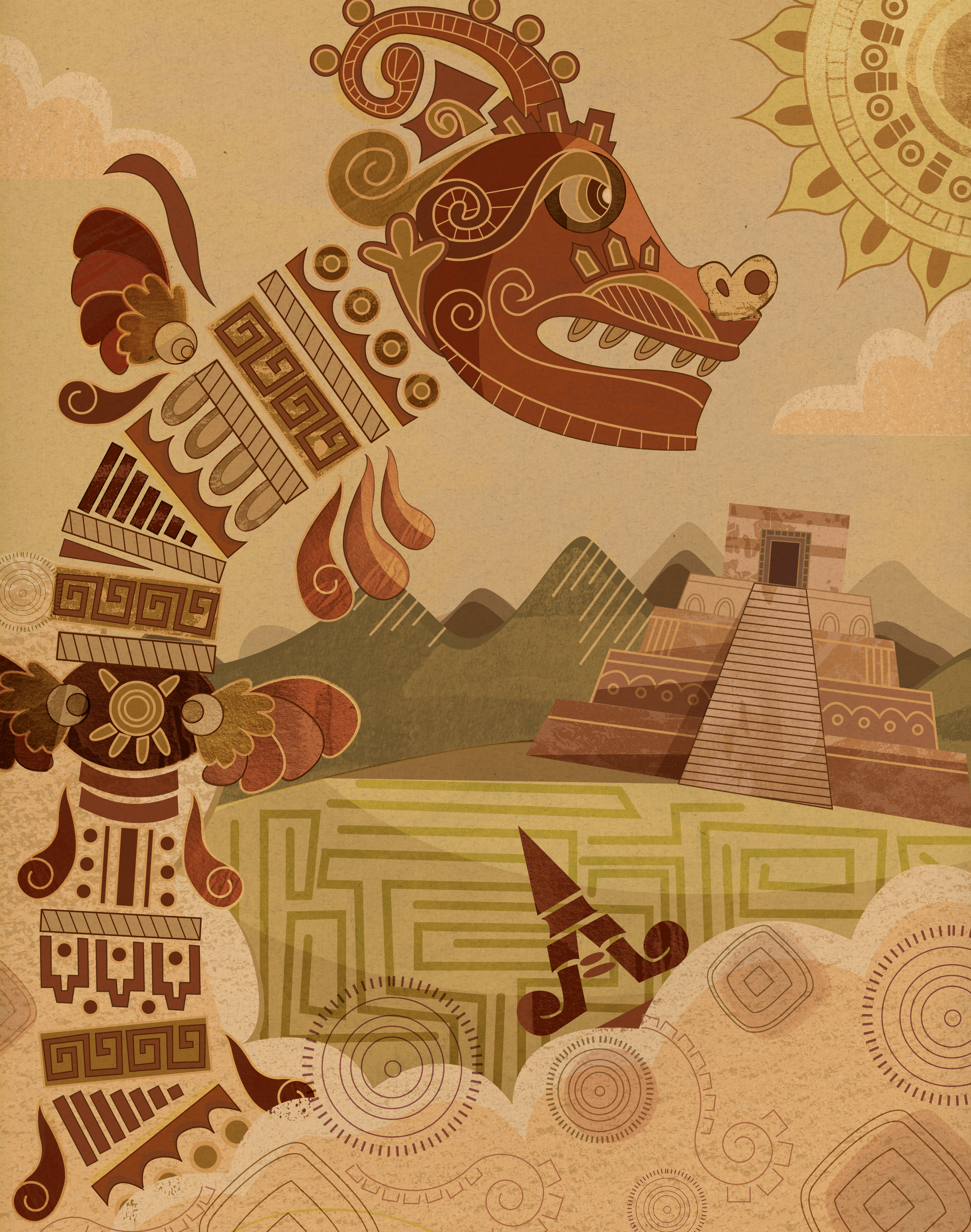
Wyatt Glennon’s illustration Egypt will hang on the walls of the Museum of American Illustration in NYC from May 9-June 2. This project was created in Prof. Denise Bosler’s Illustration I class. There will be a reception and awards presentation at the Society of Illustrators on May 18, free and open to the public, details here. The great illustrator C.F. Paine  is scheduled to get the Society’s Distinguished Educator Award that night. Perhaps Wyatt will also get a student award; we will let you know.

Wyatt has had a good school year. He was also a finalist for the World’s AIDS Day Poster Competition in Skopje Macedonia. I asked Wyatt to tell us something about his style. His response is below.

Celtic © 2011 Wyatt Glennon.

“The inspiration for this series of illustrations, as well as much of my other work, comes from cultural patterns and design.  Celtic knot-work, henna tattoos and hieroglyphics all influenced me as I worked on these pieces. I also get inspiration from classic cartoons and new animated features such as The Secret of Kells.  Similar to The Secret of Kells,  I find that giving my work a historical and cultural background aids in creating a cohesive finished piece. While this series was done mainly on the computer, I tried to instill a hand-done feel to it as I do most of my design and illustration work. By adding scanned in watercolor and paper textures I tried to add a vitality to these pieces that would have remained flat and cold vector shapes.

India ©2011 Wyatt Glennon.

Congrats to Wyatt on his success! If you are in Kutztown let him know what you think of his work. Wyatt has a work study job at the Miller Gallery. He is often at the reception desk there; do drop in and congratulate him in person.

Aztec © 2011 Wyatt Glennon.

Quilts Honor WW II Women.

WW II apron image from the series ©2012 Camille Eaton RomigDuring World War II, many U.S. women changed out of their gingham kitchen aprons and donned heavy protective factory aprons to support the war effort. This took place all across the country. In the 1940’s Penn State’s Allentown Extension campus offered courses in drafting, chemistry, management, and civil defense. Women enrolled in extension courses and became gainfully employed by local industry. To celebrate this part of its 100-year history Penn State Lehigh Valley is mounting a commemorative exhibition. Ten woman artists honor the “Homefront Heroes: Women of WW II,” from Feb. 27-April 28, 2012, at the Gallery of Penn State Lehigh Valley Campus.

Camille Eaton Romig and her quilted art, For the Duration

Camille Eaton Romig contributed nine quilted rectangles illustrating this metaphor of changing aprons. She calls the series For the Duration. The panel below includes the 1941 headline: “WAR! Oahu bombed by Japanese Planes.” Camille’s father was stationed at Hickam Field, Pearl Harbor’s ground zero, on that date that will live in infamy. I asked Camille about how she created this project and about her parents.

“My dad was 19 and in the Army Air Forces, 72nd Bombardment Squadron, at Hickam. He was a buck sergeant. Later, he met my mother in Kansas in 1944. She was a WAC. I included the front page with the Pearl Harbor attack headline to honor him as well as to define the beginning of the duration.”

Panel with Pearl Harbor Headline © 2012 Camille Romig
Panel with Pearl Harbor Headline © 2012 Camille Eaton Romig

“I bought fabric prepared for ink jet printers–silk, cotton and organza. I found images on the internet (open source) and I manipulated them in a limited way with software that I had available–some day I’ll get PhotoShop.”

“Some of the images I incorporated include ration cards, a draftsman’s drawing of a U.S. Army airplane, letters, slide rules, compasses and the central lathe operator.”

Original War Office photo from the collection of Library of Congress.

Camille shared this background info about one historic photo she used: “The photograph of a metal lathe operator radiates strength, energy and beauty and presented an acceptable new image of women. Credited to Howard R. Hollem of the Office of War Information, it was probably used to motivate women to serve in the huge war machine that was required to win. Their humble services in industry, agriculture, education, volunteer organizations and the military were in addition to the many domestic challenges of the era. They did all jobs, whether traditionally understood to be masculine or feminine. They wore all the aprons.”

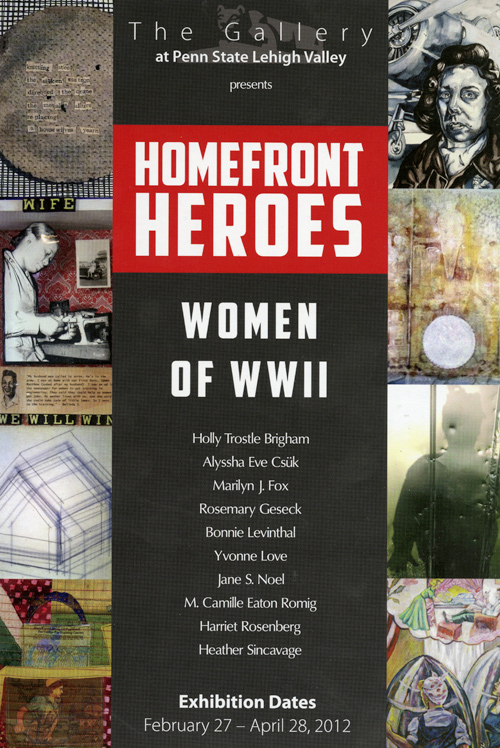
The postcard above lists the other artist participants. More info on the PSLV Gallery, including location and hours, can be found here.

High on the High Line

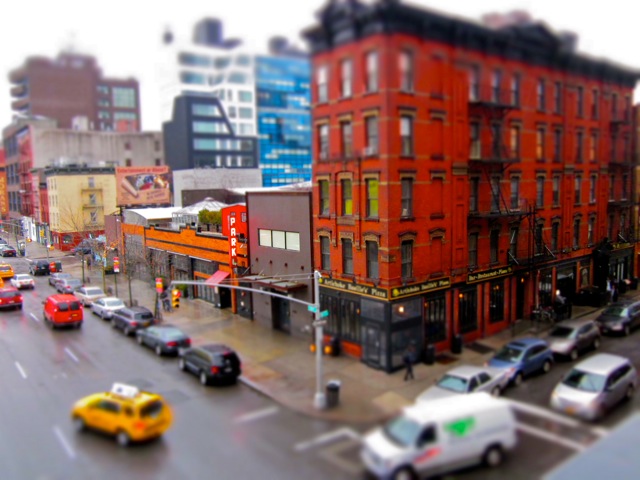
Lower Manhattan from the High Line © 2012 Rona Dacoscos Macias

The Trailing Edge of Digital Photography. This February, Rona Macias spent a week in NYC and shot pictures from the High Line. The High Line, if you are not familiar with it, is a long and narrow public park built on the site of the historic elevated freight train line. It runs North/South two stories above the streets of Manhattan’s West Side.

High Line, Winter 2012 © Rona D. Macias

I asked her what’s so special about this place?  “From the High Line you can see HOBOKEN! ” writes Rona. “The Statue of Liberty! You are high enough to see architecture from a different level without being inside.”

Hoboken from the High Line (detail) © 2012 Rona Macias

She continues, “Anytime of the day is good, but I was surprised how beautiful the light was in the morning with the mists over the river almost covering up the Lackawanna train station. And, the best part is it’s near Chelsea Market where you can pick up something to eat along the way.”

Grand Central Station © 2012 Rona Macias

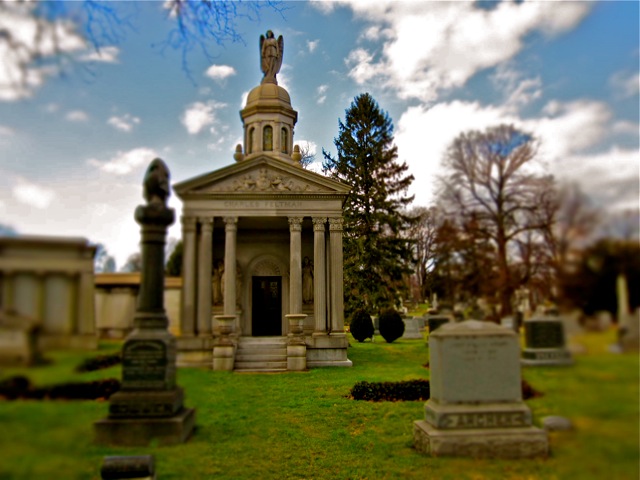
Naturally, Rona took shots of the Empire State Building and Grand Central Station. She also visited some lesser known sites, like Green-Wood Cemetery in Brooklyn. According to Rona the temple below is the final resting place of German immigrant Charles Feltman. In 1870 Feltman put a sausage in a horizontal roll and invented the Coney Island hot dog. The rest is history.

Tomb of the Inventor of the Hot Dog. ©2012 Rona Macias

Rona recommends searching the web for the latest in tilt-shift photography. Here is one site with over 80 examples and links to tutorials. And amazingly, Rona doesn’t use a pricey camera. Her Canon A1200 HD can be found on Amazon or Best Buy for as little as $80.

Hate Trolls, Love ELPHS

Strrets of Moyogolpa, Nicaragua, ©2011 Shelley Seale

My next camera will be a Canon ELPH. The wonderful photo above is by Austin-based travel writer Shelley Seale. She captured the colorful street in a small town on Ometepe, a volcanic island in the middle of Lake Nicaragua. Oddly enough, Shelley doesn’t think of herself as a gifted photographer. Do check out her ‘Trading Places Global’ travel blog to follow her adventures and see more of her work. Josh Berman, co-author the The Moon Handbook: Nicaragua shared Shelley’s picture (above) on Facebook. I wrote to her to ask about this eye-popping image, and if she had any photography advice to share.

Volcano, Ometepe, Nicaragua photo © 2011 Shelley Seale

“I assure you that was all the work of my fun, fantastic ‘miniature’ setting on my little Canon ELPH 500 camera. I don’t know if I would have any real tips for newbies; I can only say what I do, which is have my camera ready at almost any given time to snap that quick street shot or something happening in the moment. This is why I like having such a small camera.  – I even shot photos and video from the back of a motorcycle with it! I let the camera do the work and experiment with the fun settings and unusual angles or eye levels.”

Street scene, Luang Prabang, Laos, © 2012 Shelley Seale

Looking at Shelley’s Trading Places Global blog, I noticed she takes advantage of the magic of early morning light for her most dramatic shots, as in the Laotian street above. Canon’s ELPH 500, the model Shelly uses, can now be found online for about $220. Canon’s ELPH 300 is a slightly cheaper alternative: refurbished units go for under $150.

On a tighter budget? Rona Dacoscos, a San Francisco friend, uses the Canon’s A1200 HD. It has the same miniature setting. Canon’s A1200 can be found on Amazon or Best Buy for as little as $80. However, Rona recommends finding time to test every possible effect as soon as you unpack your camera. She sent back 2 lemons before she got one that was fully functional. Next post I’ll share some of Rona’s images.

Speaking of Scenic Nicaragua: My brother lives there part of each year and I’ve visited twice. Nicaragua is a colorful place to sketch, paint, or photograph. My friend Gerald Pavon is a great guide, and fluent in English, German, and Spanish. His Eco-Camp Expeditions, based in Leon, leads treks to Nicaragua’s highland coffee country, Ometepe, and other parts of Central America. Info: www.ecocampexpeditions.com

Best Camera for Illustrators?

Q. What is the best camera for an illustrator?

A. The one you will carry with you at all times.

Pumpkin head and iPhone photo by John Fronza © 2011

If that has to be your phone, fine, get good at taking pictures with your phone. Here are some amazing shots taken on the iPhone by John Fronza, an artist and the bass player in the Voyage of Slaves. (Click the band’s name only if you like death metal and you are not in the library!) He always has phone handy, so he has this camera with him.

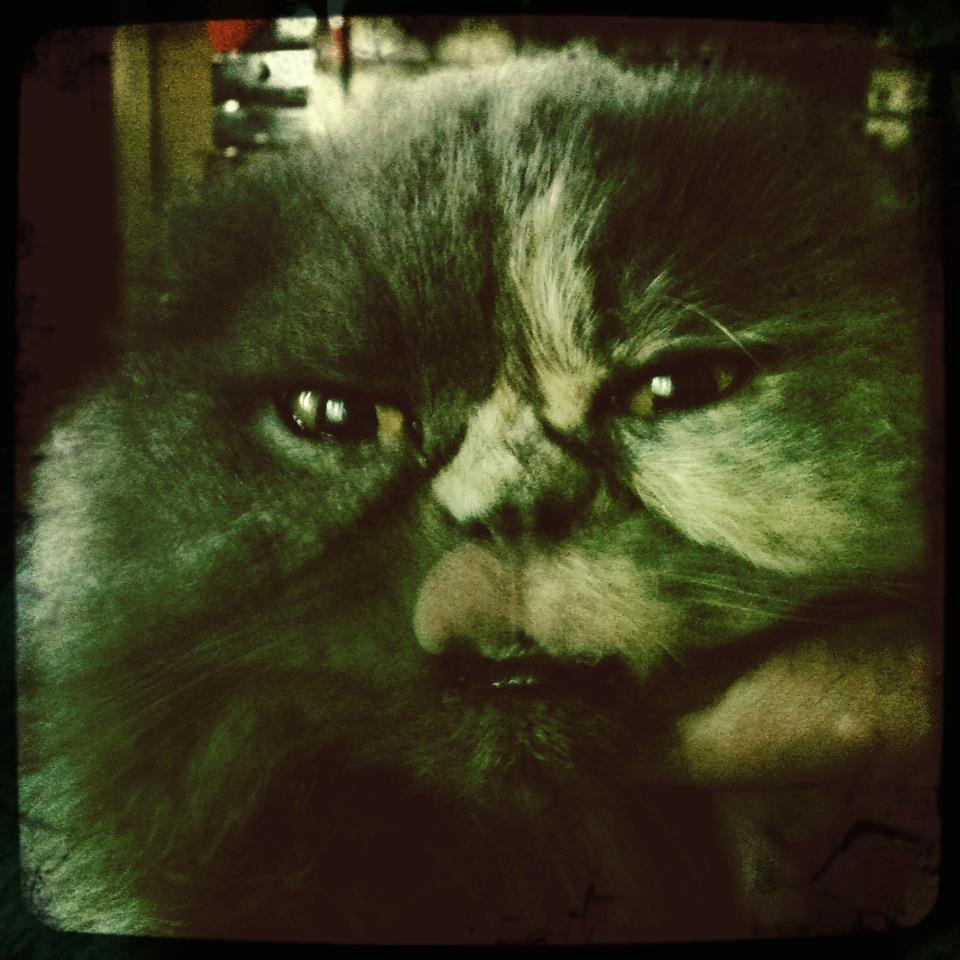
Cat © 2011 John Fronza

Fronza uses his iPhone’s $1.99 hipstamatic app for memorable images like these. He makes it look easy. Love the retro feel, it is as if they were taken by a Kodak Brownie, or a Holga, that old Eastern European plastic camera. Nice format, too. Like the song says: It’s hip to be square.

Bananas © 2011 John Fronza

Some say the iPhone will be the death of the digital camera. Maybe, but meanwhile the picture-taking ability of the iPhone is driving the point and shoot camera makers to add features and innovate. They are adding better image stabilization, Hi-def video, and some wild special effects, including miniature and toy camera modes. Next post we will take a look at the spectacular effects you can get with the Canon Elph.

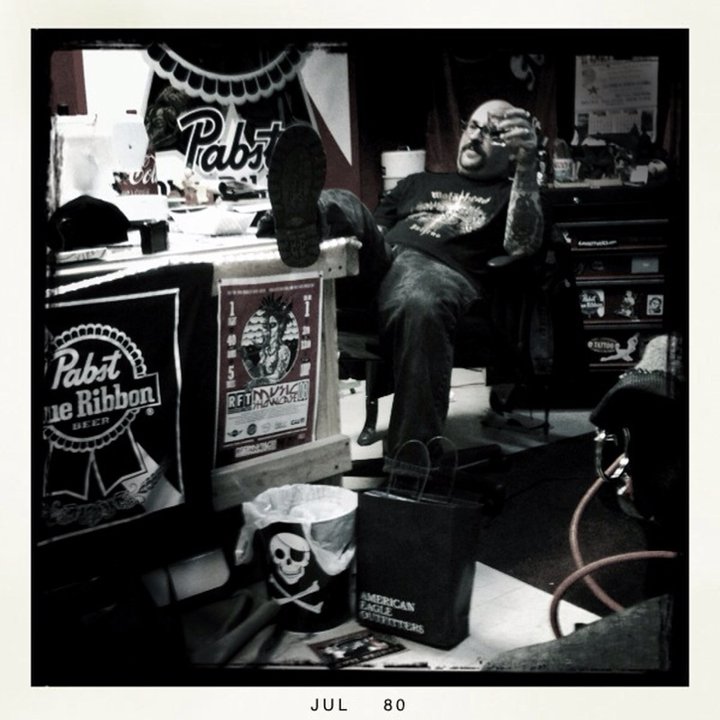
Tom Huck in his office at Evil Prints @2010 John Fronza

Generally, I use the term illustration for non-photographic artwork used in the service of a story or concept.  In my work, I only use photos for reference. The fact is, creative photographers capture images that if paired with the right text make for splendid conceptual illustrations. Fronza’s work could illustrate some weird and spooky stories.

That last image reminds me: Evil Prints Woodcut Boot Camp 2012 is open for registration. Want learn how to make woodcuts? This is the place to go. It’s where I met Fronza. Talk about weird stories!

An Illustrator’s Mind Explored

Loni Sue Johnson is an an illustrator who has had enormous success. Her whimsical watercolor illustrations graced the pages of the NY Times and six memorable New Yorker covers. Then one day in 2007 she fell ill with viral encephalitis, a rare condition, sometimes carried by mosquitos and ticks. She survived the virus, but large portions of both sides of her brain suffered devastating neurological damage.

Drawing from the Right and Left Side of the Brain:

Her mother, Margaret, invented drawing games to rehabilitate Loni Sue. She would draw a partial drawing then ask Loni Sue to complete it. Very gradually Loni Sue began to draw again. Shown artwork by famous artists she had studied in school, like Vincent Van Gogh, Loni Sue failed to identify the artist. But shown her own artwork, pre- or post illness, she recognized it immediately as her own creation. This suggests how very deeply one’s drawing style becomes ingrained in one’s self-identity.

Watercolor childrens' book illustrations © Loni Sue Johnson
Watercolor children's book illustrations © Loni Sue Johnson

An exhibition originally organized by Baltimore’s Walters Art Museum can be seen at Morven Museum and Gardens, Pricenton, NJ, through June 3, 2012. It is a wonderful show. Two Johns Hopkins University scientists, Dr. Barbara Landau, an old friend of Loni Sue, and Dr. Micheal McCloskey have been studying her art.

Loni Sue Johnson drawing, from the the Johns Hopkins video, link below.

Most illustrators are familiar with Betty Edward’s Drawing on the Right Side of the Brain.  Dr. McCloskey describes Loni Sue’s recovery portfolio as a sort of scientific detective story. The left brain/right brain divide may be more porous than we thought. There is a remarkable short video at the exhibition, in which Dr. McCloskey states, “I think if we were to make a map of the brain which showed which parts of the brain were important for art it would be pretty much the whole brain.”

Loni Sue on NPR: Radio seems a nutty way to consider illustration, but Guy Raz’s poignant interview with Loni Sue and her sister Aline is well worth a listen.

detail from Morven Museum announcement. Art above © Loni Sue Johnson 2011

See more of Loni Sue Johnson’s art via the links on her blog.