SCOM: Man & Monsters in Mexico

SCOM stood in a doorway in Oaxaca and told us some hairy stories of his life as a graffiti artist. He grew up in L.A. His mother came from a remote village in Oaxaca.

As a kid, he was George. Sometimes his Mom would bring him to visit family in Oaxaca. One day, his L.A. high school art teacher showed his notebooks to a California art college. “That’s so weird,” says SCOM, “cause she was always flunkin’ me, but I guess she saw potential.” He met the art school admission committee and they offered him a full scholarship. But, he had to come back for a formal interview.
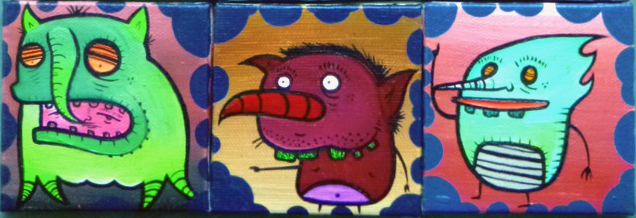
Tiny monster paintings (2 inch squares) by SCOM, collection of Sean Sweeney

Unfortunately, right before his big interview he got busted for painting graffiti. He called the art school from jail to reschedule the meeting. They must have had caller I.D. They gave the scholarship to someone else.

20140204-231345.jpg
Mural by Scom (detail) barrio Xochimilco, Oaxaca.

“So I just went down to Venice Beach and started painting. I did it for a couple years. It was probably just as well I never went to art school, ’cause I did way more painting. I developed my style, ya’ know? And people bought my stuff. My friends said, ‘Hey, how come you got money, when you don’t got no job?’ I said, hey, this is my job.”
Van2
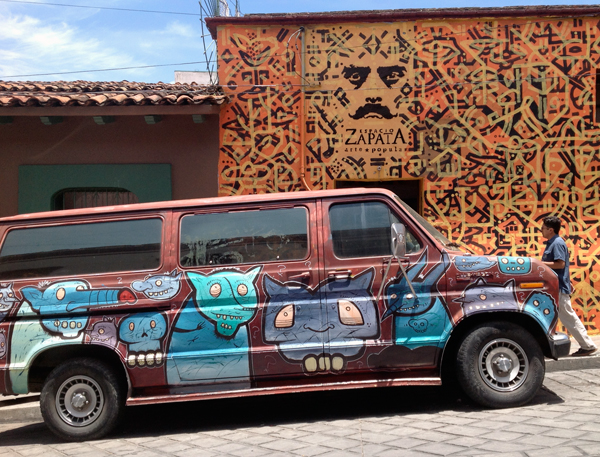
SCOM’s van parked by Espacio Zapata, Oaxaca, mural by Sanez.

Shots Fired in West Oakland!

Graffiti can be tough. “Once in West Oakland we got shot at. One night me and my partner were painting the back of a billboard on a warehouse. I like the backs better. They stay up longer. We had lookouts down below. So, this homeless guy sees us. He gets out of his little plastic tent, and he says he has asthma and the spray is bothering him. So we are thinking this over. But then I hear this scrape of metal on concrete and the homeless guy drags this big wrench out of his tent and swings it at my buddy, the lookout. Just misses his head. And we are like O.F !”

“I say, ‘should we go down and help him?’ and my partner says, ‘Nah, it’s too far down, just wait.’ The lookouts run off. But then the homeless guy starts bangin’ on a metal door. The door flies open. Out comes a big white guy looks like Elmer Fudd, with the stupid hat and the shotgun!”

Artist's recreation, Kevin McCloskey
Artist’s recreation, Kevin McCloskey

“Just like Elmer Fudd, but he has beard. Comes out with his shotgun and first thing he says is, ‘Where’s the problem?’  Our buds are long gone, but the homeless dude says I think I see two more on the roof.  So F! We move behind the posts. We don’t even breathe. We wait like an hour and we thought it was safe to come down. But, NO! Elmer Fudd was there waiting for us. I heard the shotgun blast and the buck shot was bouncing of the walls all around us. We just ran and didn’t look back. That was West Oakland. East Oakland is supposed to be the tough place, where are the murders are, but in East Oakland the people were nicer to us. They were clapping for us. So you never know.”

Can I Buy a Vowel?

Question: How did you get the name SCOM?  “Well, I was writing a lot, I came up with this phrase, Society Creates Monsters, then I shortened it to SCM. Painted it everywhere. SCM. SCM. Then some dudes said, ‘You know, man, SCM is the tag of a gang you don’t want to mess with,’ so I added the O. SC-O-M. Now, I am SCOM.”
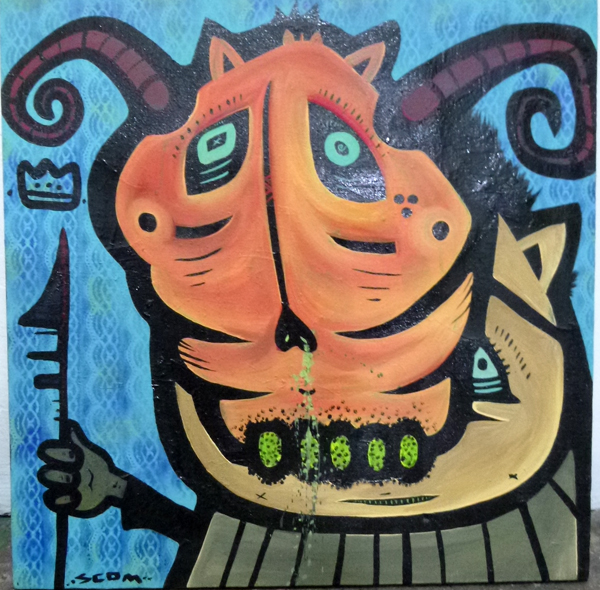
SCOM, Painting on canvas, Taller Siqueiros, Oaxaca.

SCOM’s paintings on canvas can be seen at Taller Siqueiros and Projecto Chicatana on Porfirio Diaz in Oaxaca. His littlest paintings sell for 150 pesos, about $12. His biggest works can be seen in tunnels and on the backs of billboards all over California and Mexico.
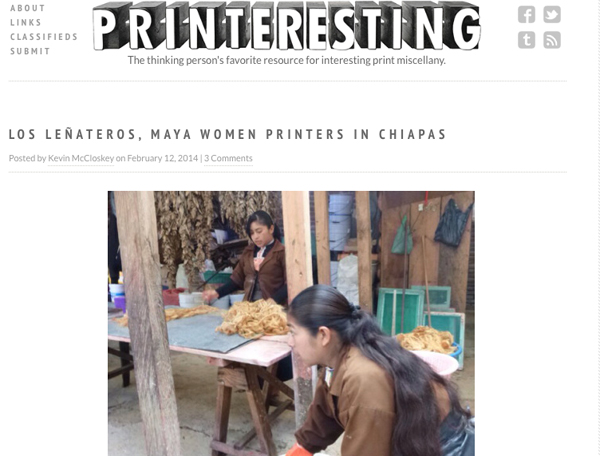
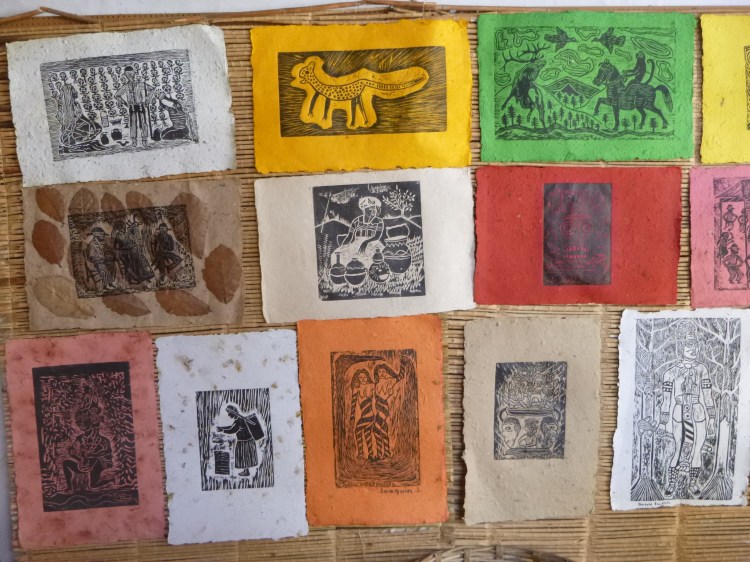
Visit Printeresting for more on Maya Woman Printers.

My photos and story of my visit to Los Leñateros at printeresting.org

Sometimes I get to write for Printeresting.org. It is a very cool site. In 2011 Printeresting won the Warhol Foundation’s Writers Grant in the blog category. I feel lucky when I get 100 visitors on a day to this blog, so I am delighted to write for the online journal, Printeresting. Jason Urban, one of the founding editors, is a Kutztown University Fine Arts grad. Though I’ve never met him, Jason is good enough to edit my work.

Click the link in line one, above, to see my story on Taller Leñateros, a women’s papermaking and print collective in San Cristóbal de las Casas, Chiapas, Mexico. Founded in 1975 by poet Ambar Past, the collective now boasts nine members, mostly women of Maya ancestry.
I am blessed to be on sabbatical, researching and working in Mexican print studios. Here are a few photo out-takes from my visit to San Cristóbal.

P1020306
Woodblock prints on handmade paper by Los Leñateros.
The white building is Taller Leñateros.

Los Leñateros, which means wood-gatherers, use native plants in their paper making. Here Kari, a master bookbinder shows me the recycled bicycle they use to shred flower petals.

The stationary bike.
Maps printed offset, scored on an old Thayer and Chandler letterpress.

The see the whole story of this amazing print workshop click here.

Viva Letterpress!

20140131-235109.jpg

The Chandler and Price Letterpress was first built in Cleveland, Ohio in 1881. The factory shut down in 1964. Today the Chandler and Price press is having something of a revival in the U.S. In Mexico, however, it never died. Last week I chanced upon Maestro Eduardo Sergio Sanchez Lopez working at his shop, Tipografia Azteca, in Oaxaca. I stopped to admire his press. He sets the type and prints 100 business cards for 184 pesos. That is about $14 U.S.

20140131-235617.jpg
I ordered a set of cards printed on simple stock. I drew a sketch of what I wanted, just my name, this blog adress, illustrationconcentration.com, and an email contact. Oddly enough, after my visit to Meastro Eduardo’s shop I travelled 12 hours by bus to a print shop in Chiapas, Mexico run by a collective of Maya women. They also had a working Chandler and Price press of a similar vintage. That workshop is called Taller Lenateros and I will write more about them soon.

20140201-001958.jpg P.S. If you need to get in touch with me here is my card:

20140201-000523.jpg

Covarubbias, more than a Caricaturist.

20140119-094554.jpg
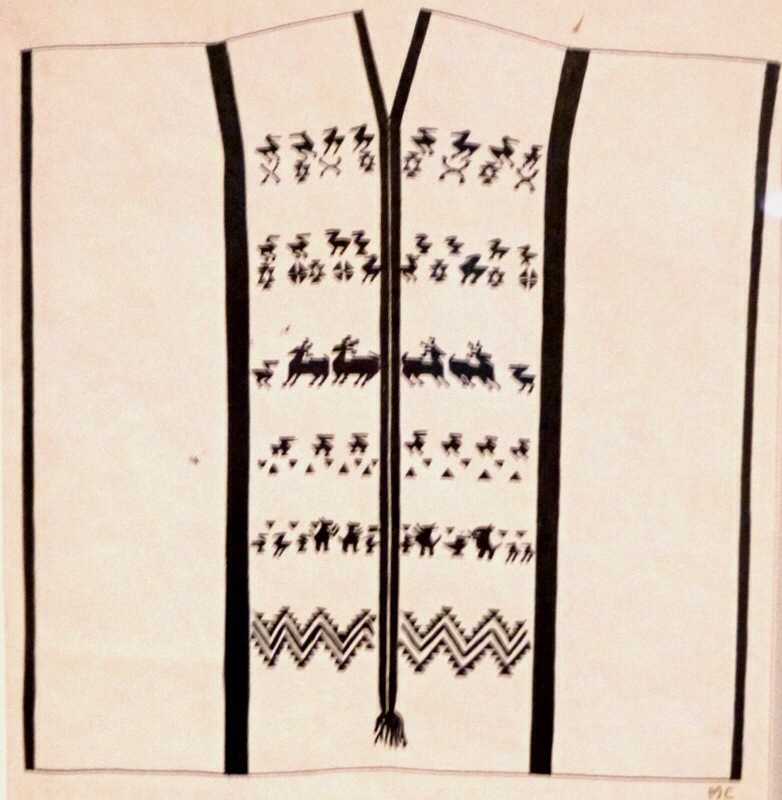
You never know where you might find an illustrator. Museo Textil de Oaxaca is a jewel of a museum in the center of Oaxaca. The current exhibition, Gráfica textil de Miguel Covarrubias, focuses on the work of the influential Mexican caricaturist. Born in Mexico City in 1905, Covarubbias journeyed to New York City at age 19, just in time for the Roaring 20’s. Handsome and talented, he must also have been quite charming. He drew in Harlem nightclubs, at gallery openings and private parties. Soon his work was appearing in The New Yorker and Vanity Fair.

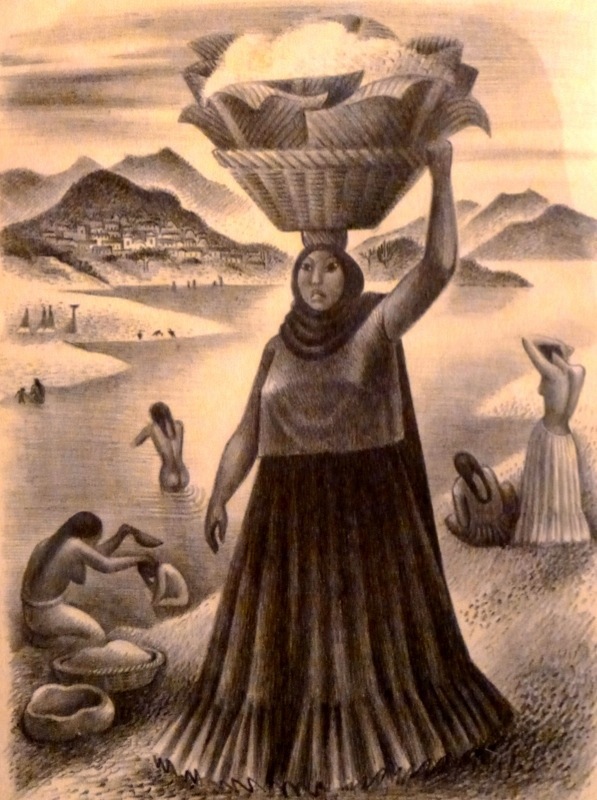
20140119-100426.jpg The show at Museo de Textil focuses on his interest in textiles. He and his wife Rosa lived for a time in Bali, where they collected and documented the island’s weaving traditions. They returned to Mexico and moved to the Isthmus of Tehuantepec on the Pacific coast of Oaxaca. His lithograph (top) shows Tehuana woman of the region washing in a stream. Covarubbias wrote and Illustrated the book Mexico South (1946) and noted similarities in the textiles of tropical Mexico and Bali. The line drawings above and below are from Mexico South.

20140119-101341.jpg Museo de Textil offers guided tours in English. The group I joined seemed most impressed by the huipile collected by Rosa Covarubbias that she lent to her friend Frida Kahlo, below.

20140119-104631.jpg To read more about the textiles of Covarrubias, an essay in Spanish by the curator Alejandro de Avila can be found here.

The textile show left me wanting to see more of Miguel Covarubbias’ work. Fortunately, the library at IAGO, the Instituto de Artes Graficos de Oaxaca, has a shelf full of books of his work. Below is a preliminary drawing he did in the 1924 for a visual essay titled, “The New Negro, a Distinct Type Created by the Colored Caberet in New York.”

20140119-105941.jpg
Personally, I find this drawing elegant and respectful. Some civil rights leaders considered his caricatures of negroes offensive. W.E.B. Dubois said, “I could exist quite happily if Covarubbias had never been born.” On the other hand, poet Langston Hughes considered Covarubbias a friend and visited him in Mexico.
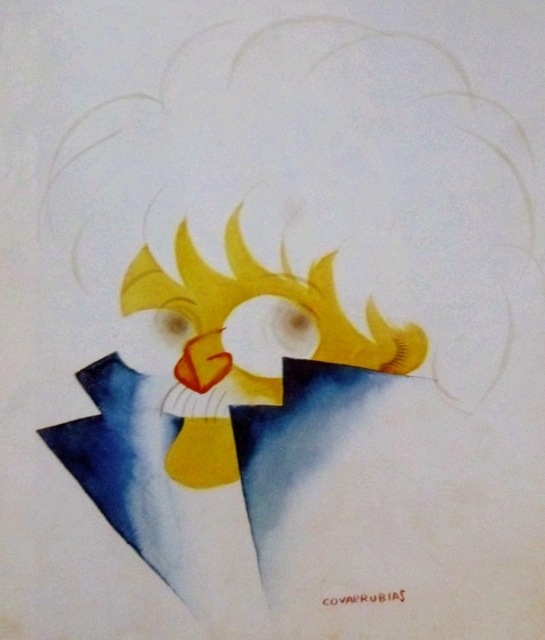
Finally, here’s a trio of brilliant vintage caricatures by Covarubbias demontrating his mastery of line, paint, and wash techniques: Babe Ruth; Ernest Hemingway; and the photographer Alfred Stieglitz.

20140119-144019.jpg

20140119-144051.jpg

20140119-144126.jpg

Rocha Channels Posada. Dos Maestros de Caricatura

20140104-224527.jpg

20140104-203447.jpg
Jose Guadalupe Posada and Catrina by Rocha

Jose Guadalupe Posada died 100 years ago. He is best known for his skeleton images such as Catrina. A working illustrator for Mexico City’s penny papers, Posada may not have thought of himself as an artist. Only after his death was he lionized by the great Mexican artists Jean Charlot and Diego Rivera. Rivera said that everything before Posada was (Spanish) colonial art, and so Posada’s illustrations were the beginning of postcolonial Mexican art.

20140104-201733.jpg
Benito Juarez by Rocha (detail)

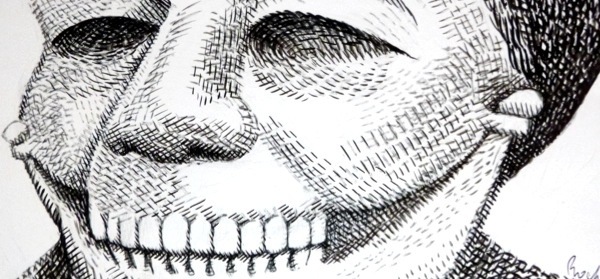
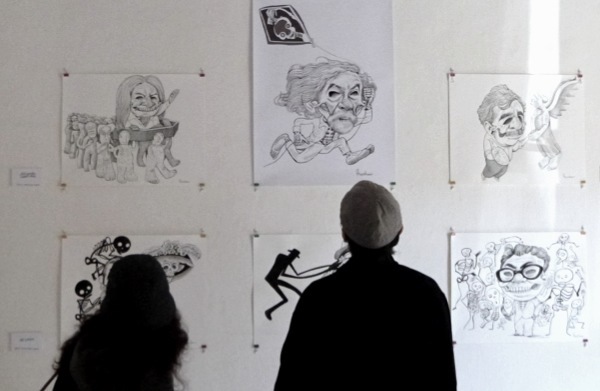
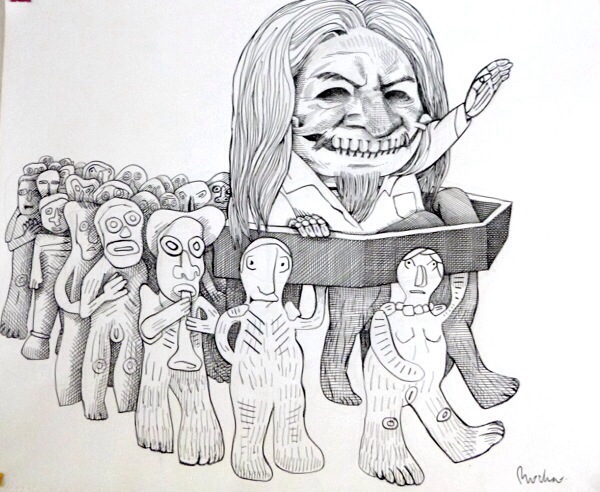
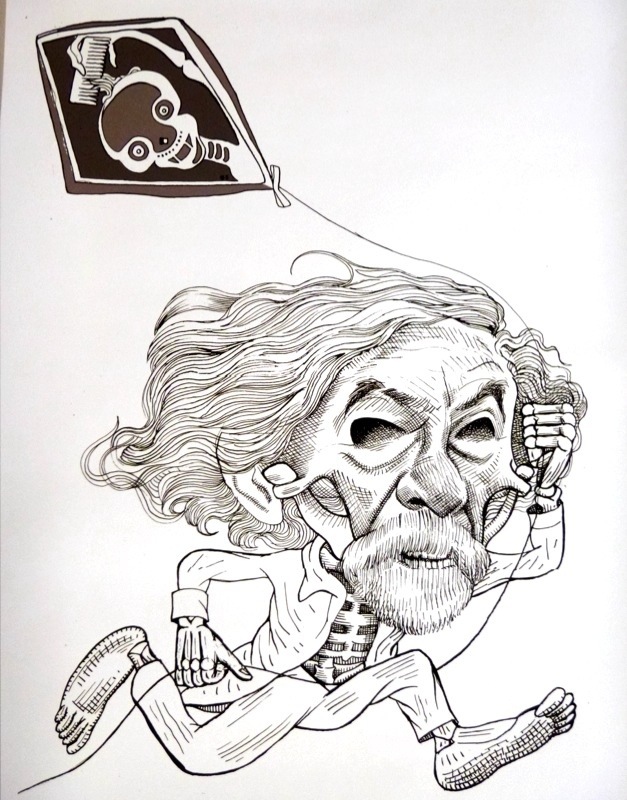
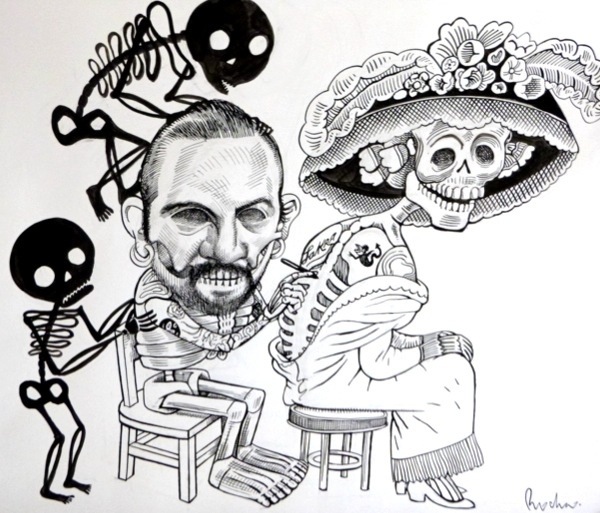
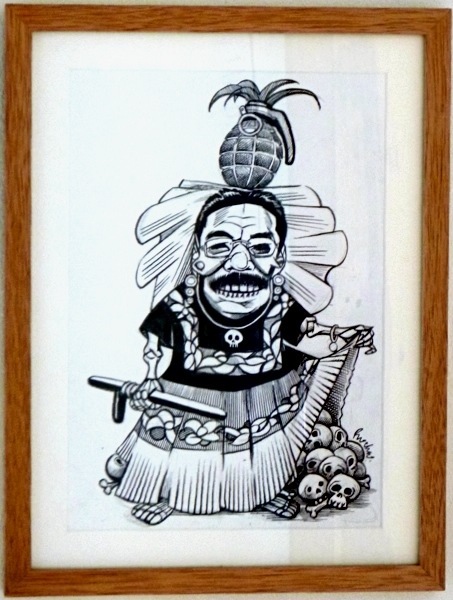
A modern Mexican master of caricature Gonzalo Rocha has produced a wonderful homage to Posada. Rocha asks what would Posada draw if he was alive and working today? Posada would have plenty of gruesome subject matter: femicides in Ciudad Juarez; beheadings, narcotrafficking, corrupt union officials, rigged elections. Boldly crosshatched in India ink Rocha’s rogue’s gallery skewers Mexican politicians, millionaires, and fine artists. I had the good luck to see Rocha’s work in Oaxaca at the Biblioteca Henestrosa Library Gallery.

20140104-210002.jpg
A wall filled with local Oaxacan artists, living and dead, was a big hit at the exhibition. Alejandro Santiago, who died last year, is transported by figures from his masterpiece, 2501 Migrantes. Maestro Francisco Toledo, living, is pictured running barefoot with a kite.

20140104-210941.jpg

20140104-211254.jpg
Dr. Lakra, living, gives Catrina, dead, a tattoo.

20140104-212900.jpg
I met these 3 Oaxacan maestros, Santiago, Toledo, and Lakra. I find Rocha’s caricatures brilliant. He makes drawing look easy, just like Posada did. Rocha is fairly generous in his representations of these artists. Rocha’s art gets angrier with political figures. Below is his take on Ulises Ruiz, the former governor of Oaxaca drawn as a folkloric dancer with a pineapple/hand grenade. Note the pile of skulls under his skirt. Ruiz was ruthless in his crackdown of dissent during 2006. Amnesty International concluded that his state operatives murdered at least 28 protesters. Many In Oaxaca say the number is far higher.

20140105-184254.jpg
Finally, for those unfamiliar with the famous Mexicans pictured above, see Rocha’s take on Amy Winehouse.

20140104-221422.jpg

All images copyright Galvino Rocha, reproduced here for purposes of review.

Lapiztola Stencil Collective, Spray for Us.

20131103-154218.jpg
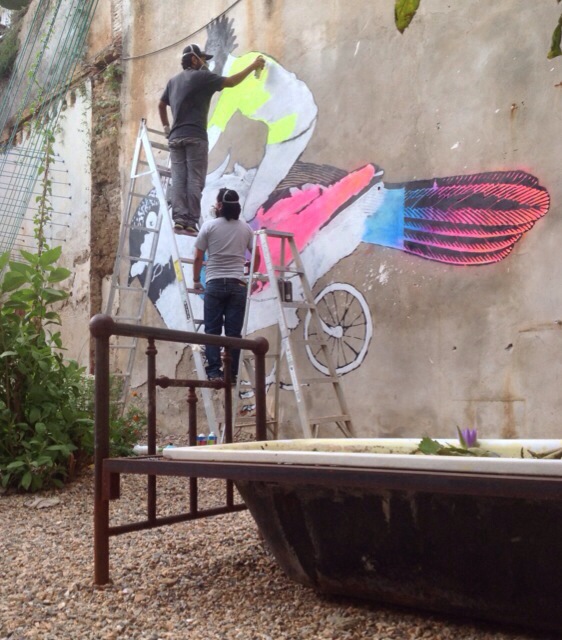
Yankel and Roberto of Lapiztola at work in Oaxaca. photo: K McCloskey

Lapiz = pencil.  Pistola = pistol. Lapiztola is a stencil collective in Oaxaca. The pun suggests the pencil is as mighty as the pistol. Their artwork has been described a visual poetry. In October, one of Lapiztola’s crew,  Yankel, was on a conference panel in Oaxaca about the city’s street art collectives. Yankel had spent much of the day on a ladder wearing a respirator mask spray-painting a luminous sparrow on a wall at Matria Art Garden a few blocks away. Another artist in the audience proclaimed his love for Lapiztola, but added compared to more radical street collectives he found their stencil murals “decorative and appropriate for restaurants.” –Decorative?  OUCH!

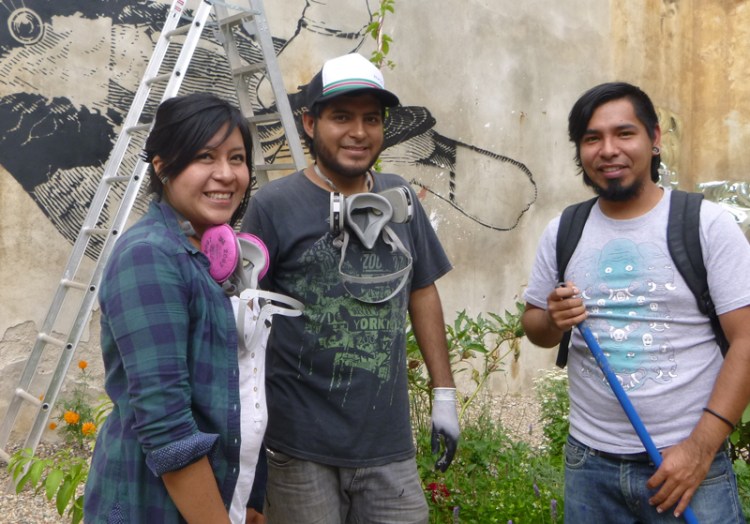
Rosario, Yankel and Roberto of Lapiztola.

Walls are where you find them. Yankel responded, sure, Lapiztola might accept invitations, but they would never let a restaurant owner dictate subject matter. They might even get reimbursed for their paint, but they don’t profit from their work.

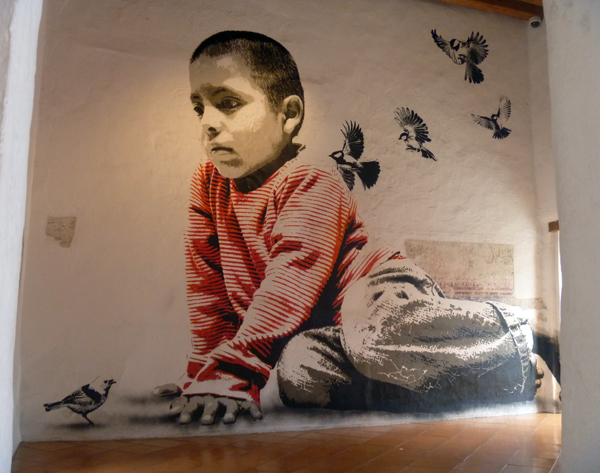
Reflejos de Huida, stencil, 2013, Lapiztola.

Yankel talked about a piece that had appeared in MACO, the Museo Arte Contemporanea de Oaxaca. Reflejos de Huida featured a little boy and birds escaping from a cage. Their inspiration was a real boy they met on the streets who lived a life of extreme stress. Even more than most children he dreamed of escaping the confines of his domestic life.

20131103-160351.jpg
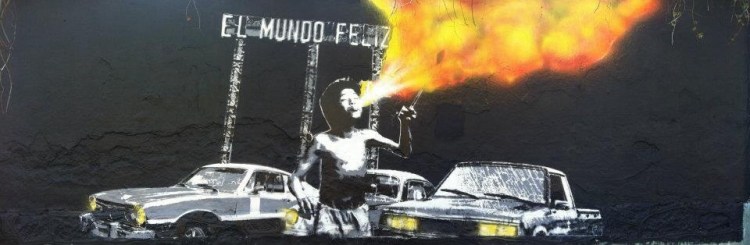
El Mundo Feliz /Happy World shows a fire-eating child at an intersection. © Lapiztola

Lapiztola’s art includes the iconic imagery of M-16’s, molotov cocktails, and skulls found in Oaxacan street art since 2006. Lapiztola, however, adds their own visual vocabulary: birds; street musicians; indigenous children. Their work often deals with street-level domestic issues like child welfare and displays a special empathy for Mexico’s children.

Mural image from Lapiztola's tumblr.
Mural image from Lapiztola’s tumblr.

Rosario and Roberto are trained in graphic design, while Yankel studied architecture. Due to their mix of backgrounds the collective’s projects are both graphically crisp and site-specific, taking full advantage of a particular wall’s potential.

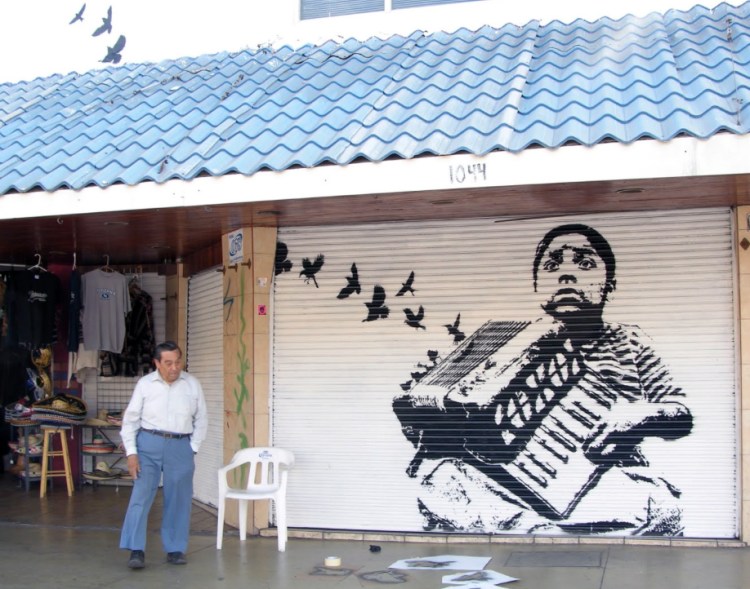
A shop gate in Tiajuana © Lapiztola from their
Shop gate project in Tijuana. Mexico © Lapiztola from their blog.

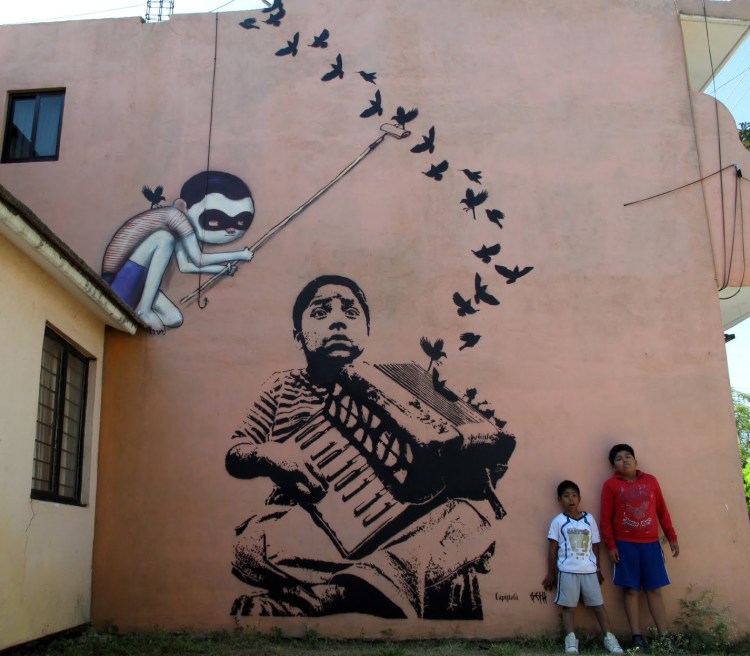
One of the wonderful things about stencils is how the elements can be repurposed. Below Lapiztola reused their accordion playing boy (spraying through the reverse side of the stencil) to collaborate with French artist Seth Globepainter.

Seth (left) with Lapiztola

Lapiztola’s artwork looks clever online. Clever is good, but in person, their large-scale visions are more than clever. They are fantastic. They have clarity, visual impact and soul.

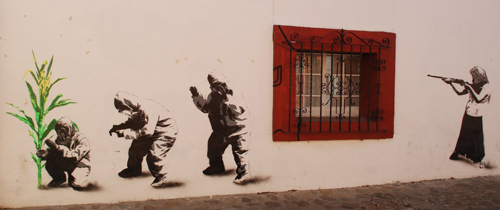
Commentary on Genetically Modified Corn, Lapiztola, Oaxaca.

Check out Lapiztola on Facebook and via their blog. For more info, see Jeffrey Pena’s fine interview with Lapiztola at Curbs and Stoops.

Kate Santee, Illustrator and Roller Girl!

Kate Santee in Kutztown T center, racing against Jerzey Brigade photo © by Tom Gaylord.
Kate Santee in the Kutztown tee, racing against Jerzey Brigade photo © by Tom Gaylord.

Speaking of curious networking, another KU grad, Kate Santee, tells me she got to illustrate a book through folks she met in her role as roller derby racer! Kate recently illustrated a chapter book for young readers. First in a series, Silly Nomads From Palmerston Close is written by Jan L. Lewis and Marcus Mohalland. 

Cover art by Kate Santee © 2013 Mohalland Lewis, LLC

Kate’s freelance design work has been picking up. I asked about roller derby and she was good enough to explain the sport.  “I logo1still skate with the Lehigh Valley Rollergirls.  We play home bouts at Independence Family Fun Center in Schnecksville. I usually play as a blocker, whose job is to prevent the other team’s jammer from getting through the pack. The jammer’s job is to lap the other skaters in a pack, and they score points for each skater from the opposing team that they pass.” 

On the Lehigh Valley RollerGirl site I learned Kate Santee, a former KU honor student was chosen as November’s  “Rough and tumble player of the month” and she is part of the “Special Vixens Unit.”

Silly Nomads?

Silly Nomad illustration by Kate Santee ©
Silly Nomad illustration by Kate Santee © Mohalland Lewis

Kate wrote, “One of the authors is an acquaintance of a woman I skate with; she gave him my business card, and he sent me an inquiry through my website. The project was originally going to be one book, but the authors decided it would be more appropriate for their target audience to make it a series of three shorter books. I’m currently working on the second book and intend to illustrate the whole series.” 

The Silly Nomads are two Jamaican brothers who get into a series of misadventures when they decide to live like desert nomads. My favorite episode occurs when the boys decide they need a cardboard tube from a roll of toilet paper. Mother must have already disposed of the tube, so the boys proceed to flush an entire roll of toilet paper down the toilet.

The clogged toilet episode drawn by Kate Santee © Mohalland Lewis 2013

Book signing in Bethlehem, PA on Dec 20

Silly Nomads is available on Amazon. Or better yet, if you’d like a signed copy, Kate Santee and both authors, M. E. Mohalland and J. L. Lewis will be at Bethlehem’s famed Moravian Bookshop, Fri. Dec. 20 from 4-6pm.  If you can’t make the signing, the Moravian Bookshop will likely have copies on hand for Christmas gifts.

Networking Pays Off for Maddie O’Neil, Cowboy & Illustrator

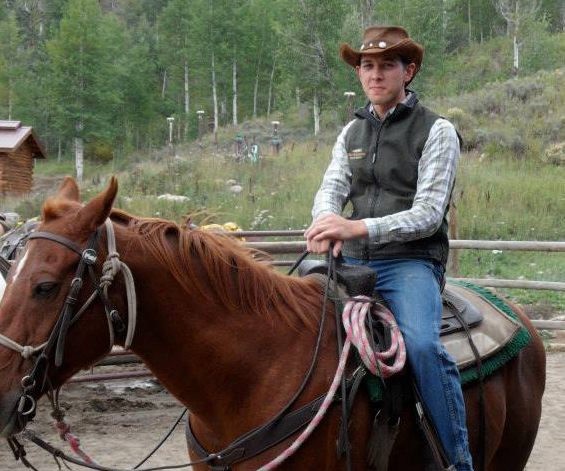
Madison O'Niel at Vista Verde.
Madison O’Niel at Vista Verde.

Maddy O’Neil won the Don Breter Illustration Award when he graduated from Kutztown in May.  The honor student attended KU on a full scholarship. For his honor’s thesis he did a great job illustrating a children’s picture book. Oddly enough, his first job after graduation with his BFA was as a ranch hand at a high-end dude ranch in Colorado. I asked Maddy what he did as a ranch hand at Vista Verde Ranch.

maddy2“Pretty much anything that needed to be done outside. Mowing, putting up fences, splitting firewood, fixing anything broken, etc. Vista Verde is absolutely gorgeous, so being outside all day was a blessing. We also got to interact with lots of the guests.  The ranch had many activities that the staff and guests would both take part in: barn dances, horseshoe tournaments, and music nights.  I got to be a dance partner at the barn dance. It was a fantastic place to work and I had a legitimate excuse to wear cowboy boots on a daily basis.”

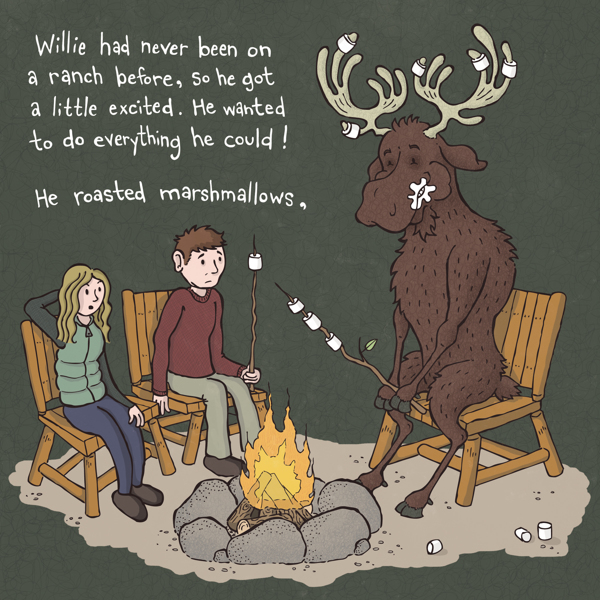
Cover for Maddy O'Neil's Willie the Moose.
Cover for Maddy O’Neil’s Willie the Moose.

“During orientation at the ranch we were able to share about ourselves to get to know everybody a little better. I shared that I had a design degree and a passion for illustration. Steph, the director of hospitality and head of public relations stopped me one day in passing and said she had an idea to do a children’s book related to the ranch. She asked me if I wanted to be involved. I was obviously excited and began work right away. We met weekly to talk about the story and artwork, but for the most part I had total creative control over the project.”

All illustrations courtesy Maddy O'Neil.
All illustrations courtesy Maddy O’Neil.

Maddy created what Steph of Vista Verde calls ” a charming story of a sweet moose trying to find his place at a little dude ranch in Colorado.” She wrote, “When Maddy revealed the book at our end of season staff party the room was filled with laughter that just wouldn’t end.”

Willie has an identity crisis! by Madison O'Neil.
Willie has an identity crisis! by Madison O’Neil.

Maddy’s success proves the power of networking no matter where one ends up. More Willy the Moose artwork can be seen on Maddy’s Behance page. Willie the Moose is now published in full color and available for 19.95 at the Vista Verde web site.

Willie as Ranch hand by Maddy O'Neil.
Willie as Ranch hand by Maddy O’Neil.

Maddy has returned back East to pursue his design and illustration career. We expect great things from him. Maddy has a great attitude, super people skills, and newly acquired horse and moose sense.

Speaking of curious networking, another KU grad, Kate Santee, tells me she got to illustrate a book through folks met as a roller derby racer! If I can get permission to use her artwork, I will share more.

BIG SNOW in Kutztown, PA -Dec.6

All art in the post © Jonathan Bean

Jonathan Bean now lives in Harrisburg, PA, but he grew up in Fleetwood and so, of course, he has often been in Kutztown. The gifted illustrator and author is returning Kutztown to share his new picture book Big Snow at Firefly Bookstore, Friday, Dec 6th from 6-8pm.

BigSnowcover
Big Snow has wonderful reviews. Publisher’s Weekly writes “another terrific offering from Bean   -his subtly rhythmic prose and elegant, astute watercolors hit just the right notes of comedy, suspense, and fantasy.”

“This delightful picture book… begs to be read aloud.” – School Library Journal

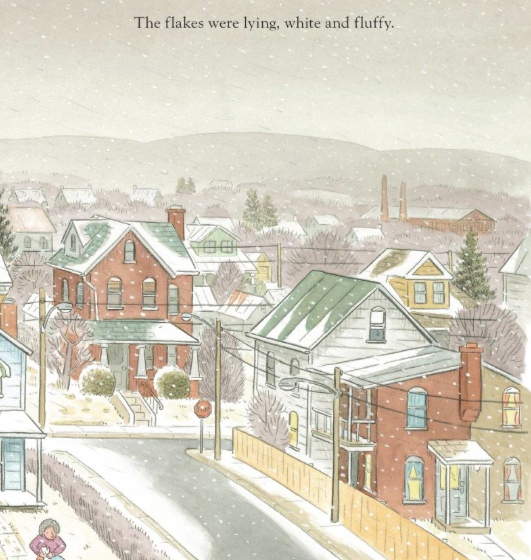
flakes
The town pictured in Big Snow looks a lot like Kutztown. We see lovely watercolor images of familiar-looking row houses, several Lutheran church steeples, the smokestacks from the old foundry. Matthew Williams of Firefly Books pointed out the most conclusive evidence, “Look at the water tower,” he said, “and you will see the letters ‘K U T Z’!

kutztower

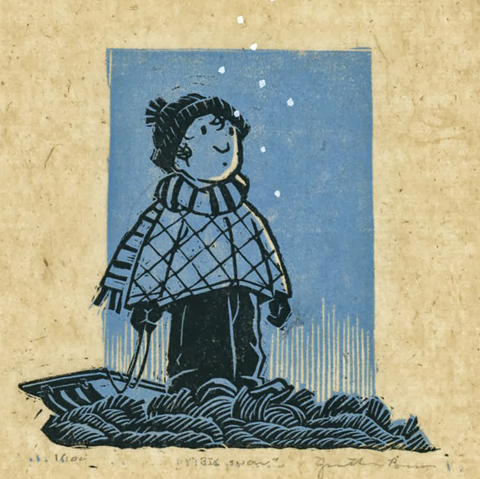
Jonathan Bean’s prints can be seen in Harrisburg at Robinson’s Rare Books and Prints. He also sells prints at his online Etsy store. One of his charming works is the limited edition linoleum print of the Big Snow boy.

Firefly Bookstore, 230 W. Main, Kutztown is a wonderful place, a true independent bookstore, supportive of local authors and illustrators. I love the place. Meet Jonathan Bean there 6 – 8 pm on Friday, December 6th. There will be children’s activities and cookies.

Note: Lisa Scheid of The Reading Eagle wrote an interesting story about Jonathan. It is worth reading and can be found here.

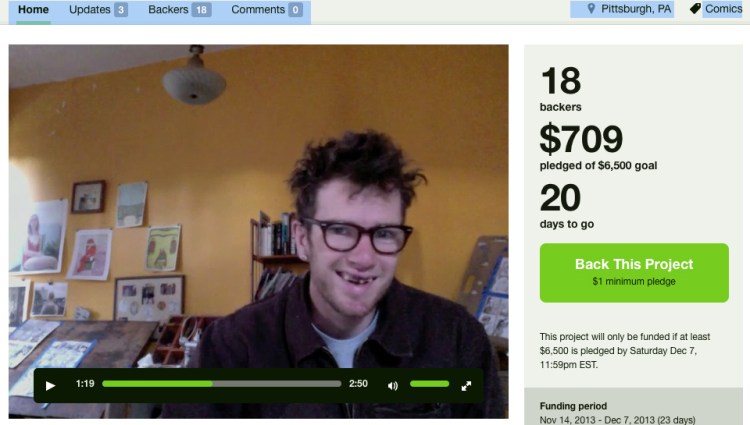
Daniel McCloskey, Smiling Artist Missing Teeth.

From a Screenshot at Noon, Dec.2

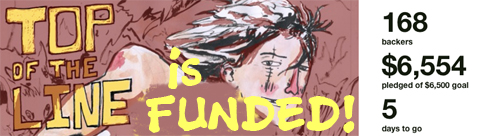
UPDATE: Dan’s Kickstarter got funded. Thanks. Julie Sokolow wrote a fine article at MichaelMoore.com that really helped.

DAn
Full disclosure: That’s my boy! Daniel McCloskey is a cartoonist and founder of Pittsburgh’s Cyberpunk Apocalypse Writer’s Project. On Oct 22, Dan was riding his bike when his front wheel fell into a deep, narrow pothole. Dan flew over the handle bars. He did a face plant on the black asphalt of River Ave, part of Pittsburgh’s Three River Heritage Trail.

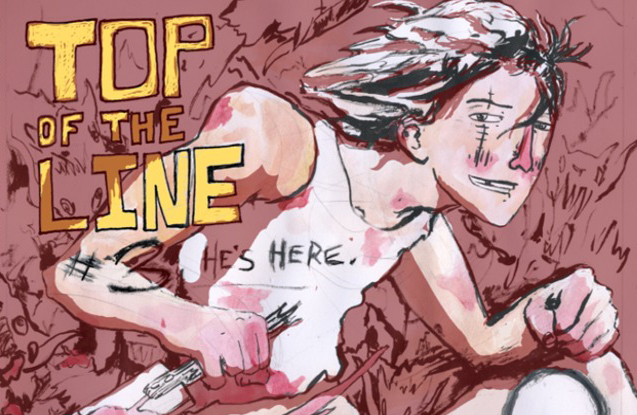
Oddly enough, the hero of Top of the Line also has missing teeth.

A Good Samaritan, a kayaker named Beth, called an ambulance and stayed by his side. Dan’s chin was split open in two flaps, but surgeons at Allegheny Hospital sewed it back together nicely. He still has a wire brace keeping his remaining front tooth in place.

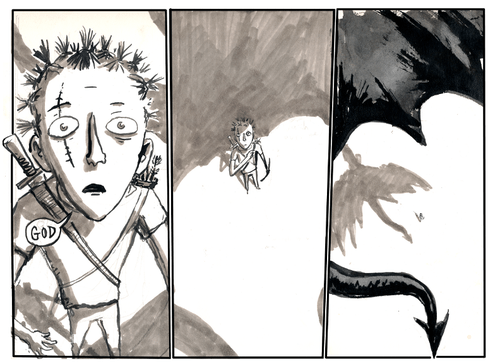
From Top of the Line © Daniel McCloskey
Recently Dan has been drawing monsters for his new comic book series, Top of The Line. He is going through with his launch of the project via Kickstarter. Here is the link.

Bonus books contributed by Pittsburgh's  Small Press Community.
Bonus books contributed by Pittsburgh’s Small Press Community.

Cyberpunk Apocalypse Drawathon

Pittsburgh’s arts and comics community is supporting Dan in his hour of need. On Nov. 20 Dan is kickstarting his Kickstarter with a Draw-a-thon. Dan promises to draw live for 24 hours, streaming at danielmccloskey.com. There will be guest comics artists like Jason Lex, Nate McDonough author of Grixly and Nils Skeletonballs dropping in throughout the day to give out bonus rewards. Award -winning poet Tameka Cage Conley  will be there. Thomas Scioli will have a special signed edition of Final Frontier. Artnoose and Brett Kashmere are contributing projects, too.

cover2

All or Nothing
If you have never supported a Kickstarter project, you will need to sign up. As Kickstarter’s site explains it: If the project reaches its funding goal, then backers are charged. If the project falls short, then no one is charged. Funding on Kickstarter is all-or-nothing.

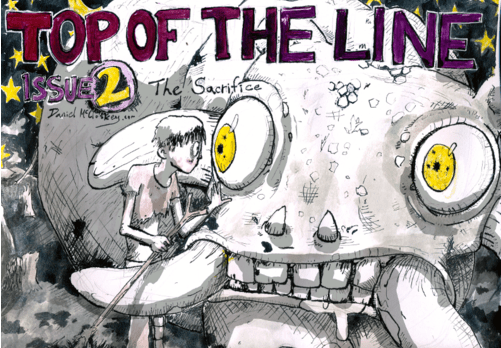
 Top of the Line © Daniel McCloskey
Top of the Line © Daniel McCloskey

Dan’s fund totals are up since I grabbed the picture above, for the latest check here. If you’d like to read Top of the Line, FREE! online, start here. Watch out for monsters and monster potholes!

Daniel McCloskey, photo © by Sarah La Ponte
Daniel McCloskey, photo © by Sarah LaPonte  sarahlaponte.com

Daniel is among the millions of uninsured Americans. He has a big hospital bill on his hands, but Allegheny Hospital is helping him with the costs. He might get it down to a few thousand dollars. He noted, “It is, however, pretty awesome to live in a world where a motorized vehicle can take you to nearby professionals who have the ability and equipment to relieve your pain, painstakingly sew your face together for 3 hours, and save what teeth can be saved.”