Loni Sue Johnson is an an illustrator who has had enormous success. Her whimsical watercolor illustrations graced the pages of the NY Times and six memorable New Yorker covers. Then one day in 2007 she fell ill with viral encephalitis, a rare condition, sometimes carried by mosquitos and ticks. She survived the virus, but large portions of both sides of her brain suffered devastating neurological damage.
Drawing from the Right and Left Side of the Brain:
Her mother, Margaret, invented drawing games to rehabilitate Loni Sue. She would draw a partial drawing then ask Loni Sue to complete it. Very gradually Loni Sue began to draw again. Shown artwork by famous artists she had studied in school, like Vincent Van Gogh, Loni Sue failed to identify the artist. But shown her own artwork, pre- or post illness, she recognized it immediately as her own creation. This suggests how very deeply one’s drawing style becomes ingrained in one’s self-identity.
An exhibition originally organized by Baltimore’s Walters Art Museum can be seen at Morven Museum and Gardens, Pricenton, NJ, through June 3, 2012. It is a wonderful show. Two Johns Hopkins University scientists, Dr. Barbara Landau, an old friend of Loni Sue, and Dr. Micheal McCloskey have been studying her art.
Loni Sue Johnson drawing, from the the Johns Hopkins video, link below.
Most illustrators are familiar with Betty Edward’s Drawing on the Right Side of the Brain. Dr. McCloskey describes Loni Sue’s recovery portfolio as a sort of scientific detective story. The left brain/right brain divide may be more porous than we thought. There is a remarkable short video at the exhibition, in which Dr. McCloskey states, “I think if we were to make a map of the brain which showed which parts of the brain were important for art it would be pretty much the whole brain.”
Loni Sue on NPR: Radio seems a nutty way to consider illustration, but Guy Raz’s poignant interview with Loni Sue and her sister Aline is well worth a listen.
ASARO: “The Assembly of Revolutionary Artists of Oaxaca”
ASARO is a collective of radical young Mexican artists. I met them in 2007. ASARO’s woodblock prints were laying in the street near Oaxaca’s cathedral. The artists were sitting on the curb. Some looked to be fifteen years old. Broom handles and chunks of stone kept the artwork from blowing away. Kneeling to look closer, I was stunned by the raw power of the images: revolutionary heroes, marching skeletons, striking farm-workers, open coffins, screaming widows. Black ink on ragged gray paper. It was as if the ink was shouting. I was mesmerized.
I found ASARO’s prints astonishing, not only for their political content, but also for their artistic excellence. It was exhilarating to see a centuries-old medium, woodblock printing, applied to the revolutionary issues of the 21st century. For one hundred pesos (roughly 10 U.S. dollars) ASARO sold prints by day. At night they poured their energy into street art, or interventions, as they call them. If a fellow activist was arrested or “disappeared” ASARO commemorated the event immediately with prints and stencils. They pasted tissue paper prints on the city’s ancient walls, or used pre-cut stencils to create complex murals in a matter of minutes.
Oaxaca’s most dramatic times occurred in 2006 after the annual teachers’ strike spun out of control. Teachers and their supporters protested to oust Governor Ulises Ruiz. APPO, the self-described “people’s assembly” occupied the city for months until Mexican Federal Police brutally removed them. Amnesty International documented the killings of at least 18 demonstrators; the full report is available as a pdf. Into 2007 there were still sporadic demonstrations, arrests, and disappearances.
There were other talented art collectives in Oaxaca, (notably Arte Jaguar) but ASARO’s daily gallery in the street made them the most accessible. I learned that some of the crew had studied art at the university with the Japanese-born printmaker, Maestro Takeda. The trained artists taught printmaking to anyone who wanted to join. Many had led hard lives. One ASARO artist told me he was abducted by thugs and questioned for 72 hours. I believe him. In 2007, their studio’s location was secret. The police would beat graffiti artists on sight. I remember being very nervous the rainy night I carried a portfolio of 20 political prints from that studio.
'We Defend What is Ours' from ASARO's petroleum portfolio.
Since ASARO formed in 2006, they have produced close to 200 different prints. They have also done canvas paintings, murals, folk art, and performances. Yet I remain enthralled by their woodblocks. They have created print portfolios focusing on issues that transcend their original concerns including: The Murdered Women of Juarez; The Future of Mexican Agriculture; Migration; and Petroleum. They have come up from the underground in the years since printmaker Lester Dore showed their work in Madison. Kutztown Univertity’s ASARO print collection has toured the country. Chicago Art Magazine’s Robin Dluzen noted, “It is as if the ASARO has now occupied the art world.”
THAT WAS THEN. THIS IS NOW.
Last month the NY Times rediscovered Oaxaca. “With the city’s street art scene, a mescal-fueled night life and one of Mexico’s most exciting regional cuisines, Oaxaca is as cosmopolitan as it is architecturally stunning.” The article points out Espacio Zapata, ASARO’s workshop at Porfirio Diaz #509. This new location is in the historic district. ASARO has also been featured in the official Oaxaca State Tourist Office’s guide to the city. Now ASARO has a blog. Recently ASARO offered a free course in printmaking at Espacio Zapata. One of the course’s sponsors is Conaculta, Mexico’s National Council for Art and Culture.
Espacio Zapata poster for free course in woodblock printing, 2011.
There is another change. A new governor, Governor Gabino Cue, replaced the polarizing figure of Ulises Ruiz. The New York Times is right; this is a good time to visit Oaxaca.
ASARO in Princeton, New Jersey
Princeton University is exhibiting a portion of their splendid ASARO print collection. Alas, none of the artists will be able to attend the Feb. 9 reception, but I will be there. The public is invited. I am honored that Princeton asked me to write about ASARO for the gallery walls. I’m taking part in a panel discussion “Born in the Zocalo: Art and Protest in Oaxaca, Mexico” at 4:30 on 2/9/2012. Reception to follow.
ASARO: Art and Activism in Oaxaca, Mexico Protest prints from a collective of Mexican artists
Jan 16 to March 8: Bernstein Gallery, Princeton University
Sponsored by Woodrow Wilson School of Public and International Affairs, exhibition designed by Kate Somers. With special thanks to Karin Trainer and Princeton U. Library for the loan of artwork. For directions & gallery hours, ph. 609-497-2441. http://wws.princeton.edu/bernstein/
Greg Christman is one of the most prolific illustrator/designers to come out of Kutztown’s C.D. Dept. His work is frequently seen on the hippest design blogs. He was recently featured in a spread in a new French design publication called the Book of Creation. I asked Greg to explain a few of his inventive images the French liked so much.
Greg: Did this when I was working at Gyro. Art in the Age of Mechanical Reproduction was looking for some artist shirts. I made this. It’s just a fun type experiment.
I love cats. Andy O’ Dore (also a KU CD grad) and I created/run a cat website (which has really blown up this year )… so you know I’m always making dumb cat things. This is exactly that… a dumb cat thing.
Love Harry Potter. No other explanation for this. This got reblogged thousands of times which was really, really amazing for me.
4-color screenprint for Slingshot Dakotas vinyl release of their record. Tom from Bird Apartment Printing screened this. He is also in the band. He is a talented screenprinter. I do a lot of work for him and his band. Excited that I’m doing their up and coming record on their new label.
Wonder Years? Band contacted me to do a t-shirt. Went through a few rounds and this one got made. Really happy with it.
Paint it Black poster: 2 -color screen printed poster for a show in DC. Contacted by the band to do it. Got a great response and sold a ton.
Asked about his career path, Greg responds: “Oh ___! Day job. I worked a crazy ad job for a few years. You know… 8am – 8pm, while still having work to do at home. It wore me out… so I quit. It was great for experience and I highly recommend anyone getting out of school to do the same… but MOVE ON. It’s what I did. I took a job that was far less stressful. It is fulfilling, allows me to do my own work, as well as spend time with my kid and wife. You have to have that balance. Design and illustration is fun and all, but life is way better and that ultimately makes you a better designer.”
'TYPEFACE' by Miles DeCoster & Kevin McCloskey, 2012
Most of the Communication Design faculty traveled to Lead Grafitti in Newark, Delaware for a one-day letterpress workshop during winter break. We were joined by printmaker Evan Summer of the Fine Arts Dept. Lead Grafitti is a family-run studio that does fine printing (wedding invitations, for example), but also offers hands-on workshops. Our workshop involved creating a bound hardcover book in a single day and printing it on their antique presses.
Ray Nichols is a former University of Delaware professor, reincarnated as a letterpress guru. Ray taught visual communications for years before he led a UD summer course to England. A chance visit to Alan Kitching at the Royal College of Art’s letterpress studio changed Ray’s life and he decided to build Lead Grafitti. Ray and his wife Jill shared a number of fascinating projects including their Kickstarter funded series based on the Tour de France.
Inked bike chain becomes map of France, from Tour de Lead Graffiti.
They also showed us a beautiful limited edition book of Bruce Hornsby’s essay on Bruce Sprinsteen’s Thunder Road illustrated by Jill.
In the history of graphic design we talk about Ottmar Mergenthaler’s earthshaking 1884 invention, the linotype machine. From Gutenberg’s time until the linotype, printers needed thousands of individual pieces of moveable type to print a page. The linotype allowed an operator to type a line, then hot molten lead flowed into a brass matrix to create an entire “line o’ type.” We all got to work on an Intertype linecaster for a few minutes, which is essentially the same as Mergenthaler’s machine.
Tray Nichols explains linotype operation to Kevin McCloskey. photo: Evan Summer
Those of you who studied typography or graphic design will recall a colophon is, “the statement at the end of a book giving details about its authorship and printing.” The colophon below was cast from hot lead and lists participants and instructors at the Lead Grafitti workshop.
Colophon, the printing credits, at the end of our book.
Thanks to Profs. Ann Lemon and Vicki Meloney for arranging this worthwhile experience. I found it more fun than Disney World, and the lines were shorter. Lead Grafitti offers workshops year round and will customize an event based on your group’s experience level and particular interests. Info at: leadgrafitti.com
Ann Lemon and Miles DeCoster checking their type. Photo by Evan Summer
Laura Richardson is a Communication Design student at Kutztown U of PA. Her friends call her Lolli. A senior who just completed an internship at Crayola, she won the competition for the borough of Kutztown’s bicentennial logo. Besides the $200 prize, she will have the honor of seeing her logo all over town. Other finalists included one of her Kutztown professors and Dr. Alan Robertson, an artistically inclined Kutztown dentist. More about the logo can be found in the Reading Eagle story by Ron Devlin.
Grant Snider is a talented young cartoonist. I think his work is brilliant, but you be the judge. He generously gave permission to share a selection of comics. I selected strips that should interest illustrators. More of his art can be seen at Incidental Comics. Grant is studying orthodontics. I find that mind-boggling. We did an email interview.
KMc: I am impressed you are going to dental school, like the poet William Carlos Williams keeping his day job as a pediatrician.
Grant: Thought about your William Carlos Williams comparison before, but I think dentist/cartoonist sounds less noble than physician/poet. Also, Osamu Tezuka went to medical school while simultaneously becoming the god of manga, though he never practiced medicine.
Your work reminds me of one old, and one new artist, Otto Soglow and Kevin Huizenga? Are you familiar with them?
Grant: Definitely. I’ve read Otto Soglow’s cartoons in some old New Yorker cartoon collections, and I’ve read a couple of Kevin Huizenga’s books and followed his work closely in comics annuals. That’s a flattering comparison – Soglow’s cartoons have some of the most beautifully efficient line work ever drawn. And I can identify very closely with Huizenga’s “Glenn Ganges” stories – especially the middle-class suburban-Midwest adult-male protagonist. They’re everyday life drawn with incredible attention to detail, and he experiments with comic format and convention in a way that adds great depth to the story.
Who are your influences?
Roz Chast, Matt Groening’s “Life in Hell,” and Tom Gauld have probably influenced my comics the most. Edward Gorey, Bill Watterson,Chris Ware, and B. Kliban are four cartoonists I greatly admire, but they would be very difficult to emulate. Designer and illustrator Christoph Niemann has genius graphic ideas and is a huge inspiration, though I doubt he considers himself a cartoonist. This American Life keeps my brain occupied in the long hours spent drawing and probably subconsciously influences my comics. I also frequently look to children’s books and music for ideas.
Does your online poster shop pay enough to cover your time at the drawing board or is Incidental Comics a labor of love?
Labor of love! It’s very nice when people like a comic enough to put it up on their wall, but if I tried to break down the hourly wage of time spent at the drawing board I would quickly become depressed. My comics appear weekly in the newspaper in Kansas City (where I went to dental school) and biweekly on GoComics.com (also based in Kansas City) so I get some compensation that way as well. It’s never been my intention to make it a full-time job, though I plan on pursuing my dual careers (cartooning and orthodontics) as far as they will take me.
Could you share some sketches?
I included some pages from my sketchbook that eventually became full-fledged comics (“Jazz,” and “The Diabolical Botanical Garden”). I use my sketchbook mostly for working out ideas and rough sketches, though there’s an occasional bit of life drawing or journaling. It’s full of false starts, but I sometimes come back to a long-unused idea and manage to spin it into a new comic.
Can you give any advice for aspiring web or print cartoonists?
Focus on writing and ideas! If you are excited about an idea, you will find a way to make the drawing and layout work. Nothing is going to look how you want it to when you first start, but if you make new comics consistently your drawing style will develop and improve. Some of the best cartoonists have idiosyncratic (or even “bad”) drawing ability, but their drawings look amazing when coupled with great ideas. Share your work early and often – try to get into your school newspaper, start a webcomic, print out mini-comics and give them away, don’t keep it hidden in a sketchbook until you’ve achieved some imagined level of perfection.
Thanks, Grant for thoughtful answers and great advice. Wonderful to see the sketches, showing that even great ideas need to be refined. The sketch below became “The Diabolical Botanical Garden.” Most of Grant Snider’s cartoons are available as $15 prints from his Poster Shop.
There are at least 2 great illustrators named Jeff Smith. One is a Pennsylvania-born cartoonist who moved to Ohio and started cartooning for the Ohio State Lantern. In 1991, Smith self-published a small black and white comic book called Bone. Bone went platinum, with such a fanatic following that it was picked up by major publishers, and has since sold millions of copies. I know the other Jeff Smith.
By the way, Columbus, Ohio is fertile ground for cartoonists. The brick Victorian home of James Thurber, the New Yorker cartoonist best known for his short stories, is worth a visit. Milt Caniff, who drew the aviation adventure strip Steve Canyon lived in Columbus. Caniff’s original artwork, along with that of many others, is housed at the Billy Ireland Cartoon Library and Museum on Ohio State’s campus.
Cover for a Smokey Stover comic, courtesy of Wikpedia
Years ago, I visited the Cartoon Library and Museum. I was told there was no public exhibition at that time and the collection was only open to comics scholars. I said I was scholar with a specialization in screwball comics. (If you are ever challenged about your comic scholarship, this response works wonders. I was a college dropout at the time.) The librarian gave me a pair of white gloves and opened up a flat file. I was permitted to hold original art from Bill Holman’sSmokey Stover. It was just india ink on bristol board, but Wowie-Zowie, the ink was in all the right places. I was in screwball scholarship heaven.
Clang! Dang! Clang! I digress. The other Jeffrey Smith is a friend of mine. Here is an invitation from the Society of Illustrators to see his work. Go ahead. Click on it. You are invited, too. January 5, 2012. I know, it costs $20, but this is your chance to get into the exclusive Members’ Hall of Fame and the Society of Illustrators lays out a nice spread. Smith is illustrator of Shadow Nights: The Secret War Against Hitler. He will discuss the project including his research trip to Paris to visit the places where Churchill’s Special Ops Unit fought their secret war against the Nazis.
Shadow Nights is part of a new series called Pulp History from Simon and Schuster, which looks to be a fascinating mix of history and edgy graphics. There is another volume, Devil Dog, illustrated by legendary underground cartoonist Spain Rodriguez.
This other Jeff (as I call him) Smith and I were classmates at the School of Visual Arts. He teaches at Art Center of Design in Pasadena. He studied with illustrators Phil Hayes and James McMullan, both outstanding watercolorists. The work he has done for Pulp History shows their influences. Stylistically, this new work also reminds me of my old thesis advisor, Julian Allen. Jeff’s illustrations have appeared in Rolling Stone, Newsweek, and G.Q. He deserves his success. I hope to make it into the big city next week to celebrate his Shadow Knights exhibition.
I picked up a copy The Penny Magazine of the Society for the Diffusion of Useful Knowledge. I got it at Renninger’s, the Kutztown Farmer’s Market. This magazine was published in 1834. It cost me one dollar. Consulting an online Historical UK Price Convertor reveals one British 1834 penny is today worth nearly .97 pound sterling, or about $1.51 U.S.. Wow! I saved 50% I’m not an antique collector. I actually started to reading the cover story about mangoes and found it fascinating.
“The Mango-tree is a native of India and the southwestern countries of Asia, and also grows abundantly in Brazil and the West Indies. …It is a large tree, attaining a height of thirty or forty feet…” The author tries to describe the taste that “melts in the mouth with a cooling sweetness that can hardly be imagined by those who have not tasted the choicest of nature’s delicacies.”
Photography was in its infancy, so this illustration is an engraving, probably on steel. The tree is drawn with confidence. One curious detail is the tiny figure, who looks to be smoking a bong. The text goes on to inform us the “Hindoos” use mango wood on their funeral pyres. The diffusion of useful knowledge continues. There is a note about mango chutney, and directions for eating the fruit. We are advised if we ever transport mangoes by sailing ship “they should be covered to defend them from the water and the spray of the sea.”
The little magazine is just eight pages. There is a review of a concert at an inn in Sussex, that concedes “England is now not a musical country.” Next comes the magazine’s longest article on the history of the East India Tea Company. It is illustrated with an engraving of the company’s London headquarters, so large that one has to turn the magazine sideways to see it.
There is a fascinating story about “The Cat Painter,” Gottfried Mind, born in Switzerland in 1768. The critic tells us Mind’s “drawings of cats were so admirable as to entitle him to the honourable, but rather awkward title, of The Raphael of Cats.” Unfortunately, this one story is not illustrated. I never heard of him, did you? I found an illustration of Herr Mind’s art at Wikipedia. One of the scholarly references cited is an 1887 article by Franz Wiedemann: Der Katzenraphael.
Art by Gottfried Mind, "the Raphael of Cats," courtesy Wikemedia.
There is one more illustration on the last page of the Penny Magazine that I must share, below. This sort of image reminds us that England not only gave us the Encylopedia Brittanica, but she also gave birth to Monty Python’s Flying Circus! Speaking of WIKIPEDIA: I would be lost without Wikipedia. Not only did Wikipedia help me investigate the Raphael of Cats, but it came in handy many times when I was putting together Powerpoint lectures for my History of Graphic Design class. I just made a tiny painless Paypal donation to Wikipedia. Happy Holidays, Wikipedia! You make me happy! The Diffusion of Useful Knowledge goes digital!
We didn’t get a lot of real holiday cards this year. The loveliest illustrated card came from Jennifer Nye. I tore the top edge off my card as I opened it. (I get impatient near Christmas.) I asked Jen to send me the digital file and give me permission to share her charming image. WordPress provides a plug-in for this blog that adds the snow effect. It makes Jen’s drawing look like a frame from an animated film.
Jennifer Nye is a 2005 Kutztown University graduate. She did her internship at Crayola. Today she is a freelance graphic designer, illustrator and fine artist in Lancaster, PA. Jennifer started her own freelancing business three years ago and works for a wide range of clientele. I think her web site looks great at nyedesignstudio.com. She feels it is time for a website update and has changes planned for early 2012. I promise to let you know about when that update happens.
HAPPY HOLIDAYS!
Wishing all illustrators a very Merry Christmas,or Hannakuh, or Diwali, or any sacred day you may celebrate. Happy New Year! If any of you, not just Jen, has an updated website or any illustration success to share, please drop us a line.
Black is back. Twenty years ago at a party in Hoboken I overheard a young punk mother complaining because she couldn’t find black baby clothes for her toddler. Today black is back. I got two presents wrapped in black. One was a brilliant new calendar from CD alum Ross Moody’s greeting collective, 55his.com. It couldn’t have come at a better time. Spoiler Alert: 2011 is ending in a less than 3 weeks.
Sketches lifted from 55hi's blog about illustrating the 2012 calendar.
The Monster Calendar includes illustrations by Sock Monkee, Chris Sandlin. I got an artist’s proof, but the calendars available at 55his.com are part of a limited silkscreened edition. Illustrators will want to check out the 55hi’s blog to see the entire process of putting this work of art together.
If you want to help save the U.S.Post Office, get over to 55hi’s for all your greeting card and gift needs.
Or maybe save some money to spend at Sean Starwar’s site. The 2012 calendar picks up exactly where my Sean Starwar’s 2011 calendar leaves off. (see below.) Sean Starwars is one my favorite printmakers. Kutztown grad Jason Urban recently featured Starwars year-long printmaking project on the Printeresting site. Starwars grew up in Eastern Pennsylvania, but now lives in rural Mississippi. I’ve met him a few times, and he is the nicest hyper-guy you would like to meet. Sean has a voracious appetite for Mountain Dew. Somewhere on the internet there is a Youtube video where he demonstrates how to add your own caffeine and sugar in an emergency when your local Piggly-Wiggly has nothing left on the shelf but the diet caffeine-free version!
Sean Starwars did a woodblock print every week of 2011. That’s over 50! Let that be an inspiration to you (and me.) Sean is having a holiday special sale at his Etsy page. Sean Starwar’s Etsy store page may be the only one that includes all three of these descriptive tags, “Mountain Dew” and “Christmas Sale” and “Rebel Scum.”
Remember. If you buy a calendar, always, always, check the date!


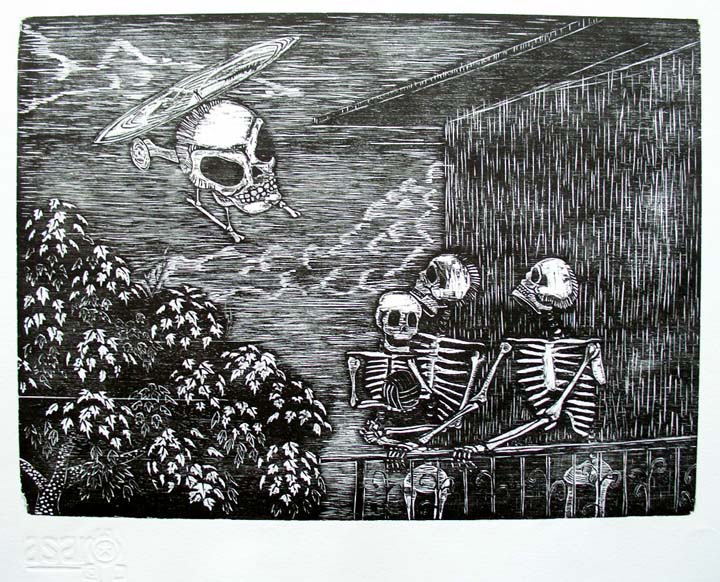
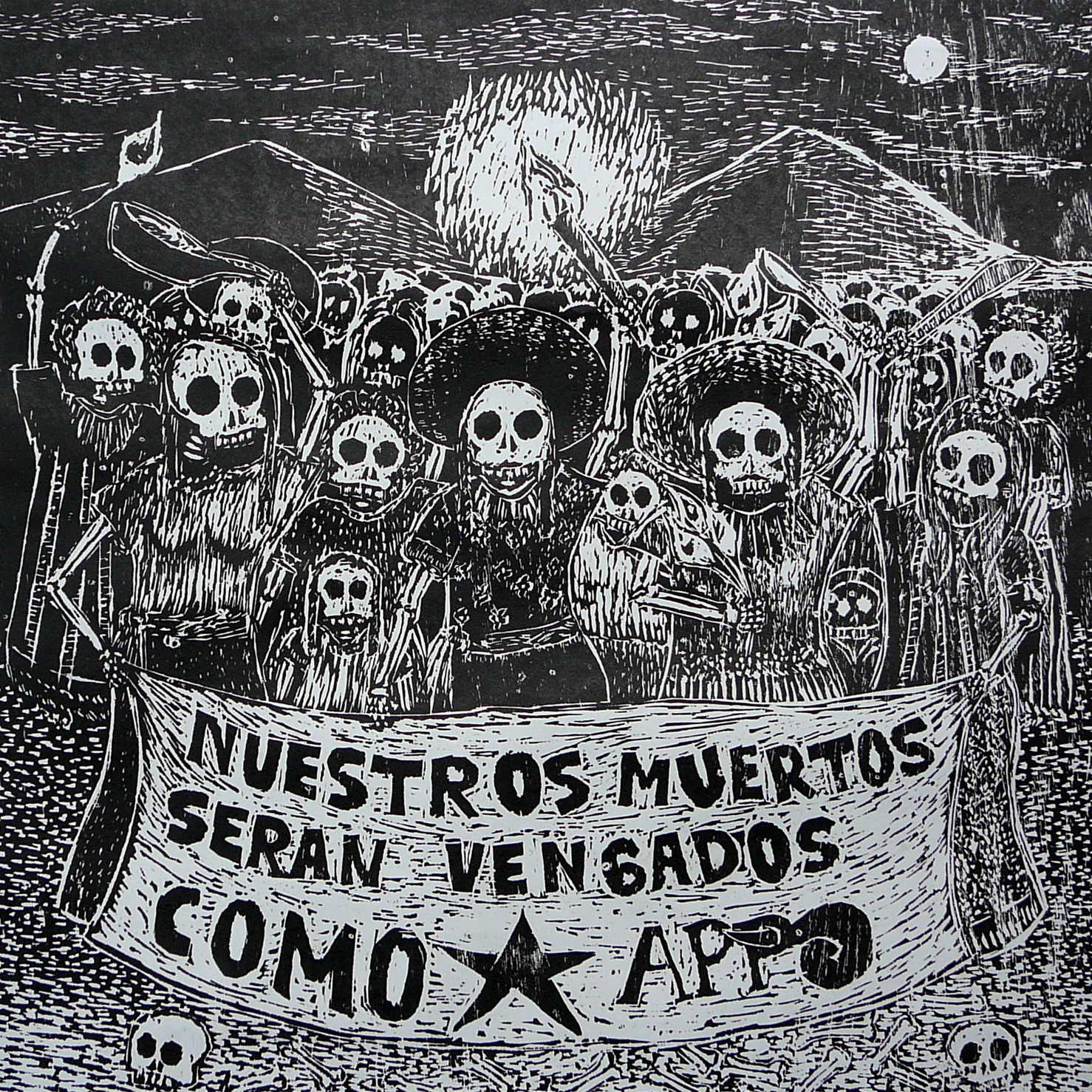
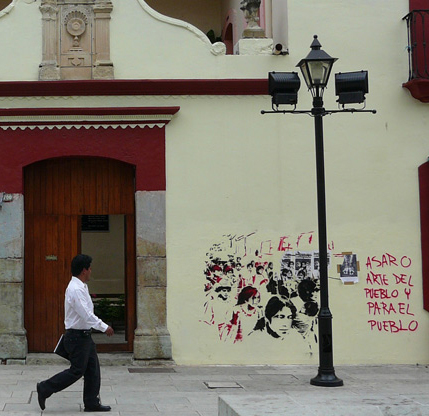
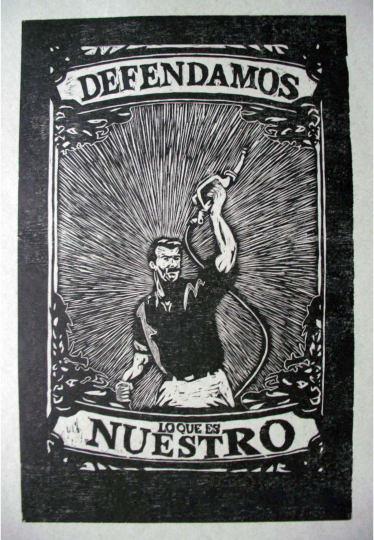

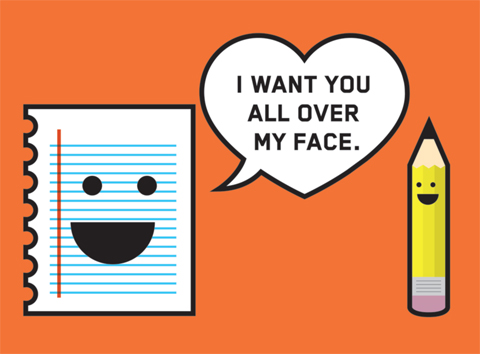
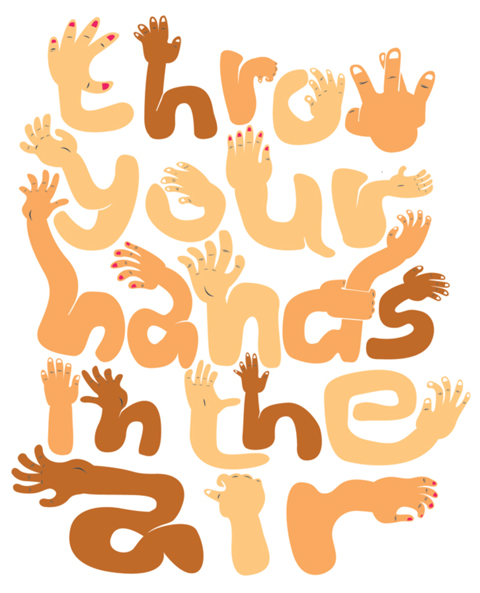
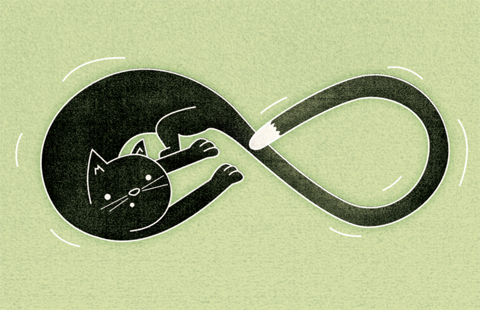

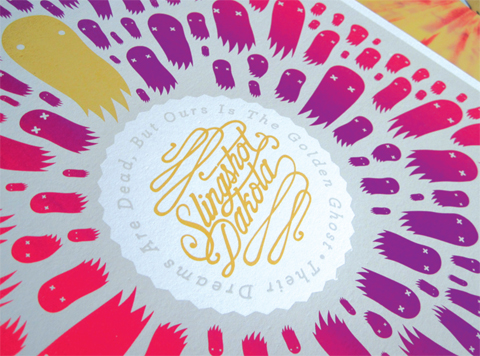
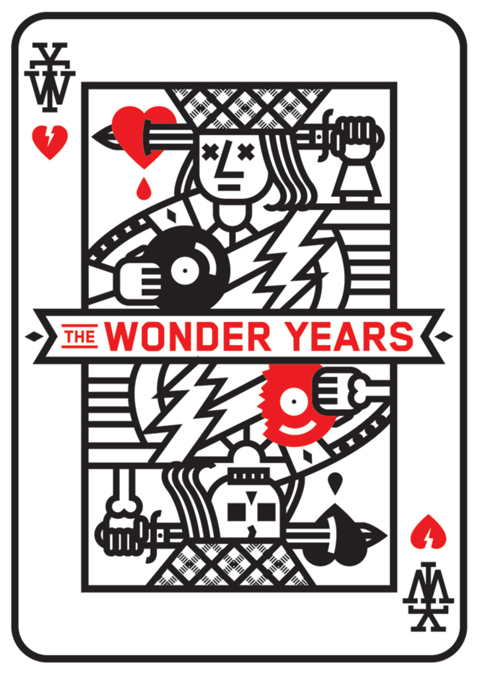
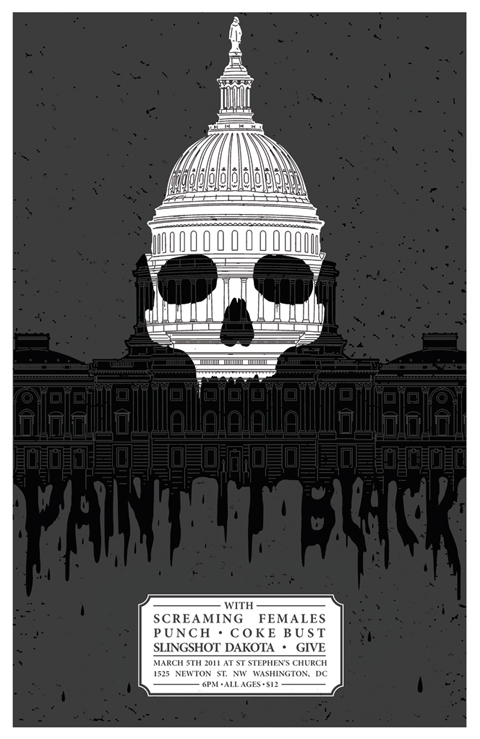
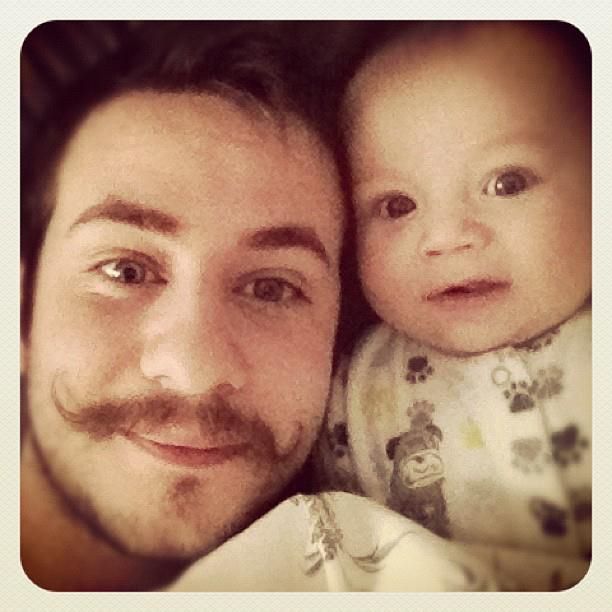
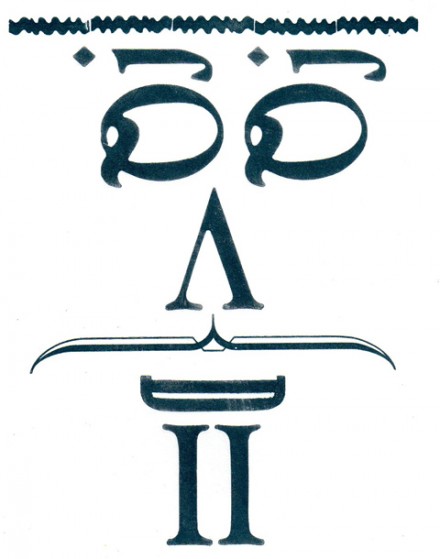
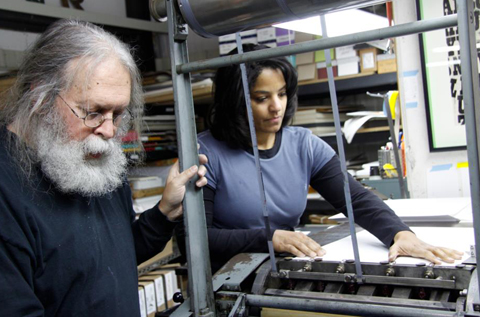


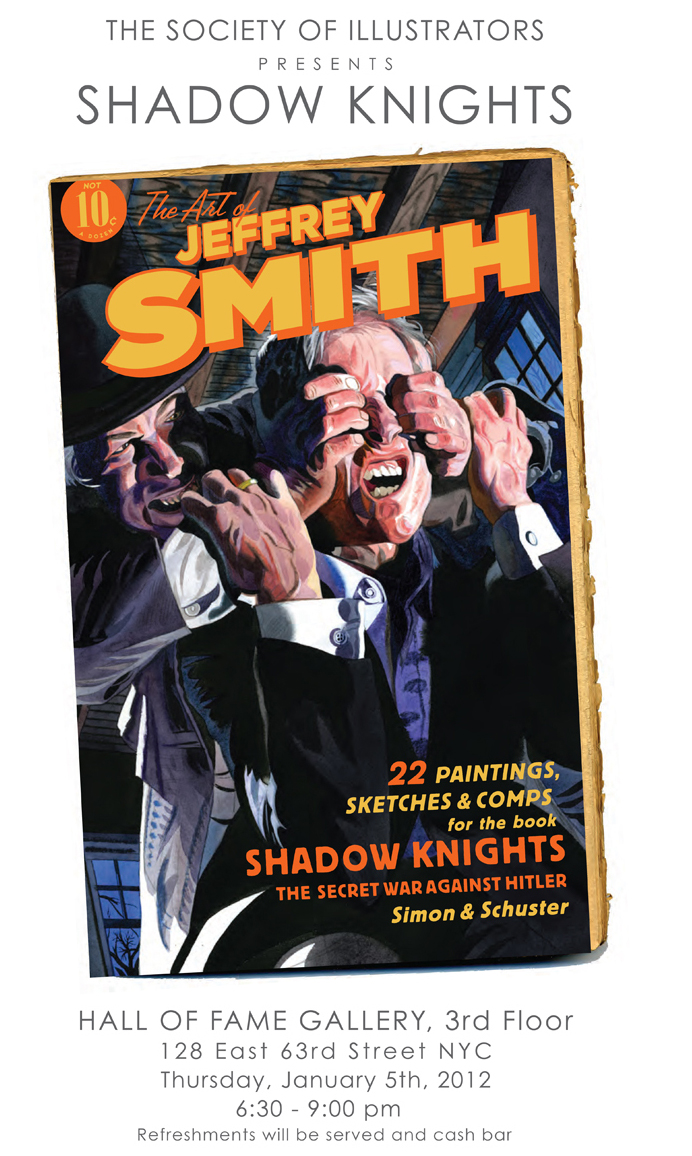



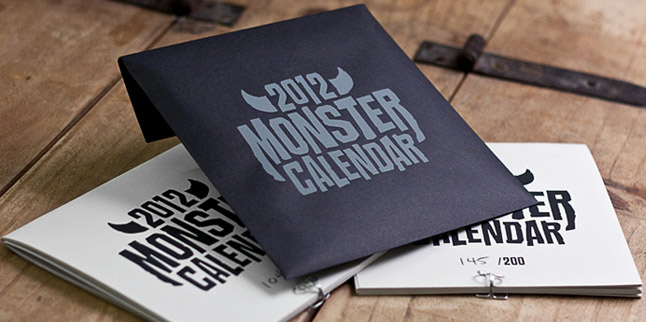

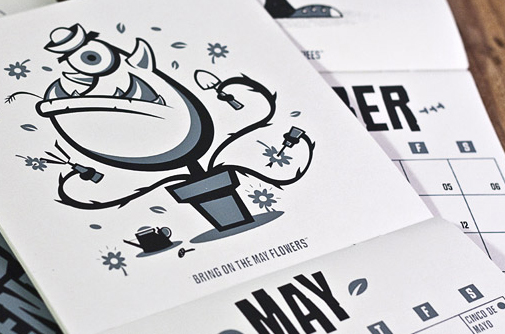

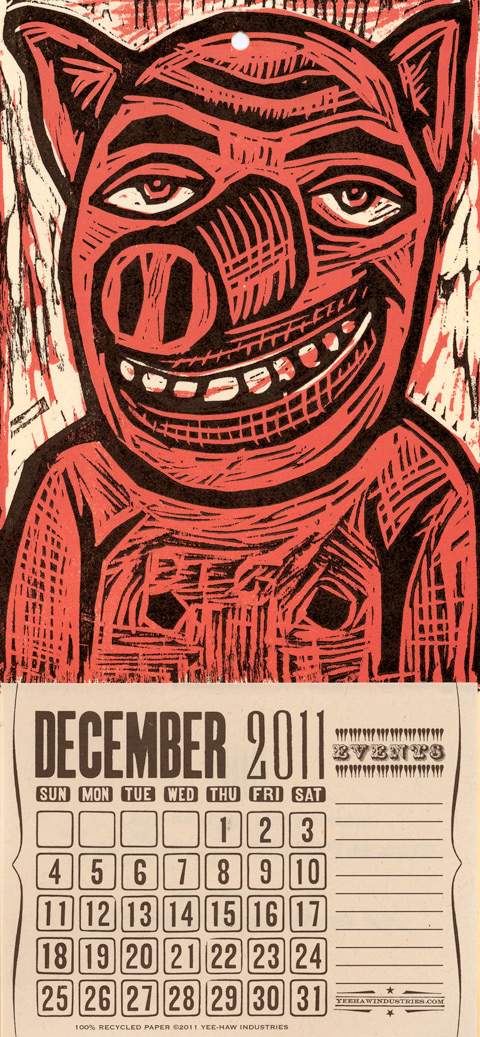
 Illustration Concentration